
c. 1207 – 1270·Feast July 4
Bl. Boniface of Savoy
Savoyard Archbishop of Canterbury and Reformer
Overview
Boniface of Savoy, born around 1207, was the eleventh child of Thomas I, Count of Savoy, and Margaret of Geneva. His first Church offices came through his family: by 1232 he was Prior of Nantua and bishop of Belley in Burgundy. His niece Eleanor of Provence married King Henry III of England in 1236, and it was Henry who pushed his election to the see of Canterbury, nominated on 1 February 1241 and confirmed by Innocent IV in September 1243. Consecrated at Lyons in January 1245 during the First Council of Lyon, he only reached Canterbury for enthronement on 1 November 1249. He spent fourteen of his twenty-nine years as archbishop abroad, working hard for his family's continental fortunes, quarrelling with his suffragans, with the king's half-brothers and at times with the papacy, yet he cleared the debt of more than 22,000 marks he had inherited, held reforming councils in 1257, 1258 and 1261, promoted the canonisation of Edmund of Abingdon, and defended the liberties of his church. During the Barons' War he moved from the reforming side to the king's, excommunicating the rebel barons in 1262. Leaving England finally in 1268, he died in Savoy on 18 July 1270 and was buried at Hautecombe. Modern historians, against Matthew Paris's scorn, judge him a responsible and reforming archbishop; he was beatified in 1839.
The Complete Life
Eleventh Child of the House of Savoy
Boniface entered the world around 1207 in Savoy, the eleventh child born to Thomas I, Count of Savoy, and Margaret of Geneva. His was one of the most formidably well-connected families of thirteenth-century Europe. His elder brother Amadeus succeeded their father as count; another brother, Peter, was created Earl of Richmond in 1240; a third, William, became Bishop of Valence and was at one time a candidate for Winchester in England. Two of his nieces married kings: Eleanor of Provence became queen of Henry III of England, while her sister was joined to Louis IX of France. Readers should not confuse this Boniface with a nephew of the same name, the son of Amadeus IV. Some sources claim that he entered the Carthusian Order in youth, a story the modern biographer treats with scepticism, since there is no evidence for it and the ferocious discipline of that order made it an unlikely home for a nobleman. Whatever the truth of that tradition, his ecclesiastical career began in the family pattern of the age, with benefices secured through kinship, and it would be the English crown, bound to him by marriage, that eventually lifted him to the primatial see of Canterbury and to a role on the wider stage of European church politics.
§ Early life
From Belley to Canterbury
Boniface's rise through the Church was steady and familial. By 1232 he held both the priorship of Nantua and the bishopric of Belley in Burgundy. On their father's death the castle of Ugine fell to him as his share, and in 1238 he formally renounced any claim to the rest of the inheritance, choosing the Church over the county. The decisive turn came through his niece Eleanor of Provence, whose marriage to Henry III of England drew a swarm of Savoyard and Provençal relatives across the Channel in search of office. Henry tried to have Boniface elected Bishop of Winchester, but the cathedral chapter would not accept him. The king had better fortune with Canterbury: on 1 February 1241 Boniface was nominated to the primatial see, and Pope Innocent IV confirmed the appointment on 16 September 1243, partly to placate the English monarch. Boniface was in no hurry to assume his charge. He arrived in England only in 1244, was present at the First Council of Lyon, and was consecrated there by Innocent IV on 15 January 1245. Before finally crossing to England in 1249 he helped arrange the marriage of another niece, Beatrice of Provence, to Charles of Anjou, brother of Louis IX, and on 1 November 1249 he was enthroned at Canterbury Cathedral.
§ Ecclesiastical career
Governing a Bankrupted Province
The archbishopric Boniface inherited was financially ruined, carrying debts of over 22,000 marks. He attacked the problem with vigour, obtaining papal permission to levy a tax on his clergy for a seven-year term; when bishops would not pay he suspended them from office, and by the time of his death the debt had been cleared. His governance was otherwise a mixture of neglect and reform. He showed little taste for the pastoral side of his office and spent fourteen of his twenty-nine years as archbishop on the continent, laboriously advancing the fortunes of his family, yet he also worked seriously for the Church. At the papal court-in-exile in Lyon between 1244 and 1249 he pressed the cause for the canonisation of his predecessor Edmund of Abingdon. In 1244 he rejected the king's clerk Robert Passelewe as Bishop of Chichester after Robert Grosseteste found the man illiterate, imposing instead Richard of Chichester, whom Innocent IV confirmed against royal objection. He contested the election of Hugh de Balsham to Ely in 1258, unsuccessfully promoting Adam Marsh. He held reforming councils of the clergy at London in 1257, Merton in 1258 and Lambeth in 1261, established a provincial court with a presiding Officialis of his own appointment, and won submission from every one of the thirty-seven bishops consecrated in his time except three.
§ Ecclesiastical career
Barons' War and Last Days
The final decade of Boniface's life was consumed by the constitutional crisis of Henry III's reign. He defended the liberties of his see with energy and money, and his suffragans resented both his supervision and the sums he collected. A provincial visitation he attempted in 1250 provoked an appeal to Rome, where the pope upheld his right to visit but capped the amount chargeable to any monastery or church. He quarrelled persistently with the king's Lusignan half-brothers, rivals of the Savoyards for lands and promotion; his dispute with Aymer de Valence over a Southwark hospital ended with Lambeth Palace plundered and one of his officials kidnapped before a settlement in early 1253. He absented himself from October 1254 to November 1256, largely in Savoy, helping his brothers ransom their eldest brother Thomas from captivity at Turin. Under the Provisions of Oxford he sat on the Council of Fifteen that governed for the king in 1258 and 1259, a body which exiled the Lusignans, and in April 1260 he joined Richard de Cornwall in brokering peace between Henry and Prince Edward. In 1261 his Lambeth council published decrees against royal interference in church courts, an ecclesiastical echo of the baronial revolt. In the Second Barons' War he sided first with the bishops against the king and then with the king, going to France in 1262 to excommunicate the rebellious barons, missing the January 1265 Parliament, and returning only in May 1266 after the royalist victory. He left England for the last time in November 1268 and died in Savoy on 18 July 1270.
§ Controversies
Cult, Tomb and Beatification
Boniface's passage to official recognition was slow and unofficial in origin. His body was laid with those of his kin at Hautecombe, the Cistercian abbey of Savoy, and by his will he left legacies to each Franciscan and Dominican house of the diocese of Canterbury; characteristically its provisions differed for burial according to whether he should die in England, in France or near the Alps. A popular cult gathered around his tomb, and when it was opened in 1580 his body was reported to be perfectly preserved, a discovery that nourished devotion for the next two centuries. The French Revolution destroyed both the tomb and its effigy, and his remains were reburied with a new monument raised in 1839. In that same year Pope Gregory XVI formally beatified him, giving the ancient cult papal sanction. His feast is kept on 4 July, and he appears in the Roman Martyrology. It is worth noticing how this beatification fits his historical reputation: the man whom Matthew Paris dismissed as 'noted more for his birth than for his brains' became, in the eyes of later ages, a witness worthy of liturgical honour, his veneration rooted less in miracles worked during his life than in the sanctity popularly attributed to his resting place and to the incorrupt body found there in the sixteenth century.
§ Death and aftermath
A Reassessed Archbishop
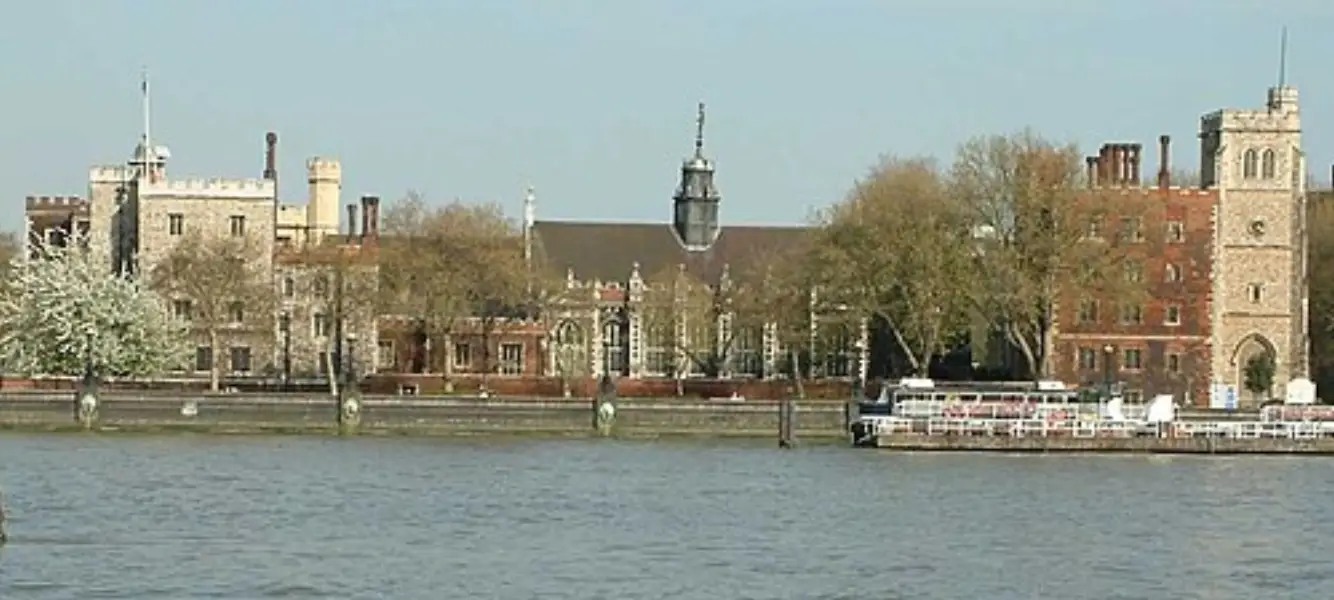
Boniface's afterlife among historians has been as contested as his archiepiscopate. Matthew Paris, the great chronicler who disliked him, painted a foreigner who cared nothing for spiritual duty, whose exactions and overbearing manner offended the English, and whose career served chiefly the continental ambitions of his house. Modern scholarship has substantially revised that verdict: the historian D. A. Carpenter writes that he 'became a respected and reforming archbishop', crediting him with clearing the enormous debt he inherited, reforming the clergy through councils, building up the administrative machinery of the province, and stoutly defending ecclesiastical liberty against both crown and baronage. Physical traces of his tenure survive, notably the Early English Gothic chapel of Lambeth Palace, which dates from building work carried out during his occupation of the palace, and oddly his official seal, which bore a head of the pagan god Jupiter Serapis alongside the conventional image of the archbishop in vestments. His episcopal registers have perished, which limits what can be known of his day-to-day government. As a beatified archbishop of Canterbury of foreign birth, governing largely at a distance during one of England's deepest constitutional crises, he remains a study in how holiness, governance and family loyalty could be entangled in the medieval Church.
§ Death and aftermath
Timeline
- 1207
Born in Savoy, the eleventh child of Thomas I, Count of Savoy, and Margaret of Geneva
§ Early life
- 1232
Held the priorship of Nantua together with the bishopric of Belley in Burgundy
§ Ecclesiastical career
- 1238
Surrendered his claims to further inheritance, having received the castle of Ugine on his father's death
§ Ecclesiastical career
- 1 Feb 1241
Nominated to the see of Canterbury on 1 February after Henry III failed to win him Winchester
§ Ecclesiastical career
- 16 Sep 1243
Pope Innocent IV confirmed his appointment to Canterbury on 16 September as a gesture towards Henry III
§ Ecclesiastical career
- 1244
Reached England for the first time; quashed the election of the illiterate Robert Passelewe to Chichester
§ Ecclesiastical career
- 15 Jan 1245
Consecrated by Innocent IV on 15 January at Lyons during the First Council of Lyon
§ Ecclesiastical career
- 1 Nov 1249
Came back to England, where Canterbury Cathedral saw his enthronement on 1 November
§ Ecclesiastical career
- 1250
Attempted a visitation of his province; protesting suffragan bishops appealed to the pope over his exactions
§ Controversies
- 1252
Came back to England after the pope decided the bishops' appeal in his favour, with limits set on visitation dues
§ Controversies
- 1253
His quarrel with Aymer de Valence over a Southwark hospital was finally settled early in the year
§ Controversies
- Oct 1254
Left England again until November 1256, spending most of the absence in Savoy helping his brothers free Thomas from captivity at Turin
§ Controversies
- 1257
Held a church council at London for the reform of the clergy
§ Ecclesiastical career
- 1258
Held a council at Merton and joined the Council of Fifteen governing for Henry III under the Provisions of Oxford
§ Controversies
- Apr 1260
Worked with Richard of Cornwall in April to make peace between King Henry and Prince Edward
§ Controversies
- 1261
Held a council at Lambeth which published laws denouncing royal limits on ecclesiastical courts
§ Controversies
- 1262
Withdrew to France and excommunicated the barons who opposed the king
§ Controversies
- May 1266
Arrived back in England in May after the triumph of the royalist party in the Second Barons' War
§ Controversies
- Nov 1268
Left England in November, never to return
§ Death and aftermath
- 18 Jul 1270
Died on 18 July in Savoy and was buried with his family at the Cistercian abbey of Hautecombe
§ Death and aftermath
- 1580
His tomb was opened and his body found to be perfectly preserved
§ Death and aftermath
- 1839
Beatified by Pope Gregory XVI; his remains reburied and a new tomb raised after the Revolution had destroyed the old one
§ Death and aftermath
In Their Own Words
Noted more for his birth than for his brains.
Became a respected and reforming archbishop.
The Record
- Canonization
- Beatified by Pope Gregory XVI in 1839; his tomb at Hautecombe Abbey became the centre of a cult after his death
Prayer
Bibliography
Show 9 sources
- Knowles, Clive H. (2004). "Savoy, Boniface of (1206/7–1270)". Oxford Dictionary of National Biography. Oxford University Press. doi:10.1093/ref:odnb/2844.
- Fryde, E. B.; Greenway, D. E.; Porter, S.; Roy, I. (1996). Handbook of British Chronology (Third revised ed.). Cambridge University Press.
- Carpenter, David (2004). The Struggle for Mastery: The Penguin History of Britain 1066–1284. Penguin.
- Moorman, John R. H. (1955). Church Life in England in the Thirteenth Century (Revised ed.). Cambridge University Press.
- Gibbs, Marion E.; Lang, Jane (2006). Bishops And Reform. Oxford University Press.
- Greenway, Diana E. (1971). "Canterbury: Archbishops". Fasti Ecclesiae Anglicanae 1066–1300, Vol. 2. Institute of Historical Research.
- Powell, J. Enoch; Wallis, Keith (1968). The House of Lords in the Middle Ages: A History of the English House of Lords to 1540. Weidenfeld and Nicolson.
- Prestwich, Michael (1997). Edward I. Yale University Press.
- Martyrologium Romanum. Vatican: Libreria Editrice Vaticana. 2004. p. 369.
Profile text adapted from the Wikipedia article, licensed CC BY-SA 4.0.
Pray with this saint every day
Save Bl. Boniface of Savoy to your favorites, read the full profile, and get feast-day reminders in the Saints app.
Get the Saints AppFree on the App Store for iPhone and iPad