
1891-1927·Feast November 23
Blessed Miguel Pro
Jesuit Priest and Martyr
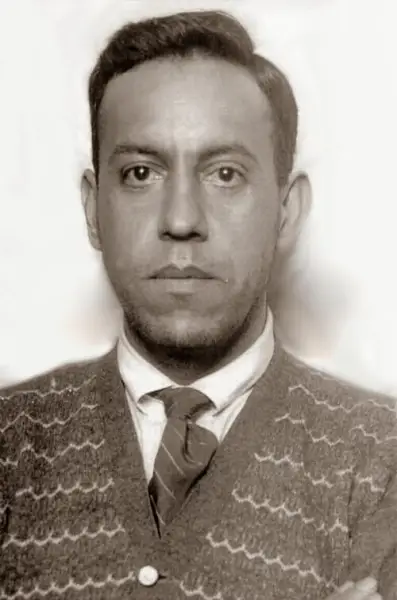
Overview
José Ramón Miguel Agustín Pro Juárez was born on 13 January 1891 into a mining family at Guadalupe in Zacatecas, the third of eleven children and known at home by the nickname Cocol. He joined the Jesuit novitiate at El Llano in 1911, but the Mexican Revolution soon scattered his order: anti-Catholic decrees dissolved the house in 1914 and he continued formation in California, Granada in Spain, and Nicaragua, where he taught from 1919 to 1922. Sent to Enghien in Belgium for theology, he was ordained a priest on 31 August 1925 and first served the industrial workers of Charleroi, surviving several operations for ulcers with unbroken cheerfulness. He reached Veracruz on 8 July 1926, weeks before the Calles Law drove the Church underground. Ministering in disguise under his boyhood nickname, he celebrated clandestine Masses, heard confessions, and anointed the sick across Mexico City until a failed attempt on Álvaro Obregón gave the government a pretext. Arrested with his brothers Humberto and Roberto, he was shot without trial on 23 November 1927, arms outstretched like the crucified Christ, crying Viva Cristo Rey. Photographs the government published to terrify the faithful instead became icons of the Cristero resistance.
The Complete Life
Early Life
José Ramón Miguel Agustín Pro Juárez was born on 13 January 1891 at Guadalupe in Zacatecas, into a mining family of limited means. Of the eleven children born to his parents, four died in infancy; two sisters entered religious life, and the household's faith was of the warm, practical Mexican kind. From his childhood he was known by the nickname Cocol, a name that would follow him into legend. Cheerful, imitative and theatrical — he loved mimicry, costumes and charades — he seemed the least likely of martyrs, and his companions in the Society would later say exactly that: his superior Pulido remarked that he had never seen such innocence combined with such common sense. In 1911 he entered the Jesuit novitiate at El Llano on 15 August, at twenty, the same year the Mexican Revolution began.
§ Childhood
A Novitiate in Exile
Miguel's formation was a casualty of the revolution he outlived. In 1914 anti-Catholic decrees dissolved the novitiate at El Llano, and the community fled to Los Gatos in California; he continued his studies in exile — at Granada in Spain from 1915, and then teaching in Nicaragua from 1919 to 1922, where his health, never robust, was further tested. Sent to Enghien in Belgium for theology, he was ordained a priest on 31 August 1925. He first served the industrial workers of Charleroi, and underwent several operations for stomach ulcers with unbroken cheerfulness. His superiors judged him not strong enough for Mexico; he asked to go anyway, and was allowed, on condition he travel home via the United States.
§ Jesuit life in Mexico, persecution, exile abroad, and ordination
The Underground Ministry
Pro reached Veracruz on 8 July 1926, three weeks before the Calles Law drove the Church in Mexico underground — the law that closed churches, banished priests, and made the sacraments crimes. His whole Mexican priesthood therefore was clandestine. He became famous in Mexico City for his disguises: the mechanic's overalls, the chauffeur, the businessman, the dandy with the golf clubs — costumes deployed not as jokes but as pastoral instruments, by a man who had loved charades all his life. He celebrated clandestine Masses in private houses, heard confessions, anointed the sick, and distributed Communion across the city, his fame spreading among the faithful as the priest who could reach anyone. His nickname, Cocol, signed his letters.
§ Return to Mexico
Arrest and Execution
On 13 November 1927 a bomb was thrown at Álvaro Obregón, the former president, in Mexico City. The government, without evidence, blamed the plotting on the Catholics and seized the pretext. Miguel was arrested, together with his brothers Humberto and Roberto — who were not priests — and held in the detective headquarters. There was no trial and no evidence. On 23 November 1927 he was taken to the police shooting range, photographed at his own request, and shot by firing squad. He died with his arms outstretched in the form of a cross, refusing the blindfold, crying Viva Cristo Rey — Long live Christ the King — and declaring his innocence and his forgiveness of his enemies. The photographs the government itself published, intending a warning, circulated instead as an icon.
§ Arrest and execution
Beatification
Pope John Paul II beatified Miguel Pro in Saint Peter's Square on 25 September 1988, recognizing him as a martyr slain in odium fidei — out of hatred for the faith — a finding that removed the need for the usual miracle. His cause was closely bound with the memory of the Cristero War and of the many Mexican priests and laypeople killed in those years. He is honored on 23 November, the day of his death. He has not been canonized; devotion in Mexico has long outrun the process, and his cause continues.
§ Introduction
Legacy
Blessed Miguel Pro is the most photographed martyr of the twentieth century: the government's own images of him at the wall, calm and smiling before the rifles, became among the most reproduced religious photographs in history, and did more than any polemic to discredit the persecution. In Mexico he is an institution — Padre Pro — invoked by the poor, celebrated in film and song, his disguises lovingly cataloged in popular devotion. For the universal Church he stands for the priestly joy under persecution: the man whose cheerfulness was his testimony, whose death was the only sermon he was permitted to preach aloud.
§ Introduction
Timeline
- 13 Jan 1891
Born in Guadalupe, Zacatecas, the third of eleven children in a mining family
§ Childhood
- 15 Aug 1911
Entered the Jesuit novitiate at El Llano
§ Childhood
- 1914
Anti-Catholic wave forces the novitiate to dissolve; he leaves with the Jesuits for Los Gatos, California
§ Jesuit life in Mexico, persecution, exile abroad, and ordination
- 1915
Moves to Granada, Spain, where he studies until 1919
§ Jesuit life in Mexico, persecution, exile abroad, and ordination
- 1919
Teaches in Nicaragua for three years, until 1922
§ Jesuit life in Mexico, persecution, exile abroad, and ordination
- 31 Aug 1925
Ordained a priest at Enghien, Belgium, where he had been sent for theological studies
§ Jesuit life in Mexico, persecution, exile abroad, and ordination
- 8 Jul 1926
Returns to Mexico, arriving at Veracruz, and begins serving an underground Church after the Calles Law
§ Return to Mexico
- Oct 1926
An arrest warrant is issued; he is taken into custody and released the following day, though kept under surveillance
§ Return to Mexico
- Nov 1927
Arrested again with his brothers after the failed attempt to assassinate former president Álvaro Obregón
§ Arrest and execution
- 23 Nov 1927
Executed by firing squad in Mexico City without trial, on President Calles's orders
§ Arrest and execution
- 1 Jun 1947
His spiritual writings receive theological approval, advancing his cause
§ Beatification
- 11 Jan 1952
Cause formally opened, giving him the title Servant of God
§ Beatification
- 25 Sep 1988
Beatified by Pope John Paul II in Saint Peter's Square, Rome, as a martyr killed in hatred of the faith
§ Beatification
In Their Own Words
¡Viva Cristo Rey!
May God have mercy on you! May God bless you! Lord, Thou knowest that I am innocent! With all my heart I forgive my enemies!
How can I explain to you the sweet grace of the Holy Spirit... I could not hold back the tears on the day of my ordination, above all at the moment when I pronounced... the words of the consecration.
The Record
- Major works
- Spiritual writings and letters from his underground ministry, signed with the nickname Cocol
- Patron of
- Persecuted Christians·Those facing execution·Priests ministering in secret
- Symbols
- Crucifix and rosary held at his execution·Arms outstretched in imitation of the crucified Christ·Firing squad
- Canonization
- Beatified by Pope John Paul II in Saint Peter's Square on 25 September 1988 as a martyr killed in hatred of the faith; not yet canonized
Prayer
Bibliography
Show 12 sources
- ↑ 2010 Calendar Calendar.SK
- 1 2 López-Menéndez, Marisol (2016). Miguel Pro: Martyrdom, Politics, and Society in Twentieth-Century Mexico . Lexington Books. ISBN 978-1-4985-0426-3 . [ page needed ]
- ↑ Dragon, Antonio; Drummond, Lawrence (1930). Miguel Augustin Pro of the Society of Jesus: martyr of Christ the King, executed in Mexico, November 23, 1972 . Boston College. Montreal: The Messenger press. {{ cite book }} : CS1 maint: publis
- ↑ Lopez-Menendez, Marisol (2012). The Holy Jester: Martyrdom, Social Cohesion and Meaning in Mexico The story of Miguel Agustin Pro SJ, 1927–1988 (Thesis). ProQuest 924485046 . [ page needed ]
- ↑ Suro, Roberto (26 September 1988). "An Assailed Missionary To America Is Beatified" . The New York Times .
- ↑ Greene, Graham (1970). The Collected Edition: The lawless roads . William Heinemann and the Bodley Head. p. 9. ISBN 978-0-370-30111-2 .
- ↑ Br. Dominic, M.I.C.M., Tert. "Padre Pro, A Modern Martyr
- ↑ Dragon, Antonio; Drummond, Lawrence (1930). Miguel Augustin Pro of the Society of Jesus: martyr of Christ the King, executed in Mexico, November 23, 1972 . Boston College. Montreal: The Messenger press. {{ cite book }} : CS1 maint: publis
- 1 2 Gentges, Mary E. Father Pro of Mexico (Angelus Online 20070 Archived 2007-09-28 at the Wayback Machine
- ↑ Miguel Pro Juárez Encyclopædia Britannica 2007
- ↑ "Blessed Miguel Agustín Pro" . Franciscan Media . 2015-11-23. Archived from the original on 2018-02-08.
- ↑ Buck, Ray and Ball, Ann Blessed Miguel Pro, SJ -- Biographical Data (Creighton University 2006)
Profile text adapted from the Wikipedia article, licensed CC BY-SA 4.0.
Pray with this saint every day
Save Blessed Miguel Pro to your favorites, read the full profile, and get feast-day reminders in the Saints app.
Get the Saints AppFree on the App Store for iPhone and iPad