
martyred under Diocletian·Feast January 20
St. Abadios
Soldier-Martyr of the Diocletianic Persecution in Egypt
Overview
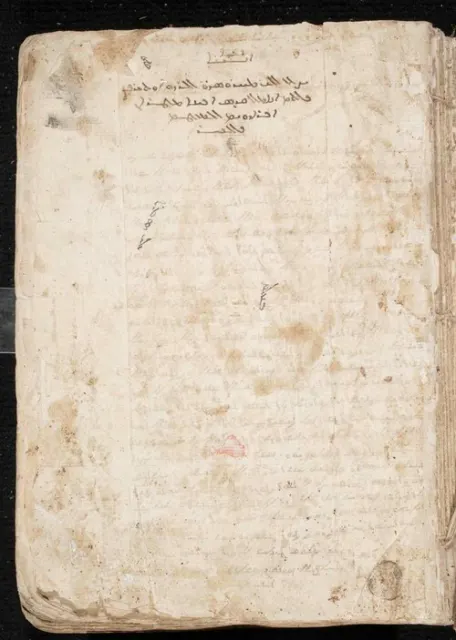
Abadios is an Egyptian martyr whose story survives only as a brief notice in the Jacobite Arab Synaxarium, a collection of saints' lives copied in 1733 for the Syriac Orthodox archdiocese of Aleppo and printed in French by René Basset in the Patrologia Orientalis in 1904. The notice records that he came from Bilgai in Egypt and served as a soldier raised from among the native population. While he was stationed at Khalakhis, in the years when the emperor Diocletian was waging his assault on the Church, Abadios openly declared his faith in Jesus Christ, and for that confession he was put to death, thrown against a rock. His commemoration was fixed on January 20. Everything else about him is silence. He belongs to the vast company of Egyptian confessors of the Great Persecution whose names reached the calendars of the Coptic and Syriac churches without narrative detail, remembered simply for the place they came from, the confession they made, and the day on which their witness was celebrated. Holweck's Biographical Dictionary of the Saints, drawing on the same synaxarial literature, preserves the same outline for modern readers.
The Complete Life
A Son of Bilgai
Every detail that survives about Abadios comes from a single synaxarial notice, and it begins with places rather than deeds: he was a man of Bilgai, a settlement in Egypt whose exact location the source does not pause to explain. The mention is characteristically Egyptian. The calendars of the Coptic and Syriac churches are filled with martyrs identified only by a town and a date of commemoration, because for the communities that kept their memory the essential facts were where a saint belonged and when his witness was to be celebrated. That Abadios was a soldier drawn from the native population adds a further strand to the picture. Egypt in the late third century garrisoned troops raised from among its own people, and a soldier's loyalty to the emperor was precisely what the demand for sacrifice tested when the edicts of Diocletian turned the machinery of the state against the Church. The notice preserving his name was copied in 1733 into a manuscript prepared for the Syriac Orthodox archdiocese of Aleppo, a reminder of how the memory of one Egyptian martyr traveled through the liturgical books of the Christian East before reaching modern scholarship through Basset's edition.
§ Introduction
The Confession at Khalakhis
The synaxarium places the decisive scene of Abadios's life at Khalakhis, where he was serving when the Diocletianic persecution reached the army. The edicts of that persecution required officials and soldiers alike to prove their loyalty by offering sacrifice to the gods, and the army became one of its most relentless instruments: men who would not burn incense were dismissed, tortured, or killed. Against that background, the soldier's declaration of faith recorded in his notice was not a private conviction but a public act with a known price. The tradition of the Egyptian Church counted such soldiers among its noblest martyrs, precisely because their profession cost them rank, livelihood, and life all at once. In the compact idiom of the synaxaria, to confess Christ at such a moment was itself the whole of a saint's story; no further deeds were needed to explain why his name was kept. The annual date of January 20 gave the communities that read the Aleppo manuscript a fixed day on which that confession could be recalled in story and song, and on which the faithful could ask for a share of the steadfastness it displayed.
§ Introduction
Death and Remembrance
The manner of Abadios's death — he was thrown against a rock — is exactly the kind of stark detail the synaxaria preserve when the rest of a passion narrative has dropped away. It tells of an execution carried out on the spot, without trial scenes or lengthy torments, and it fixes the image of a soldier whose body was broken against stone in the very place where he had refused to betray his Lord. For the communities that handed his memory on, such an ending required no elaboration; the point of the notice was that a man of Bilgai had stood where nearly everyone else knelt. His story reached the modern age only through the manuscript culture of the Christian East: written into Arabic synaxaria, copied into the 1733 volume from the archdiocese of Aleppo, and finally edited by René Basset in the Patrologia Orientalis of 1904, with the saints' names cross-checked against Holweck's Biographical Dictionary of the Saints. Abadios therefore stands among those early Egyptian witnesses whose lives the Church cannot narrate but whose feast it has never stopped keeping.
§ Introduction
Timeline
- 1733
A copy of the Jacobite Arab Synaxarium containing his notice is made for the Syriac Orthodox archdiocese of Aleppo
§ Introduction
- 1904
René Basset first publishes the Jacobite Arab Synaxarium, with his notice, in the Patrologia Orientalis
§ Introduction
The Record
- Symbols
- Martyr's palm
- Canonization
- Pre-congregation martyr; commemorated in the Syriac Orthodox tradition
Prayer
Bibliography
Show 4 sources
- Curtin, D. P. (July 2015). Jacobite Arab Synaxarium- Volume I. Dalcassian Press. ISBN 9781088061237.
- "Patrologia Orientalis (Volume 1)". Yahoo's Patrologia. 19 December 2008.
- "Welcome to Medieval Nubia - Synaxarium Aethiopicum".
- Holweck, F. G., A Biographical Dictionary of the Saints. St. Louis, MO: B. Herder, 1924.
Profile text adapted from the Wikipedia article, licensed CC BY-SA 4.0.
Pray with this saint every day
Save St. Abadios to your favorites, read the full profile, and get feast-day reminders in the Saints app.
Get the Saints AppFree on the App Store for iPhone and iPad