
1892-1963·Feast April 14 (6 Parmouti)
St. Abdel Messih el-Makari
Coptic Orthodox Monk and Priest
Overview
Abdel Messih el-Makari (also spelled el-Manahri) was a Coptic Orthodox monk and priest, born on 11 November 1892 in the village of Abou Shehata in the Matai district of the El-Menya governorate in Egypt. His parents, Henein and Esther, were Christians of the countryside of Upper Egypt. As a young man he left home for the Monastery of Saint Samuel the Confessor in the el-Qalamun mountain, drawn to the monastic life his father at first opposed; he returned to the monastery more than once, and each time his father came to bring him home. When his father finally relented, Abdel Messih entered the Monastery of Saint Macarius in the desert of Scetes at Wadi El-Natrun, the ancient heart of Egyptian monasticism, and was made a monk. In later life he lived at El-Manahra village near Matai, where he became known for humility and severe asceticism. He was reputed to have gifts of prescience, discernment of spirits, and healing, and he gave away everything he received to the poor. He died on Easter Sunday morning, 14 April 1963, and is honored as a twentieth-century Coptic saint.
The Complete Life
Early Life
Abdel Messih was born on 11 November 1892 in Abou Shehata, a village of the Matai district in the El-Menya governorate of Upper Egypt, into the Christian family of Henein and Esther. Egypt in his youth was under khedival and then British-dominated rule, and the Coptic Church of the countryside was a church of villages, fields, and parish priests, with the monasteries of the desert still the great centers of the spiritual tradition. It was to that tradition the boy was drawn: like many Coptic saints before him, he felt the pull of the monastic life while still young, and the struggle over his vocation would be played out between his village and the mountain monasteries.
§ Life
Struggle and Vocation
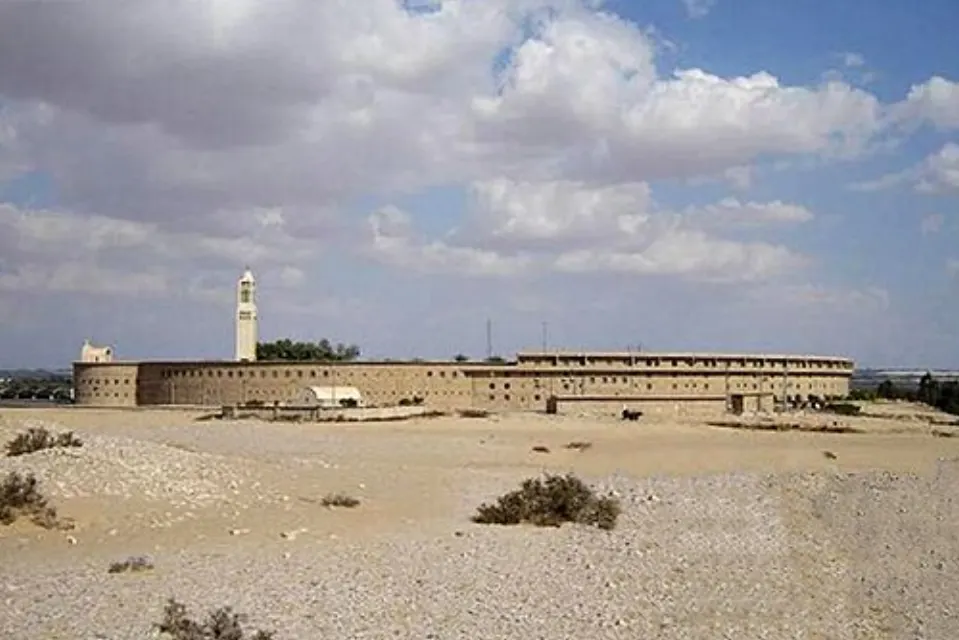
As a young adult Abdel Messih left his home town for the Monastery of Saint Samuel the Confessor, the medieval house in the el-Qalamun mountain at the edge of the desert. He did this several times, and each time his father came to the monastery and took him back home — a domestic battle over a vocation that the family experienced as loss. Tradition holds that many of his father's cattle died at the time, a loss read as heaven's confirmation that the boy's call came from God. In the end his father relented and allowed him to join the Monastery of Saint Macarius in the desert of Scetes at Wadi El-Natrun, where he received the monastic habit and became a monk in the place where Macarius, Arsenius, and the desert fathers had lived.
§ Life
Ministry at El-Manahra
Abdel Messih later moved to El-Manahra, a village of the Matai district, living there as monk and priest among the rural faithful. His ministry took the classic form of the Coptic holy man: a life of visible humility and extreme asceticism that made him a magnet for those in need. He was said to have the gifts of prescience, of discerning spirits, and of healing the sick, and the accounts of his life record the stream of visitors who sought his prayers. What most marked him was compassion: he gave away everything that was given to him to the needy, keeping nothing for himself, so that his poverty was as complete as his prayer.
§ Introduction
Final Years and Death
Abdel Messih's last years were spent in the reputation of holiness that his ascetic and charitable life had built. He died on the morning of Easter Sunday, 14 April 1963, corresponding to 6 Parmouti 1669 in the Coptic calendar — a death on the feast of the Resurrection that the Coptic faithful received as a fitting close to a life given to Christ. His memory remained vivid in the Matai district and in the wider Coptic Church, which had in his lifetime already come to regard him as one of its modern saints.
§ Life
Recognition
The Coptic Orthodox Church commemorates Abdel Messih el-Makari as a saint, with his feast on 14 April, the day of his death, corresponding to 6 Parmouti in the Coptic calendar. No formal canonical process is required in the Coptic tradition, where sanctity is ratified by the reception of the faithful and the testimony of the hierarchy. In his case that testimony reached the highest level: Pope Cyril VI of Alexandria, the pope and patriarch who led the Coptic Church from 1959 to 1971 and was himself later canonized, testified to Abdel Messih's holiness and asceticism.
§ Introduction
Legacy
Abdel Messih belongs to the modern flowering of Coptic sanctity — the monks, priests, and lay people of the nineteenth and twentieth centuries whose holiness renewed a church that would face much suffering in the decades after his death. He is remembered in the Matai district and at the monasteries associated with his life, and his example of total poverty and compassion continues to be told among the Copts: a man who owned nothing, gave away everything, and was trusted by the poor with their sickness and their prayers.
§ Introduction
Timeline
- 11 Nov 1892
Born in the village of Abou Shehata, Matai district, Egypt, to the Christian couple Henein and Esther
§ Introduction
- 14 Apr 1963
Dies on Easter Sunday morning, 14 April (6 Parmouti 1669 A.M.); his feast is kept on this date
§ Life
The Record
- Patron of
- The poor·The sick
- Symbols
- Monk's habit·Coptic monastic garb
- Canonization
- Commemorated as a saint in the Coptic Orthodox Church; Pope Cyril VI of Alexandria testified to his holiness
Prayer
Bibliography
Show 2 sources
Profile text adapted from the Wikipedia article, licensed CC BY-SA 4.0.
Pray with this saint every day
Save St. Abdel Messih el-Makari to your favorites, read the full profile, and get feast-day reminders in the Saints app.
Get the Saints AppFree on the App Store for iPhone and iPad