
1829-1914·Feast June 10 (3 Paoni)
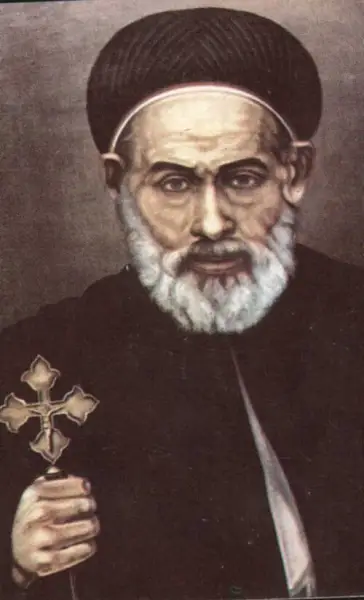
St. Abraam, Bishop of Faiyum
Bishop, Friend of the Poor
Overview
Abraam, born Boulos Gabriel at the village of Gilda near Mallawi in 1829, became the most beloved Coptic bishop of his century and earned the name Friend of the Poor. Orphaned of his mother at eight, he was ordained a deacon at fifteen and became a monk at the Monastery of the Virgin Mary at El-Muharraq in 1848, taking the name Paul El-Muharraqi. His generosity was already his signature: as abbot of El-Muharraq he opened the monastery's income to the needy so freely that more than forty new monks joined, and just as freely the community complained that he was dissipating its fortune; in 1870 the acting patriarchal deputy removed him from office. He withdrew to the Paromeos Monastery, where the abbot, Youhanna the Scribe, the future Pope Cyril V, befriended him. In 1881 Cyril V consecrated him Bishop of Faiyum and Giza under the name Abraam. For over thirty years he gave himself to the poor of his diocese, and when he died on 10 June 1914 some twenty-five thousand people, Christians and Muslims together, attended his funeral at a grave he had dug for himself. The Coptic Holy Synod canonized him in 1964.
The Complete Life
Early Life
Boulos Gabriel was born in 1829 in the village of Gilda, in the district of Mallawi of the Minya Governorate in Upper Egypt. His mother died of a brief illness when he was eight years old, an early bereavement that biographers have connected with the tenderness toward the suffering that marked his whole life. The village priests noticed the boy's piety and recommended him to Youssab, bishop of the diocese, who ordained him a deacon at the age of fifteen. His path then turned monastic: at nineteen, in 1848, he joined the Monastery of the Most Holy Virgin Mary at El-Muharraq in Assiut, the most revered house of Upper Egypt, and was tonsured a monk under the name Paul El-Muharraqi. The young monk was distinguished by two qualities that his contemporaries named again and again: patience and self-control, joined to an interest in almsgiving that would eventually cost him his office and gain him a people's love.
§ Biography
Monk and Controversial Abbot
Paul's reputation reached Metropolitan Yakoubos of the region, who called him to the metropolitanate to continue his work among the poor; after four years Paul asked to return to the monastery, and the metropolitan ordained him a priest and released him in 1863. In time he became abbot of El-Muharraq, and under him the community grew quickly, with more than forty new monks entering within a short period. The monastery also became a refuge for the poor of the surrounding country, whom he aided unreservedly from its income. This generosity set him against his own monks, who saw the fortunes of the house being poured out and judged it sheer waste of the house's substance. Their complaints went to Anba Marcus — archbishop of Beheira and the deputy governing the patriarchate in the interval after Demetrius II's death — and in 1870 he stripped Paul of the headship. He left El-Muharraq for the Paromeos Monastery in Wadi Natrun, followed by four monks who would not be separated from him; its abbot, the arch-priest Youhanna the Scribe, received him warmly and in time became Pope Cyril V of Alexandria.
§ Biography
Bishop of Faiyum and Giza
In 1881 Pope Cyril V appointed Paul bishop of the parish of Faiyum and Giza, consecrating him under the name Abraam in succession to the reposed Bishop Isaak. The Faiyum, an oasis of farms and villages west of the Nile, became the field of his last three decades. He governed a large diocese with the same instincts that had shaped him as a monk: the claims of the poor came before the comfort of institutions, and pastoral presence came before administration. Coptic memory filled these years with stories of his journeys to the villages, his care for widows and orphans, and the simplicity of his personal life. His title, the Friend of the Poor, was not awarded after his death but used of him while he lived, and it drew to his funeral, on 10 June 1914, a crowd estimated at twenty-five thousand persons, Muslims gathered there together with Christians. He had dug his own grave in advance and was laid in it; today his body rests at the Coptic Orthodox Metropolitanate of Fayoum.
§ Biography
Canonization
Abraam's canonization is unusually modern and unusually clear: in 1964 the Holy Synod of the Coptic Orthodox Patriarchate of Alexandria formally declared him a saint and ordered his name added to the Diptych of the Saints, the list of the holy men and women commemorated during the Divine Liturgy. For a Coptic saint of the twentieth century this was the full weight the tradition can give, placing a bishop who died in 1914 beside the martyrs and fathers of the early Church. His feast is kept on 3 Paoni in the Coptic calendar, corresponding to 10 June. The monastery that bears his name at Fayyum grew around his cult and remains the center of devotion to him, drawing pilgrims who come to ask the intercession of the bishop who was famous for giving everything away. His name is invoked in Coptic homes beside those of the older fathers, a modern bridge in the Diptych between the desert of Egypt and the Egypt of today.
§ Biography
Legacy
Abraam's legacy stands on a single paradox: the man who was deposed as abbot for wasting the monastery's wealth on the poor was canonized within living memory as the standard of Coptic charity. His life is a standing commentary on the cost of taking the Gospel's economics literally, and Coptic preaching has returned to that commentary constantly since 1964. The vast, mixed crowd at his funeral, which included Muslims as well as Christians, already testified that his holiness was a public fact and not merely a church affair, and the continuation of that public devotion at Fayyum has kept his memory warm. For bishops he remains an exacting model, since his episcopate was organized around the least and not around the treasury, and for the poor of Egypt he remains, by his own title, a friend. Pilgrims to his shrine at Fayyum still leave with stories of answered prayers, as their grandparents left with bread he had given them.
§ Introduction
Timeline
- 1829
Born Boulos (Paul) Gabriel at Gilda near Mallawi in the Minya region
§ Biography
- 1848
Ordained monk at El-Muharraq Monastery in Assiut, taking the name Paul El-Muharraqi
§ Biography
- 1863
Ordained priest by Metropolitan Yakoubos, who allows him to return to the monastery
§ Biography
- 1870
Deposed from the headship of El-Muharraq by Metropolitan Marcos and withdraws to the Paromeos Monastery
§ Biography
- 1881
Pope Cyril V appoints him bishop of Faiyum and Giza under the name Abraam
§ Biography
- 10 Jun 1914
Dies at Faiyum; some twenty-five thousand Christians and Muslims follow his funeral
§ Biography
- 1964
The Holy Synod of the Coptic Patriarchate of Alexandria canonizes him and adds his name to the Diptych
§ Biography
The Record
- Patron of
- The poor·Bishops·Faiyum and Giza
- Symbols
- Bishop's vestments·Alms for the poor
- Canonization
- Canonized in 1964 by the Holy Synod of the Coptic Orthodox Patriarchate of Alexandria; name added to the Diptych of the Saints
Prayer
Bibliography
Show 2 sources
Profile text adapted from the Wikipedia article, licensed CC BY-SA 4.0.
Pray with this saint every day
Save St. Abraam, Bishop of Faiyum to your favorites, read the full profile, and get feast-day reminders in the Saints app.
Get the Saints AppFree on the App Store for iPhone and iPad