
died c. 251·Feast March 31 (varies in the East)
St. Acathius of Melitene
Third-Century Bishop and Confessor
Overview
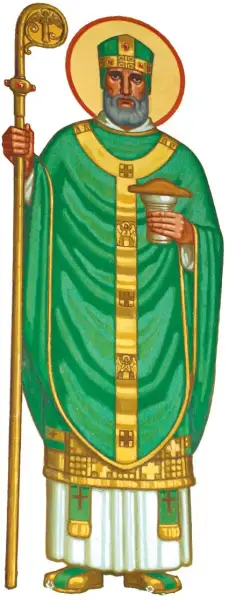
Acathius, also Acacius or Achates, was bishop of Melitene — modern Malatya in Turkey, the capital of the Roman province of Second Armenia — in the third century, dying around 251, though he is occasionally given instead as bishop of Antioch. The persecution of Decius fell within his lifetime, and he was in fact summoned to answer for his faith before the tribunal of Marcian — a summons history treats as certain — yet he cannot be shown to have died for it: the death sentence was indeed passed upon him, but the emperor, struck by his prudence and constancy, let him go once much suffering had been endured. Tradition celebrates him, the records say, above all for two things: the brilliance of his instruction in doctrine and the wonders he performed; the East gave him the surname Agathangelos, 'good angel'. He must not be confused with the later Acacius of Melitene, the opponent of Nestorius at the Council of Ephesus in 431, a different and better-documented bishop of the same city. In the East his feast is kept on varying dates, above all 31 March, and in art his mark is a crown of thorns.
The Complete Life
A Bishop of Second Armenia
Melitene — modern Malatya, in eastern Anatolia — was the capital of the Roman province of Second Armenia and one of the cities where Christianity took earliest and deepest root; its bishops appear in the conciliar records from the fourth century onward, and its martyr-rolls were long before that. Acathius governed this see in the third century, dying around 251; the sources occasionally misplace him in Antioch, but the weight of the tradition is Melitenian. Nothing is recorded of his origin or consecration. What the record preserves is his teaching — he was famous, it says, for the splendour of his doctrinal instruction, at a time when doctrine had to be carried in the bishop's own voice, there being as yet no agreed creed beyond the baptismal rule — and his wonders: the miracles he wrought belonged, in the ancient estimate, to the ordinary furniture of an apostolic bishop's reputation.
§ Introduction
Before the Tribunal of Marcian
Decius' edict of 250, which for the first time obliged every subject to offer sacrifice to the gods upon pain of death, brought Acathius before Marcian's tribunal to answer for what he believed; the trial itself is beyond dispute, though whether he died in it remains unsettled. A capital sentence followed, yet it was never executed: the emperor, won over by the bishop's prudence and constancy, set him free once he had endured a great deal. This ordeal ranks Acathius among the confessors rather than the martyrs: the Church distinguished carefully between those who died and those who bore torture and lived, and the confessor's authority in the third-century church was second only to the martyr's. The surname the East gave him, Agathangelos — good angel — perhaps reflects the manner tradition remembered from the trial: the bishop under sentence speaking with a composure that seemed not entirely human.
§ Life
Cult and Calendar
Acathius is a saint of the calendars, pre-congregational in the technical sense: no process ever declared him, and none was needed. The Roman Catholic, Eastern Orthodox and Oriental Orthodox churches all venerate him, the Eastern churches on differing days, but especially 31 March. His iconographic emblem is the crown of thorns — an emblem of the Passion applied to a confessor, marking him as one who bore a share of Christ's sufferings in his own body without the crown of death. The great difficulty with his memory is a namesake: Acacius of Melitene, the later bishop who stood against Nestorius and sat at Ephesus in 431, has absorbed a certain amount of the earlier bishop's honour, and readers of the calendars must keep the two apart. The earlier Acathius remains what the record made him: a teacher and wonder-worker of the Armenian church, tried under Decius, tortured, released, and remembered — the crown of thorns without the sword.
§ Introduction
Timeline
- 251
In the persecution of Decius he is cited before the tribunal of Marcian to account for his faith and condemned to death
§ Life
- 251
His prudence and constancy so impress the emperor that he is discharged after much suffering; he is said to have died around 251
§ Introduction
The Record
- Symbols
- Crown of thorns
- Canonization
- Pre-congregation
Prayer
Bibliography
Show 4 sources
- ↑ Butler, Alban (1886). "St. Acacius, or Achates, Bishop of Antioch, in Asia Minor, Confessor" . The Lives of the Saints .
- ↑ Monks of Ramsgate. “Acacius”. Book of Saints , 1921. CatholicSaints.Info. 30 April 2012
- ↑ Campbell, Thomas. "St. Acacius." The Catholic Encyclopedia Vol. 1. New York: Robert Appleton Company, 1907. 6 June 2018
- ↑ Den hellige Akakios Agathangelos av Melitene ( -~251)in Latin Retrieved on 27 March 2018
Profile text adapted from the Wikipedia article, licensed CC BY-SA 4.0.
Pray with this saint every day
Save St. Acathius of Melitene to your favorites, read the full profile, and get feast-day reminders in the Saints app.
Get the Saints AppFree on the App Store for iPhone and iPad