
c. 1067-1137·Feast February 24
St. Adela of Normandy
Countess of Blois, Daughter of William the Conqueror
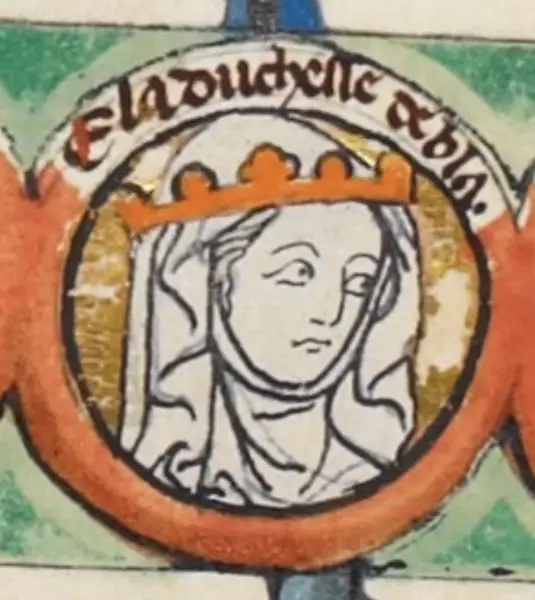
Overview
Adela of Normandy, also called Adela of Blois or of England, was a daughter of William the Conqueror and Matilda of Flanders, and countess of Blois, Chartres and Meaux by her marriage to Stephen II of Blois. Born around 1067, she was the favourite sister of Henry I of England, a high-spirited and educated woman with Latin, and an effective ruler. She served as regent of Blois during her husband's crusading absences in 1096-1100 and 1101-02, and again through her son Theobald's minority until her retirement in 1120, touring the lands, issuing charters, settling disputes and corresponding with Bishop Ivo of Chartres. She berated Stephen into returning to the Holy Land, where he was killed at Ramla in 1102. Mother of King Stephen of England, she placed her son Henry as an oblate at Cluny, and in 1120 retired to become a nun at Marcigny, keeping her influence until her death on 8 March 1137.
The Complete Life
Early Life
Adela was born around 1067, probably at Rouen, into the house that had just conquered England; she was the youngest daughter of William the Conqueror and Matilda of Flanders, and the favourite sister of the future Henry I. Her royal birth set her apart in the eyes of her contemporaries, and she was given the schooling of a great lady: she learned Latin, read, and was known as high-spirited — a word her later career proved accurate. Her parents' court moved constantly through Normandy, and she likely grew up in its schools of politics and piety together. Between 1080 and 1083, at about fifteen, she was married at Chartres Cathedral to Stephen Henry, heir to the count of Blois, nearly twenty years her senior. The match linked the two most powerful families of northern France and proved, unusually for dynastic marriage, a working partnership: across some fifteen years the couple had six or eight children who lived past infancy, and husband and wife acted in concert, Adela joining Stephen in a vow to shield the bishop of Chartres during his quarrel with the crown.
Regencies
Adela's public work began when Stephen-Henry joined the First Crusade in 1096 with his brother-in-law Robert Curthose. She governed Blois, Chartres and Meaux during his absence and again during his expedition of 1101, and her regency was no figurehead's post: she granted charters allowing monks to build new churches, toured the counties, settled disputes, promoted economic growth, commanded knights to serve the king, and exchanged letters with Ivo of Chartres on everything from the discipline of misbehaving nuns to the theology of oaths. Stephen's letters to her from the crusade form one of the most intimate records of the expedition's leadership, and show his complete trust in her rule. According to Orderic Vitalis she constantly berated him — even, he says, during their love-making — for abandoning the crusade in ignominy, until he returned east in 1101 and fell in a last stand after Ramla in 1102. Her insistence that obligation outrank comfort has shaped his reputation ever since.
Co-Ruler and Mother
After her husband's death Adela continued as regent through her son Theobald's early rule and long after he came of age, issuing charters as co-ruler of much of the family's land. She deliberately left Theobald unmarried until her retirement, which preserved her influence over son and counties alike. A devout Benedictine sympathizer, she employed high-ranking tutors for her children and gave her youngest son Henry, conceived in Stephen's single year home, to Cluny as an oblate at two years old; he became abbot of Glastonbury and bishop of Winchester, one of the great churchmen of the century. She quarrelled with her eldest surviving son William — reportedly surnamed the simple — and in 1107 replaced him as heir with the more capable Theobald, a decision that made possible the rise of the county of Champagne under his rule. Another son, Stephen, joined the court of Henry I, seized the English throne in 1135, and dragged England into the civil war called the Anarchy, a consequence Adela did not live to weigh.
Religion and Retirement
Adela's piety was public, learned and practical. When Anselm visited her during a sickness in 1105, she carried his warnings of excommunication faithfully to her brother Henry I in the investiture dispute, and Orderic praised her as a wise and spirited woman. Her surviving letters show religiosity joined to a precise sense of lordship: in a grant of 1104 she gives a monastery a tract of land with all its wildlife, while reserving to herself judgement of crimes committed there, marking at once her generosity and her rights. In 1120, at the height of her power, she chose to retire, passing over Normandy houses where her sisters and nieces lived for the larger and more prestigious monastery of Marcigny near Cluny, where her son Henry was. She became a nun there, perhaps serving as abbess, though this is not certain, and continued to advise her children and the churchmen of her former lands by letter until her death.
Final Years
At Marcigny Adela lived another seventeen years, a retired empress of a family that now stretched from Winchester to the Levant. In the year of her retirement her daughter Lucia-Mahaut drowned with her husband in the wreck of the White Ship; Adela lived to see her son Stephen take the English throne in 1135, though any reaction she had has been lost, and likely took pride in Henry's elevation to Winchester in 1129. She corresponded with her sons Theobald and Stephen and with church leaders to the end, maintaining influence over regions she no longer ruled. She died at Marcigny on 8 March 1137, aged about seventy, and prayers were offered for her at many churches she had endowed. Her burial place was the abbey she had chosen, among the nuns of the community she had joined.
Canonization and Legacy
Adela is honoured as a saint in the Roman Catholic Church with a feast on 24 February, a pre-congregation cult resting on her monastic death, her foundations and the memory of her rule. Historians have given her a second canonization: Kimberly LoPrete's study Adela of Blois: Countess and Lord restored her as the effective co-architect of the Thibaudian lands that became Champagne, and as one of the best-documented women of the Anglo-Norman world. Her career shows a twelfth-century aristocratic woman exercising full lordship — military, judicial and diplomatic — with the blessing of reforming churchmen like Ivo and Anselm, then laying it down for the cloister of Cluny. For readers today she is the patron, if unofficial, of women who govern: regents, mothers of dynasties and all who hold power they did not seek for its own sake.
Timeline
- 1067
Born in Normandy, youngest daughter of William the Conqueror and Matilda of Flanders
§ Introduction
- 1083
Marries Stephen Henry, heir to the count of Blois, at Chartres Cathedral, between 1080 and 1083
§ Early life
- 1089
Stephen inherits Blois, Chartres and Meaux on his father's death and Adela becomes countess
§ Early life
- 1096
Becomes regent of Blois when Stephen joins the First Crusade alongside Robert Curthose
§ First regency
- 1100
Stephen returns from crusade to France, bringing treasures he deposits at Chartres
§ First regency
- 1102
Stephen meets his death in a final stand at Ramla during his second crusading expedition
§ First regency
- 1104
In a surviving letter, grants a monastery land with its wildlife while reserving judicial rights
§ Second regency
- 1105
After a visit from Anselm during illness, relays his threat of excommunication to her brother Henry I
§ Second regency
- 1107
Passes over her eldest son William and names Theobald heir to the family lands
§ Second regency
- 1111
Her son Stephen leaves for London to serve in the household of King Henry I
§ Second regency
- 1120
Retires to the monastery at Marcigny near Cluny, where she becomes a nun
§ Retirement
- 25 Nov 1120
Her daughter Lucia-Mahaut drowns alongside her husband in the wreck of the White Ship
§ Issue
- 1129
Her youngest son Henry of Blois ascends to the bishopric of Winchester
§ Retirement
- 1135
After Henry I dies in Normandy, her son Stephen seizes the English throne, starting the Anarchy
§ Second regency
- 8 Mar 1137
Dies at Marcigny-sur-Loire, where prayers are later offered at churches she had endowed
§ Retirement
In Their Own Words
Far be it from you, my lord, to deign to suffer the reproaches of such men for long. Recapture the famous vigour of your youth, and take up the weapons of the glorious army for the salvation of many thousands, so that there may be a great rejoicing arising from Christians all over the world, and terror for the heathen, and the public overthrow of their wicked law.
The Record
- Major works
- Charters and letters survive, including her correspondence with Ivo of Chartres and a letter of 1104 granting land to a monastery
- Symbols
- Countess's crown·Monastic habit at Marcigny
- Canonization
- Pre-congregation; honoured as a saint in the Roman Catholic Church, feast 24 February
Prayer
Profile text adapted from the Wikipedia article, licensed CC BY-SA 4.0.
Pray with this saint every day
Save St. Adela of Normandy to your favorites, read the full profile, and get feast-day reminders in the Saints app.
Get the Saints AppFree on the App Store for iPhone and iPad