
martyred 484·Feast December 6 (Catholic); December 7 (Eastern Orthodox)
St. Aemilianus
Physician, Confessor, and Martyr of the Vandal Persecution
Overview
Aemilianus, also called Aemilius, was a fifth-century North African physician remembered as a confessor and martyr of the Arian persecution conducted by Huneric, king of the Vandals, who reigned from 477 to 484. Aemilianus, a physician and therefore a man of standing in his community, fell into the machinery of that persecution in its final and fiercest phase; when he refused to accept Arian doctrine, he was executed by being flayed alive, a death the ancient world reserved for the most contemptible of the condemned. His death fell in 484, the year of Huneric's great anti-Catholic edicts. The memory of him was preserved by the African church historians, above all Victor of Vita, whose history of the Vandal persecution is the principal source for the whole company of these martyrs. He is honored by the Catholic Church on 6 December and by the Eastern Orthodox Church on 7 December.
The Complete Life
A Physician under Vandal Rule
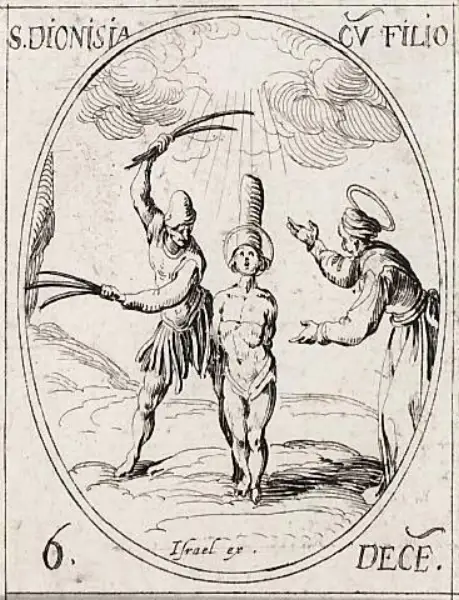
Aemilianus lived and died in the Vandal kingdom of Africa, the state the barbarian army of Gaiseric carved from the Roman provinces after the fall of Carthage in 439. The Vandals were Arian Christians, holding a doctrine of the Son's created inferiority that the African Catholics, heirs of Cyprian and Augustine, could not accept; the result was a semi-tolerant, intermittently savage church-state conflict that lasted the kingdom's whole life. Under Huneric, who succeeded in 477, the conflict turned to open persecution: Catholic bishops were exiled or killed, churches handed to Arian clergy, and lay professionals, physicians among them, found their licenses and lives tied to conformity. Aemilianus was such a physician, a confessor of the Catholic faith in a profession that brought him into every house of his city. The sources do not record his see or his family; what they record is the collision, when the demand for conversion to Arianism was laid before him, and his refusal, and the penalty that followed. The depiction that survives shows him among the martyrs of that generation, the company of Dionysia, Dativa, Leontia, Majoricus and Servus, who died in the same storm.
§ Introduction
Martyrdom
The instrument of Aemilianus's death was flaying alive, a punishment whose cruelty the ancient world understood as a statement: the victim's body, taken whole from him by inches, was made the emblem of what the state thought of his confession. He was not alone; the persecution of 484, the year of his death, was Huneric's final answer to the Catholic church's refusal to dissolve, and it produced a harvest of martyrs that the African church counted with grief and pride. Victor of Vita, who wrote his History of the Vandal Persecution within a decade of these events, is the authority behind the memory of the whole generation; the Roman Martyrology, in the editions descending from Baronius, keeps Aemilianus on 6 December, and the Byzantine calendars on the 7th, the doubled date being the ordinary sign of a cult transmitted through both Latin and Greek channels. That a physician, whose life was the healing of bodies, should be remembered chiefly by the manner of the destruction of his own, is one of the hard ironies the martyrologies carry without comment.
§ Introduction
Legacy
Aemilianus stands in the sanctorale for a persecution that is too little remembered: the Arian persecution of Catholic Africa, in which the church of Augustine and Cyprian was crushed between a heretical state and, a century later, the Islamic conquest that ended African Christianity altogether. His memory, with that of the whole Vandal-era company, kept alive in the West the knowledge that heresy, when married to power, could persecute as fiercely as paganism ever had; the medieval doctors of the church cited the African Arian martyrs in their own controversies with temporal rulers. Bzovius, in his Nomenclator of saints by profession, lists Aemilianus among the physicians, and he has remained a patron's name for that profession, which gives his martyrdom a particular edge: the healer refused the therapeutic state's condition of conscience. For the modern church in North Africa, which persists in tiny communities on the old heartland, he is one of the ancestors in whose blood the African church was planted.
§ Introduction
The Record
- Patron of
- Physicians·Those tortured for the faith·North African Christians
- Symbols
- Physician's instruments·Flayed skin (martyrdom)·Palm of martyrdom
- Canonization
- Pre-congregation (ancient cult; recorded in the Roman Martyrology)
Prayer
Bibliography
Show 5 sources
- ↑ Greenhill, William Alexander (1867). "Aemilianus (4)" . In Smith, William (ed.). Dictionary of Greek and Roman Biography and Mythology . Vol. 1. Boston. p. 30. {{ cite book }} : CS1 maint: location missing publisher ( link )
- ↑ Englebert, Omer (1994). The Lives of the Saints . Barnes & Noble Publishing. p. 465. ISBN 1-56619-516-0 .
- ↑ Martyrol. Rom. ed. Baron.
- ↑ Victor Vitensis , De Persecut. Vandal , v. 1, with Ruinart's notes, Paris. 8vo. 1694
- ↑ Bzovius , Nomenclator Sanctorum Professione Medicorum
Profile text adapted from the Wikipedia article, licensed CC BY-SA 4.0.
Pray with this saint every day
Save St. Aemilianus to your favorites, read the full profile, and get feast-day reminders in the Saints app.
Get the Saints AppFree on the App Store for iPhone and iPad