
1197/1198-1253·Feast November 16
St. Agnes of Assisi
Co-foundress of the Poor Clares, Abbess
Overview
Agnes of Assisi — Caterina Offreducia by birth, in 1197 or 1198 — belonged to the first company of Poor Clares and was Clare's younger sister. A daughter of the nobleman Count Favorino Scifi, she spent her childhood between her father's house in Assisi and his castle of Sasso Rosso on Mount Subasio, alongside her mother Ortolana and her sisters Clare and Beatrice. It was on 18 March 1212 that Clare slipped away from home to follow Francis of Assisi; sixteen days later Agnes ran off to the church of St. Angelo di Panzo to share her sister's life of poverty and penance. Her father sent her uncle Monaldo with eleven armed relatives to drag her back and marry her off; struck and kicked, she became miraculously so heavy the men could not lift her, and Monaldo's sword-arm withered at the moment he drew it. Named Agnes — for the lamb, agnus — at her profession, she joined Clare at San Damiano, where the Order of Poor Ladies began. In 1221 she was chosen to lead the new community of Monticelli near Florence, and went on to found houses at Verona, Padua, Venice and Mantua. In 1253 she returned to Assisi to nurse the dying Clare, and died herself on 16 November, three months later.
The Complete Life
Early Life
Caterina Offreducia was born in 1197 or 1198 into the minor nobility of Assisi: her father was Count Favorino Scifi, her mother Ortolana, a woman of piety who would herself join the sisters at San Damiano. The household moved between the town house in Assisi and the castle of Sasso Rosso on Mount Subasio. She and Clare and Beatrice grew up in the years when Francis of Assisi was converting the town's young nobility; when Clare left her father's home in secret on 18 March 1212, sixteen days were enough for the younger sister to make her own decision.
§ Life
The Flight and the Miracle of Immovability
Agnes ran off to the church of St. Angelo di Panzo, where Francis had brought Clare, resolved to share the life of poverty and penance. Her father, angry at losing a second daughter, sent her uncle Monaldo with eleven relatives and armed followers to bring her home and wed her. On her refusal they set upon her, beating and kicking her as they tried to haul her out of the church — whereupon her body turned so heavy that no one among them could raise it from the ground. When Monaldo drew his sword, his arm at that instant dropped to his side, withered and useless. The relatives, realizing that something divine protected her, let her remain. She was given the name Agnes at her profession, reflecting the Latin agnus, lamb.
§ Life
Abbess of Monticelli and the Northern Foundations
It was Francis who settled Clare and Agnes in an enclosed convent at the rural chapel of San Damiano, and as further noblewomen came the Order of Poor Ladies — the future Poor Clares — took shape there, under Clare as abbess. In 1221, when Benedictine nuns at Monticelli near Florence asked to become Poor Ladies, Agnes was chosen, though still young, to head the new community. As abbess she was deeply loving, kind and intelligent, with a gift for making virtue's practice appealing to those under her; the Florentine house stayed harmonious and free of faction. Yet the separation from her sister weighed heavily — a surviving letter to Clare, written from Florence, speaks of the anguish of body and soul it brought her — and she is reported to have worn a hair shirt from her teenage years to enter more deeply into Christ's suffering. Out of Tuscany she went on to plant houses of the order in Verona, Padua, Venice and Mantua, becoming one of the first women to serve as a Poor Clare abbess over several communities.
§ Life
Final Years
In 1253 Agnes came back to Assisi to care for Clare through her final illness. Clare died in August; Agnes followed her on 16 November 1253, three months later — a death that reads as the closing of a shared life. Her remains were interred with her sister's at the Basilica of St. Clare in Assisi, where both lie.
§ Life
Canonization
Agnes was canonized in 1753, five hundred years after her death, by Pope Benedict XIV — the great canonizing pope also responsible for her sister's formal canonization process. Her feast is kept on 16 November, the anniversary of her death, and her major shrine is the Basilica of St. Clare.
§ Introduction
Legacy
Agnes's historical importance is as the organizer of the second generation of the Poor Clares: while Clare held San Damiano through its forty years of struggle over the Privilege of Poverty, Agnes carried the form of life to Tuscany and the Veneto, founding and ruling the houses that made the order a reality beyond Umbria. Among the earliest women to become a Poor Clare and to rule as abbess in community after community, she gave the order its shape and offered both a model and a place for the many women who came after her.
§ Life
Timeline
- 1197
Born Caterina Offreducia at Assisi, daughter of Count Favorino Scifi and Ortolana
§ Life
- 1212
Sixteen days after Clare's secret departure on 18 March, runs away to join her at St. Angelo di Panzo
§ Life
- 1212
The attack of Monaldo and the armed kinsmen; her body grows immovable; takes the name Agnes
§ Life
- 1212
Francis establishes Clare and Agnes at San Damiano; the Poor Ladies begin
§ Life
- 1221
Chosen abbess of the new foundation of Monticelli near Florence
§ Life
- 1253
Returns to Assisi to nurse Clare, who dies in August
§ Life
- 16 Nov 1253
Dies at Assisi; her remains are interred beside Clare's at the Basilica of St. Clare
§ Introduction
- 1753
Canonized by Pope Benedict XIV, five hundred years after her death
§ Introduction
The Record
- Major works
- Founded branches of the Poor Clares at Verona, Padua, Venice and Mantua·A letter to St. Clare from Florence survives
- Symbols
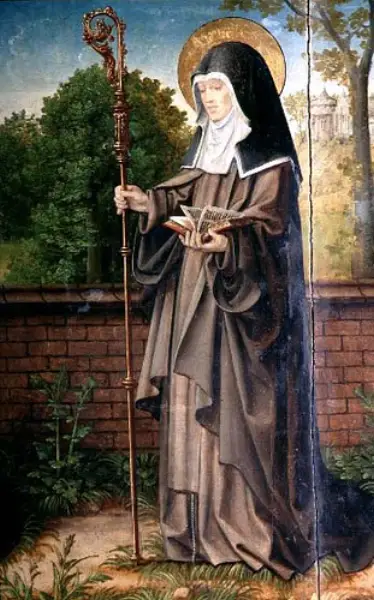
- Poor Clare nun holding a book·Lamb (her name)
- Canonization
- Canonized in 1753 by Pope Benedict XIV
Prayer
Bibliography
Show 5 sources
- 1 2 "},"date":{"wt":""},"website":{"wt":"EWTN"},"publisher":{"wt":""},"access-date":{"wt":"July 22, 2025"},"quote":{"wt":""}},"i":0}}]}' id="mwgg"/> "St Agnes of Assisi was a Lamb with the heart of a Lion" . EWTN . Retrieved July 22, 2025 .
- 1 2 3 "},"date":{"wt":""},"website":{"wt":"Franciscans"},"publisher":{"wt":""},"access-date":{"wt":"July 22, 2025"},"quote":{"wt":""}},"i":0}}]}' id="mwkA"/> "St Agnes of Assisi (1197-1253)" . Franciscans . Retrieved July 22, 2025 .
- 1 2 3 "},"date":{"wt":""},"website":{"wt":"Franciscan Media"},"publisher":{"wt":""},"access-date":{"wt":"July 22, 2025"},"quote":{"wt":""}},"i":0}}]}' id="mwng"/> "Saint Agnes of Assisi" . Franciscan Media . Retrieved July 22, 2025 .
- 1 2 "},"date":{"wt":""},"website":{"wt":"Roman Catholic Saints"},"publisher":{"wt":""},"access-date":{"wt":"July 22, 2025"},"quote":{"wt":""}},"i":0}}]}' id="mwqg"/> "Saint Agnes of Assisi" . Roman Catholic Saints . Retrieved July 22, 2025
- ↑ "},"date":{"wt":""},"website":{"wt":"Catholic.org"},"publisher":{"wt":""},"access-date":{"wt":"July 22, 2025"},"quote":{"wt":""}},"i":0}}]}' id="mwtA"/> "St Agnes of Assisi" . Catholic.org . Retrieved July 22, 2025 .
Profile text adapted from the Wikipedia article, licensed CC BY-SA 4.0.
Pray with this saint every day
Save St. Agnes of Assisi to your favorites, read the full profile, and get feast-day reminders in the Saints app.
Get the Saints AppFree on the App Store for iPhone and iPad