
1864-1894·Feast November 13
St. Agostina Livia Pietrantoni
Religious Sister, Nurse and Martyr
Overview
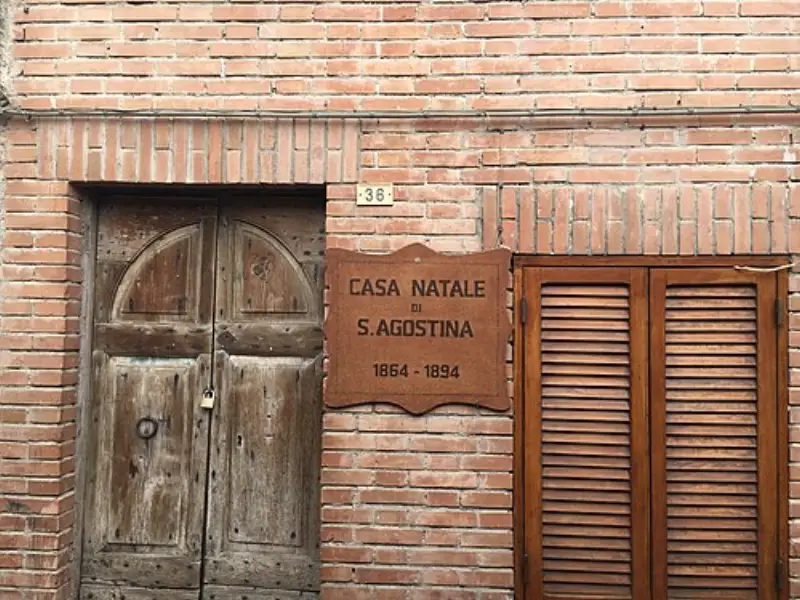
Livia Pietrantoni, born on 27 March 1864 at Pozzaglia Sabina near Rieti, second of eleven children of poor farmers, became a Sister of Divine Charity and died a martyr at her nursing post in Rome. After First Communion in 1868 and Confirmation in 1876 she worked at manual labor on road construction and in the olive harvests of Tivoli, refusing offers of marriage despite her mother's insistence. In January 1886 she traveled to Rome with her priest uncle Matteo to seek consecrated life; the congregation first declined her, but she persisted and was accepted, joining the house in Via Santa Maria in Cosmedin on 23 March 1886 and taking the name Agostina at her clothing on 13 August 1887. That same day she was sent to Santo Spirito Hospital as a nurse, where she stayed until her death. She contracted tuberculosis in the ward, recovered, and returned to tend its patients. A male patient, Giuseppe Romanelli, harassed her and sent death threats; on the morning of 13 November 1894 he stabbed her to death in a dark corridor, and she forgave him as she died. John Paul II canonized her in 1999.
The Complete Life
A Farmer's Daughter
Born at Pozzaglia Sabina, some fifty kilometres north-east of Rome, on 27 March 1864, Livia Pietrantoni was the second of eleven children of Francesco Pietrantoni and Caterina Costantini, poor farmers. She made her First Communion in 1868 and was confirmed in 1876. From the age of seven she shared in the family's hard economy: she began paid work in 1871 at manual labor on road construction, and from 1876 went with other adolescent seasonal workers to Tivoli for the winter olive harvests. Her mother pressed marriage offers on her and she refused them all, a decision that cost her something in a household that needed the match. In January 1886, at twenty-one, she traveled to Rome with her priest uncle Matteo, aiming to enter consecrated life. The Sisters of Divine Charity declined her first letter of admission, but she persisted and was accepted a few months later, entering the house in the Via Santa Maria in Cosmedin on 23 March 1886 and taking the name Agostina at her clothing on 13 August 1887.
§ Life
Nurse of Santo Spirito
On 13 August 1887, the very day of her clothing, Sister Agostina received her assignment to Rome's Santo Spirito Hospital as a nurse, and there she stayed until her death seven years later. Her assignment was the tuberculosis ward, among the most dangerous and disheartening posts in the hospital, and she contracted the disease herself, recovered, and was sent back to the same ward in 1889 to tend its patients, an obedience she accepted without protest. The work exposed her to more than infection. Once she was set upon and beaten for having wrested a knife away from a patient — an episode that alarmed the other sisters, though Agostina insisted she was well and would continue. Her ministry was of the most physical kind, feeding, washing and sitting with the dying, and it was this daily fidelity, rather than anything visionary or extraordinary, that her congregation and the Church later held up as the substance of her holiness.
§ Life
Murder and Forgiveness
The patient Giuseppe Romanelli began to harass her as her duties brought her near him, and the harassment grew into outright threats on her life. When evening came on 12 November 1894, the frightened sisters begged her to take some time away, and she refused. The next morning, 13 November 1894, Romanelli attacked her in a dark corridor, stabbing her in the shoulder, the left arm, the jugular and finally the chest. She forgave her killer in the moments before she died of her wounds, her last words being a cry to her Lady. Professor Achille Ballori — who had earlier warned her about Romanelli — examined her body and judged that Sister Agostina had let herself be slaughtered like a lamb, observing that neither her nerves nor her heart had contracted. Her funeral brought the streets of Rome to a standstill, with thousands kneeling as the casket went by, and the Messaggero of 16 November wrote that never had a more impressive spectacle been seen in Rome.
§ Life
Canonization
Her cause moved on a modern timetable. Theologians gave their approval to her spiritual writings on 28 May 1941; the beatification cause opened on 14 December 1945 under Pius XII; venerable status came from Paul VI on 19 September 1968, and he beatified her in Saint Peter's Square on 12 November 1972, the eve of the anniversary of her death. A miracle attributed to her intercession went before the Congregation for the Causes of Saints, which investigated and validated it on 19 March 1996; the medical board gave its assent on 17 April 1997 and the panel of theologians on 7 October 1997; John Paul II approved it on 6 April 1998 and canonized her on 18 April 1999. In 2003 the Italian Episcopal Conference declared her patron saint of nurses in Italy. Her remains, moved to the generalate in 1941, were translated to her hometown of Pozzaglia Sabina on 14 November 2004. Her feast is kept on 13 November, the day of her death, in parishes and hospitals across Italy.
§ Beatification process
Legacy
Agostina Pietrantoni's legacy is the sanctification of work that the world considers low: she was a nurse in a tuberculosis ward, and the Church canonized her for exactly that, without any adjustment of the record into something more dramatic. Her death, murdered by a patient she had served and warned about, fixed in Catholic memory the image of a woman who would not leave her post and who forgave at the point of death, joining the small company of modern martyrs of charity. For the nursing profession in Italy she is the official patron, and hospitals, nursing schools and chaplaincies carry her name. Her story is also a sober record of workplace violence against women religious, which her biographers have not softened, and the serenity of her end, attested by the physician's observation of her body, has made her a favorite subject of those who write on the grace of final perseverance.
§ Introduction
Timeline
- 27 Mar 1864
Born at Pozzaglia Sabina, second of eleven children of the poor farmers Francesco Pietrantoni and Caterina Costantini
§ Life
- 1868
Makes her First Communion
§ Life
- 1871
Begins manual labor on road construction
§ Life
- 1876
Confirmed, then leaves for the winter olive harvests at Tivoli with other adolescent seasonal workers
§ Life
- Jan 1886
Travels to Rome with her priest uncle Matteo to pursue entry into consecrated life
§ Life
- 23 Mar 1886
Enters the Sisters of Divine Charity at the house of Via Santa Maria in Cosmedin in Rome
§ Life
- 13 Aug 1887
Receives the name Agostina at her clothing ceremony and is sent the same day to nurse at Santo Spirito Hospital
§ Life
- 1889
After recovering from tuberculosis, is sent back to the disease's ward to tend its patients
§ Life
- 13 Nov 1894
Stabbed to death in a corridor by the patient Giuseppe Romanelli, forgiving him moments before she dies
§ Life
- 3 Feb 1941
Her remains are moved to the congregation's generalate
§ Life
- 14 Dec 1945
Her beatification process opens under Pope Pius XII
§ Beatification process
- 19 Sep 1968
Pope Paul VI declares her venerable
§ Beatification process
- 12 Nov 1972
Beatified by Pope Paul VI in Saint Peter's Square
§ Beatification process
- 6 Apr 1998
Pope John Paul II approves the miracle worked through her intercession
§ Beatification process
- 18 Apr 1999
Canonized by Pope John Paul II in Saint Peter's Square
§ Introduction
- 20 May 2003
Declared patron saint of nurses in Italy by the Italian Episcopal Conference
§ Beatification process
- 14 Nov 2004
Her remains are translated to her hometown of Pozzaglia Sabina following her canonization
§ Life
In Their Own Words
Mother of mine: help me!
The Record
- Patron of
- Nurses (patron saint of nurses in Italy, declared 2003)·Hospital workers·Murder victims (by tradition)
- Symbols
- Nurse's habit·Palm of martyrdom·Tuberculosis ward
- Canonization
- Beatified 12 November 1972 by Pope Paul VI; canonized 18 April 1999 by Pope John Paul II
Prayer
Bibliography
Show 5 sources
- 1 2 3 "Saint Agostina Petrantoni" . Saints SQPN. 10 November 2015 . Retrieved 30 October 2016 .
- 1 2 3 4 "Agostina Livia Pietrantoni (1864-1894)" . Vatican News Services . Retrieved 30 October 2016 .
- 1 2 3 4 "Saint Agostina Pietrantoni: life" . Sisters of Charity of Saint Jeanne-Antide Thouret . Retrieved 30 October 2016 .
- ↑ Index ac status causarum beatificationis servorum dei et canonizationis beatorum (in Latin). Typis polyglottis vaticanis. January 1953. p. 16.
- ↑ Škrobonja, Ante; Pavlović, Eduard; Zubović, Šime (2003). "Tragic fate of the sister of charity Agostina Pietrantoni - Inspiration for announce of one more possible patronesse of nurses" . Acta medico-historica Adriatica . 1 (2): 189– 201.
Profile text adapted from the Wikipedia article, licensed CC BY-SA 4.0.
Pray with this saint every day
Save St. Agostina Livia Pietrantoni to your favorites, read the full profile, and get feast-day reminders in the Saints app.
Get the Saints AppFree on the App Store for iPhone and iPad