
c. 260 – c. 335·Feast January 19 (also kept January 13)
St. Agricius of Trier
First Documented Bishop of Trier
Overview
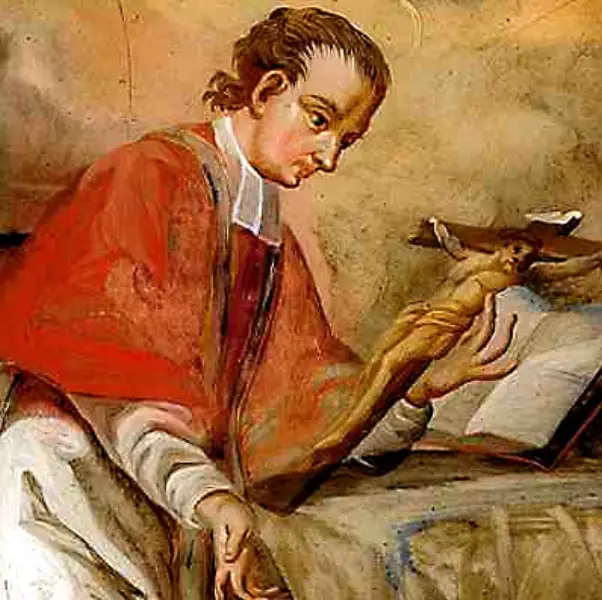
Agricius, also written Agritius, born about 260 and dying about 335, was the first clearly authenticated bishop of Trier, the oldest episcopal see in Germany. Under Diocletian's reorganization the city, Augusta Treverorum, was the capital of Belgica Prima, chief city of Gaul and frequent residence of emperors, and the Christian community there was old enough that a bishop probably existed by the third century. Agricius is the first whose documentation is secure: he attended the Council of Arles in 314 and signed its acts immediately after the presiding bishop, a placement that attests Trier's fourth-century primatial standing among the churches of Gaul and Germany — a primacy his successor Maximin would reinforce. An eleventh-century tradition makes him a priest of Antioch, born in Syria, translated to Trier by Pope Sylvester I at the request of the empress Helena, deriving from Altmann's dubious Vita Helenae of about 850. Medieval tradition assigned to his time the building of Trier's first cathedral over Helena's palace, and credited him with receiving from her the Holy Robe, the seamless garment of Christ, along with the Nail from the True Cross and the remains of the apostle Matthias. Athanasius, exiled to Trier in 335 or 336, testifies to the numbers of faithful and churches he found there.
The Complete Life
Trier in the Age of Constantine
Agricius governed the church of the city the Romans called Augusta Treverorum, modern Trier on the Moselle, at the moment of its greatest imperial splendor. After Diocletian's reorganization it was the capital of the province Belgica Prima and the chief city of Gaul, and from Constantius Chlorus onward it served repeatedly as an imperial residence; the palace, the basilica, and the Porta Nigra that tourists walk today are the architecture of Agricius's world. Christians were in the city by the second century, and the probability is that a bishopric existed there from the third, which would make Trier's see the oldest in Germany. Of Agricius's own origin the tradition says he was born about 260 in Syria, and an eleventh-century account makes him a priest of Antioch moved to Trier by Pope Sylvester I at the empress Helena's request; the claim descends from Altmann's Vita Helenae of about 850, which scholars regard as dubious, and it serves the medieval see's ambition more than the fourth century's record. What is certain begins in 314.
§ History
Arles, the Cathedral, and the Relics
At the Council of Arles in 314, convened to settle the Donatist controversy and to regulate the church of the new Constantinian age, Agricius subscribed the acts directly after the bishop who presided over the gathering, a place in the signature lists that signaled rank; Trier, in other words, was asserting a primatial claim over Gaul and Germany already, one that Saint Maximin, his successor, would go on to reinforce. Medieval tradition dated to Agricius's time the construction of Trier's first cathedral, raised, it was said, over the palace the empress Helena gave for the purpose, excavations under the present building having in fact revealed substantial early structures beneath the choir. The same tradition credited him with receiving from Helena the Holy Robe, the seamless tunic of Christ for which the soldiers cast lots, along with the Nail from the True Cross and the remains of the apostle Matthias, the three great relic-treasures that made Trier a goal of medieval pilgrimage. The gift of the robe, like the Vita Helenae it depends on, cannot be verified; the association of all three relics with Agricius stands as the see's memory of a bishop under whom its treasures arrived.
§ History
The Testimony of Athanasius
The last firm date of Agricius's episcopate is also its finest witness. In 335 or 336 the exiled Athanasius of Alexandria, banished by Constantine after the council of Tyre, was sent to Trier, where he spent two years under the bishop's protection; his writings speak of the great numbers of the faithful he found in the city and of the churches then in the course of building, an incidental but contemporary confirmation that the church of Trier in Agricius's last years was numerous, active, and constructing. The presence of Athanasius in the see is worth weighing: to shelter the empire's most celebrated confessor of the Nicene faith was a decision with consequences, and it aligned Trier, permanently, with the orthodox party whose cause Athanasius embodied. Agricius died about 335, the traditional year of his death, and was succeeded by Maximin, under whom the see's standing continued to grow. The diocesan tradition counts him among its founding line with Maternus before him and Maximin after.
§ History
Cult
Agricius's cult belongs entirely to the local and regional sanctorale. He is venerated in the Roman Catholic Church and the Eastern Orthodox Church, and his patronage is the Diocese of Trier itself; his feast stands in the calendars at 19 January, with 13 January also appearing in older lists. The see that claims him as its first documented bishop has kept his memory structurally, in the line of its bishops recited in its litanies, and materially, in the cathedral that preserves the fabric of the church his age first raised. The Diocese of Oslo's brief life of him, followed by several popular compilations, dates him approximately 260 to 329 or 335, the uncertainty being honest. The nineteenth-century Catholic Encyclopedia articles on Trier and on Agricius himself, by Lins and Grey, remain the standard summary of what can be said, and both are careful to separate the documented career from the legendary.
§ Notes
Legacy
Agricius's historical importance is out of proportion to the thinness of his record. As the first authenticated bishop of the oldest see in Germany, he anchors the whole episcopal genealogy of the German church; as the signer at Arles who stood second in the lists, he witnesses the earliest assertion of Trier's primatial claim, the claim that produced, in the Middle Ages, the great quarrel with Mainz that other saints of this region embody; and as the host of Athanasius, he attached his city to the defense of Nicaea at the moment the council's fate was most in doubt. The legendary accretions around him, the Syrian origin, Helena's palace, the Holy Robe, are themselves historical evidence, of the ambitions and self-understanding of the medieval church of Trier, which built its identity on this fourth-century bishop. The robe he is said to have received remains in Trier, exhibited at long intervals to crowds of pilgrims, as the city's most treasured relic.
§ History
Timeline
- 260
Born about this year in Syria; an eleventh-century tradition makes him a priest of Antioch
§ History
- 314
Attends the Council of Arles, signing the acts immediately after the presiding bishop
§ Background
- 327
Listed as Bishop of Trier from this year until his death
§ History
- 335
Athanasius arrives in exile at Trier, or in 336, and finds a numerous faithful and churches being built
§ History
- 335
Dies after about twenty years labouring for the conversion of Gaul and western Germany; succeeded by Maximin
§ History
The Record
- Patron of
- The Diocese of Trier·Bishops
- Symbols
- Bishop's vestments·The Holy Robe of Trier·Cathedral
- Canonization
- Pre-congregation (ancient cult in the Diocese of Trier)
Prayer
Bibliography
Show 6 sources
- 1 2 3 Monks of Ramsgate. "Agritius". Book of Saints , 1921. CatholicSaints.Info. 13 May 2012 This article incorporates text from this source, which is in the public domain .
- 1 2 3 "The Holy Agricius of Trier (~ 260-329)", Roman Catholic Diocese of Oslo
- ↑ Lins, Joseph. "Trier." The Catholic Encyclopedia . Vol. 15. New York: Robert Appleton Company, 1912. 20 Mar. 2015
- 1 2 Drijvers, Jan Willem. Helena Augusta , Brill, 1992 ISBN 9789004094352
- 1 2 Grey, Francis. "St. Agricius." The Catholic Encyclopedia. Vol. 1. New York: Robert Appleton Company, 1907. 4 Aug. 2014
- ↑ " "The Holy Robe, Symbol of the Church's Indivisible Unity", News.VA, Vatican City, April 14, 2012" . Archived from the original on August 17, 2016 . Retrieved August 4, 2014 .
Profile text adapted from the Wikipedia article, licensed CC BY-SA 4.0.
Pray with this saint every day
Save St. Agricius of Trier to your favorites, read the full profile, and get feast-day reminders in the Saints app.
Get the Saints AppFree on the App Store for iPhone and iPad