
c. 630-c. 700·Feast September 2
St. Agricola of Avignon
Bishop of Avignon
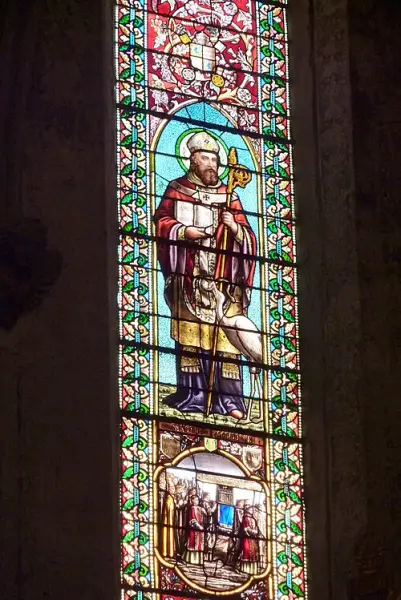
Overview
Agricola — Agricol, Agricolus — son of Saint Magnus, bishop of Avignon, was himself bishop of that city from 660 to about 700. He received the monastic habit at Lerins abbey at the age of sixteen; at thirty his father called him to Avignon and made him coadjutor; and when Magnus died in 660, Agricola took over the bishopric. In the city he erected a church served by monks from Lerins, tying his see to the monastic ideal he had absorbed on their island, and he likewise founded a convent of Benedictine nuns. As a preacher he enjoyed renown, celebrated for his charity and for defending the poor and the sick against the civil authorities — among the first bishops to use his office in advocacy on behalf of the weak against the powerful. His death came naturally, and Saint Veredemus succeeded him. A charter of 919 records his burial in the church of Saint-Pierre at Avignon; the abbey of Saint-Agricol arose over his memory, its church made collegiate by Pope John XXII in 1321, and his cult grew strong in the fourteenth and fifteenth centuries. In art he appears with a stork, recalling the fifteenth-century story in which his blessing drove off an invasion of storks — the source of his patronage of these birds, and of Avignon's invocation of him against plague and misfortune.
The Complete Life
Early Life
Agricola was born around 630, the son of Magnus, bishop of Avignon — a father already a saint in the calendar, so that the see of Avignon passed, in effect, through a family of holiness. At sixteen the boy was professed a monk at the abbey of Lerins, the island monastery off Cannes that trained so many of the Gallic episcopate in the seventh century. The Lerins formation — scripture, asceticism, and the conviction that a bishop should be a monk in spirit — stayed with him. At thirty his father summoned him home and made him coadjutor of Avignon, and on Magnus's death in 660 he succeeded to the full office.
§ Introduction
Bishop, Builder, Preacher
His episcopate joined together the three qualities that made a good Merovingian bishop. He built: within the city, a church served by monks of Lerins — monastic clergy filling a cathedral role — together with a convent of Benedictine nuns. He preached: he was a well-known preacher, in a Provence where the pulpit was the mass medium. And he defended: he was famous for his charity and for his defense of the poor and sick against the civil authorities, the judicial magnates of the seventh century, whose exactions on the weak were the ordinary abuse of the age. He died of natural causes — a quiet ending for a combative pastor — and was succeeded by Saint Veredemus.
§ Life
Cult
A charter of 919 mentions his burial in the church of Saint-Pierre in Avignon. At the end of the eleventh century Bishop Arbert of Avignon made a donation referring to the abbey of Saint-Agricol, and the church of Saint-Agricol, seemingly built in the twelfth century, was made collegiate in 1321 by Pope John XXII, an Avignon pope, who endowed it with a statute and revenues and probably moved Agricola's relics from Saint-Pierre on that occasion; they remain in the church today. His cult increased in the fourteenth and fifteenth centuries with Avignon's rise. In 1647 Archbishop Cesar Argelli declared him patron saint of the city.
§ Veneration
Legacy
Fifteenth-century documents tell how Agricola's blessing held off an invasion of storks — from this came his emblem and his patronage of the birds, surely the most ornithological patronage in the calendar. The faithful prayed to this saint, whose name means 'cultivator of fields,' asking him for good weather, fine harvests and rain in drought, and for protection against plague and every kind of misfortune. Name, emblem and petitions joined in the peasant Christianity of Provence, and his church in Avignon keeps the whole assemblage still.
§ Introduction
Timeline
- 660
Summoned by his father Magnus as coadjutor of Avignon, he succeeds him as bishop on Magnus's death
§ Life
- 700
Dies of natural causes after building a Lérins-staffed church and a Benedictine convent; succeeded by St. Veredemus
§ Life
- 919
A charter records that he was buried in the church of Saint-Pierre at Avignon
§ Veneration
- 1321
Pope John XXII makes the church of Saint-Agricol collegiate, probably transferring his relics there from Saint-Pierre
§ Veneration
- 1647
Archbishop César Argelli names him patron saint of the city of Avignon
§ Veneration
The Record
- Major works
- Built a church in Avignon staffed by the monks of Lerins·Built a convent for Benedictine nuns
- Patron of
- Avignon (from 1647)·Storks·Invoked against bubonic plague and misfortune; for good weather, harvests and rain
- Symbols
- Stork·Bishop's crozier
- Canonization
- Pre-congregation; declared patron saint of the city of Avignon in 1647
Prayer
Bibliography
Show 2 sources
Profile text adapted from the Wikipedia article, licensed CC BY-SA 4.0.
Pray with this saint every day
Save St. Agricola of Avignon to your favorites, read the full profile, and get feast-day reminders in the Saints app.
Get the Saints AppFree on the App Store for iPhone and iPad