
died 26 January 1109·Feast January 26
St. Alberic of Cîteaux
Cistercian Monk and Second Abbot of Cîteaux
Overview
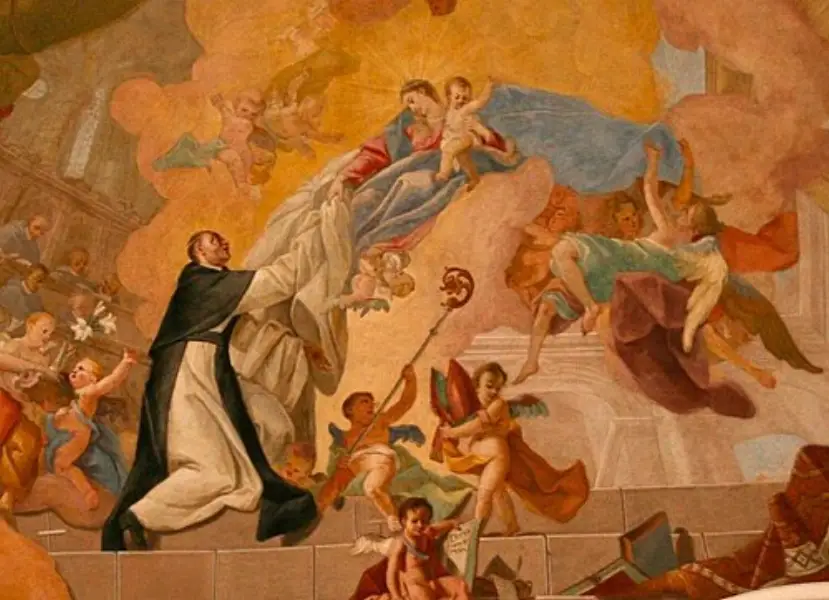
Alberic of Cîteaux, sometimes called Aubrey, was a French monk and abbot numbered among the founders of the Cistercian Order. His religious life began as a hermit in the forest of Collan, one of six hermits who invited Abbot Robert of Molesme to found a new monastery under the Rule of St Benedict; Robert led them to Molesme in 1075 and served as abbot with Alberic as prior. As Molesme's fame brought gifts and wealth, laxer recruits followed, the community divided, and the strict party around Robert and Alberic was resisted — during one of Robert's absences the brothers even imprisoned Alberic to have their way. Robert was twice ordered back by the pope; finally the stricter group left Molesme for the wilderness of Cîteaux. Robert was the first abbot there, with Alberic prior; when Urban II permitted Robert to return to Molesme in 1100, Alberic became abbot of Cîteaux. He secured the new foundation's legal existence through Pope Paschal II's bull Desiderium quod (around 1100), moved the buildings a kilometre north and began the first abbey church, consecrated within six years, and introduced the white Cistercian cowl — given, the legend says, by the Virgin Mary to the monks at vigils. He established lay brothers to handle manual labour so the choir monks could keep the full Office, and died on 26 January 1109.
The Complete Life
Hermit of Collan
Alberic's life before Molesme is the life of a hermit in the forest of Collan in Burgundy. He was one of a group of six hermits who, seeking a life under rule rather than their own wills, invited Abbot Robert of Molesme — already famous as a monastic founder — to begin a new monastery with them. Robert brought them into the forest of Molesme, where in 1075 he established the settlement that grew into Molesme Abbey, with himself as first abbot and Alberic as prior: the second office in the house, and in practice the officer responsible for the day-to-day discipline of the monks. The arrangement was made in the first age of the Gregorian reform, when the burning question of monastic life was whether Benedict's Rule as written — its poverty, its manual labour, its austerity — could actually be lived, or whether the great Cluniac houses with their wealth and liturgical splendour represented the best the age could manage. Alberic spent his first decades at Molesme on the strict side of that argument.
§ Life
The Quarrel at Molesme
Molesme's fame grew, gifts followed the fame, and the wealth drew in new monks whose observance was laxer. The community divided against itself. The stricter party stood with Robert and Alberic; the majority opposed them, wanting the easier life the endowments made possible. Twice Robert abandoned the monastery for the life of a hermit, and each time the pope ordered him back. On one such absence the brothers imprisoned Alberic, their own prior, so that they might get their way. The conflict could not be resolved inside the house, and the resolution was separation: the strict group obtained permission to leave Molesme, and in 1098 they went into the marshy wilderness at Cîteaux and founded the New Monastery. It was a schism in the literal sense, a splitting away, and everything the Cistercian Order later became — the largest monastic enterprise of the Middle Ages, with hundreds of daughter houses across Europe — began as a quarrel about observance that cost its founders their home.
§ Life
Abbot of Cîteaux
At Cîteaux Robert was first abbot and Alberic his prior, until the monks of Molesme petitioned Pope Urban II to let Robert come back to them, vowing obedience to the Rule. In 1100 Robert left, and Alberic became abbot of the New Monastery. His decade in office fixed the order's institutional shape. He obtained its legal foundation from Pope Paschal II in the bull Desiderium quod, around 1100 — the charter that made Cîteaux a reality in law and not merely an unauthorized secession. He decided to move the monastery's buildings a kilometre north and began construction of the first abbey church, which was consecrated less than six years later. He introduced the white cowl that became the emblem of the Cistercians — given to the monks, the legend says, by the Virgin Mary while the community kept the vigils in choir. And, to observe the rule of the Divine Office by day and night, he and his monks associated lay brothers with the community, conversi to be chiefly occupied with the manual labour and material affairs of the house — the innovation that let Cistercian monasteries combine strict choir discipline with the exploitation of the wilderness lands they were given.
§ Life
Cult
Alberic died on 26 January 1109, still abbot, and was buried at Cîteaux among his brethren. His cult, like that of the other founders, is pre-congregational: the Cistercian Order honoured its three founders together — Robert of Molesme, Alberic, and Stephen Harding, the Englishman who succeeded him and gave the order its Carta Caritatis — and their common feast is kept on 26 January. In art Alberic's attribute is the white cowl, from the legend of the Virgin's gift. He is in some ways the least visible of the three: Robert had the fame of a famous abbot and Stephen the fame of a legislator, while Alberic was the man who held the infant community together through its first institutional decade, secured its legal existence, built its first stone church, and clothed it in the habit that gave it its name. Without him there was no order for the others to be famous in; that is his monument.
§ Life
Timeline
- 1075
Abbot Robert established Molesme Abbey with the hermits, and Alberic served as its prior
§ Life
- 1100
Robert returned to Molesme at the pope's bidding, and Alberic became abbot of Cîteaux
§ Life
- 1100
Pope Paschal II granted the young order legal standing through the bull Desiderium quod
§ Life
- 26 Jan 1109
Died at the abbey of Cîteaux in the Duchy of Burgundy
§ Introduction
The Record
- Patron of
- Cistercian Order (co-founder)
- Symbols
- White Cistercian cowl (given, by legend, by the Virgin Mary)
- Canonization
- Pre-congregation; feast kept with Robert of Molesme and Stephen Harding
Prayer
Bibliography
Show 3 sources
- 1 2 3 Gildas, Marie. "Cistercians." The Catholic Encyclopedia Vol. 3. New York: Robert Appleton Company, 1908. 21 January 2020 This article incorporates text from this source, which is in the public domain .
- ↑ Monks of Ramsgate. "Alberic". Book of Saints , 1921. CatholicSaints.Info. 15 May 2012 This article incorporates text from this source, which is in the public domain .
- ↑ "Solemnity of the Founders of Citeaux", New Melleray Abbey
Profile text adapted from the Wikipedia article, licensed CC BY-SA 4.0.
Pray with this saint every day
Save St. Alberic of Cîteaux to your favorites, read the full profile, and get feast-day reminders in the Saints app.
Get the Saints AppFree on the App Store for iPhone and iPad