
1901-1952·Feast August 18
St. Alberto Hurtado
Jesuit Priest, Apostle of Social Justice
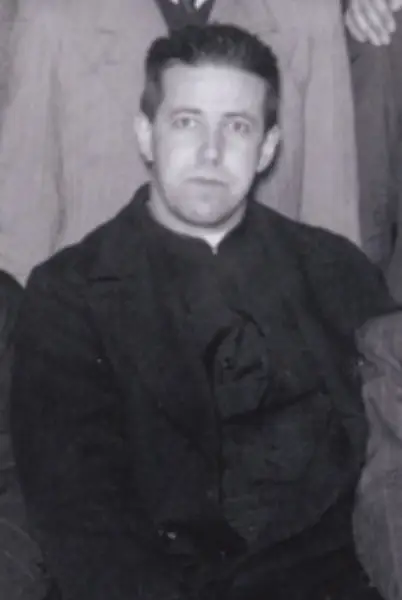
Overview
Luis Alberto Hurtado Cruchaga was born at Viña del Mar in 1901 into an aristocratic family whose fortunes collapsed when his father died and a fraudster cheated his widowed mother out of the estate. Raised among relatives in Santiago and educated on scholarship by the Jesuits, he knew insecurity from the inside. He took a law degree at the Catholic University of Chile, writing his thesis on labour law, then entered the Jesuit novitiate in 1923. Studies carried him to Argentina, Spain, and finally Louvain, where he was ordained in 1933 and earned a doctorate in pedagogy and psychology. Returning home in 1936 he taught, directed Catholic Action, and unsettled comfortable Catholics with his 1941 book Is Chile a Catholic Country?, which documented how thinly priests covered the working class and the countryside. His response to the poverty he saw was concrete: in 1944 he founded Hogar de Cristo, a network of shelters for children without homes, and patrolled Santiago's streets at night in a green pickup truck. He built Christian trade unionism, launched the journal Mensaje in 1951, and died of pancreatic cancer on 18 August 1952, mourned by the whole nation.
The Complete Life
Early Life
Luis Alberto Hurtado Cruchaga was born at Viña del Mar on 22 January 1901 into a family of aristocratic, Basque-descended stock whose standing could not survive misfortune. His father died when the boy was four; his mother, left with two small sons, sold the large estate and was cheated by the buyer, and the reduced household spent the following years moving among relatives. Poverty of that kind is usually hidden in Chile, and Hurtado learned early what it meant to be a guest in other people's houses. A scholarship carried him to the Jesuits' Colegio San Ignacio in Santiago between 1909 and 1917, and while still a student he gave his Saturdays to a parish school in a poor district of the city, shelving books and running errands in a world very different from his classrooms. He went on to the Pontificia Universidad Católica de Chile, interrupted his law studies for compulsory military service, and took his degree in August 1923 with a thesis written on labour law — an early signal of where his attention would settle.
§ Early life and education
Conversion and Vocation
The year he qualified as a lawyer, Hurtado entered the Jesuit novitiate, closing the door on a comfortable professional career. His formation was peripatetic in the way Jesuit training then was: humanities at Córdoba in Argentina from 1925, philosophy and theology at Barcelona from 1927, and, when the Jesuits were suppressed in Spain in 1931, a removal to Louvain in Belgium to finish theology. He was ordained there on 24 August 1933 and proceeded to a doctorate in pedagogy and psychology in 1935. Before sailing home he toured social and educational works in Germany, France, Belgium and the Netherlands, deliberately studying how European Catholics had answered industrial poverty. He reached Chile in January 1936 and took up teaching — religion at his old school, pedagogy at the Catholic University — and direction of the Sodality of Our Lady, through which he set students to teaching catechism in the poor quarters of Santiago.
§ Early life and education
Mission and Ministry
Hurtado's ministry had two fronts, the classroom and the street, and he refused to let either excuse the other. The year 1940 brought his appointment as diocesan director of the Catholic Action youth movement; between 1941 and 1944 he served it at the national level. In 1941 he published the book that made him unpopular in drawing-room Catholicism, ¿Es Chile un país católico?, an unsparing statistical audit built on a 1939 survey of Chilean religious practice: one priest for ten thousand laypeople across huge rural parishes, nearly half the clergy foreign missionaries riding circuits of towns, and regular Mass attendance at only nine percent of women and three and a half percent of men. Conservative Catholics accused him of communism. His answer to the poverty he had documented was institutional. In 1944 he founded the Hogar de Cristo, a shelter movement on the model of Boys Town that took in any child in need of food and a bed, abandoned or not; the shelters multiplied across Chile, and from 1945 through 1951 upwards of 850,000 children obtained some measure of help from the work. He turned to the labour question in 1947, creating the Chilean Trade Union Association in order to form leaders and root Christian values in the unions, and 1951 saw the launch of the periodical Mensaje, which kept the Church's social teaching before Chilean opinion. In his last years he also served as confessor to the Falange Nacional.
§ Social apostolate
Spirituality and Teaching
The engine of all this was a spirituality of finding Christ in the poor that Hurtado taught as plainly as he lived it. Grateful for the help his own reduced family had received in their worst years, he held that faith which does not become action is not yet faith, and he pressed the point in retreats, sermons and a steady stream of writing on labour questions read through the lens of Catholic doctrine — Social Humanism (1947), Trade Unions (1950) and The Christian Social Order (1947). His psychological training went into the care of souls, and an Ignatian habit of discernment into his organizing. He was impatient with almsgiving that cost nothing and with a piety that never left the church; the test of devotion, he insisted, was what it did for the person sleeping in the street. His own strength he spent as freely as his money, buying a green pickup truck in 1946 and driving the streets of Santiago at night to reach whoever needed help before morning.
§ Labor movement and social doctrine of the church
Trial and Final Years
The year 1952 brought a sudden onset of severe pain; taken at once to hospital, Hurtado learned that he had pancreatic cancer — then essentially a death sentence. He accepted the news without drama, and the Chilean press reported his condition day after day, so that the whole country followed the last weeks of the dying priest. By the time death came he was a national hero, celebrated well outside the church he had so often embarrassed. He died in Santiago on 18 August 1952, fifty-one years old. His memorable green pickup truck, parked outside the shelters, became the emblem of everything he had built, and the crowds at his funeral forced Chile to admit what his life had been arguing all along.
§ Introduction
Canonization
His cause moved with unusual speed by the standards of the time. John Paul II beatified him on 16 October 1994, and Benedict XVI canonized him in Rome on 23 October 2005 — one of the first saints of that pontificate, and Chile's second. The liturgical memorial of Saint Alberto Hurtado is kept on 18 August, the day of his death, and his shrine in Santiago remains a centre of pilgrimage. He is invoked as patron of Chile, of the poor, of street children and of social workers — a patronage his life had already filled with content before the Church formalized it.
§ Introduction
Legacy
The Hogar de Cristo survived its founder and grew into one of the largest charitable organizations in Chile, still housing and feeding the people he considered Christ. The Chilean Trade Union Association and the periodical Mensaje carry parts of his social program, and his question — whether a country may be called Catholic while its workers are abandoned — has not aged. For the Chilean church he is the point where Catholic social teaching stopped being a document and became a pickup truck in the night, and his canonization confirmed what Santiago had decided at his funeral. Jesuit formation programs across Latin America cite him as a model of the social apostolate, and 'Padre Hurtado' remains, unusually for a modern public figure, a name invoked across the Chilean political spectrum.
§ Introduction
Timeline
- 22 Jan 1901
Born at Viña del Mar into an aristocratic family
§ Introduction
- 1909
Began at the Jesuit school of St. Ignacio in Santiago on a scholarship
§ Early life and education
- 1918
Entered the law school of the Pontificia Universidad Católica de Chile
§ Early life and education
- 1923
Earned his law degree and entered the Jesuit novitiate
§ Early life and education
- 1925
Went to Córdoba, Argentina, to study humanities
§ Early life and education
- 1927
Sent to Barcelona to study philosophy and theology
§ Early life and education
- 1931
After the suppression of the Jesuits in Spain, continued theology at Louvain
§ Early life and education
- 24 Aug 1933
Ordained a priest at Louvain, Belgium
§ Early life and education
- 1935
Obtained a doctorate in pedagogy and psychology
§ Early life and education
- Jan 1936
Returned to Chile to teach religion and pedagogy, and that year published 'The Priesthood Crisis in Chile'
§ Educator
- 1940
Named diocesan head of the Catholic Action youth movement
§ Social apostolate
- 1941
Published 'Is Chile a Catholic Country?', drawing accusations of communism from conservatives
§ Social apostolate
- 1944
Founded Hogar de Cristo, shelters taking in children in need of food and shelter
§ Social apostolate
- 1947
Founded the Chilean Trade Union Association to train leaders in Christian values
§ Labor movement and social doctrine of the church
- 1951
Founded the periodical Mensaje to spread the church's social teaching
§ Labor movement and social doctrine of the church
- 18 Aug 1952
Died of pancreatic cancer in Santiago after a brief illness
§ Death
- 16 Oct 1994
Beatified by Pope John Paul II
§ Veneration
- 23 Oct 2005
Canonized by Pope Benedict XVI, becoming Chile's second saint
§ Veneration
In Their Own Words
I hold that every poor man, every vagrant, every beggar is Christ carrying his cross.
I am happy, Lord, happy.
Being Catholics is equivalent to being social.
The Record
- Major works
- Is Chile a Catholic Country? (¿Es Chile un país católico?, 1941)·Social Humanism (Humanismo social, 1947)·The Christian Social Order (El orden social cristiano, 1947)·Trade Unions (Sindicalismo, 1950)
- Patron of
- Chile·The poor·Street children·Social workers
- Symbols
- Jesuit cassock·The green pickup truck of his night rounds
- Canonization
- Beatified by Pope John Paul II on 16 October 1994; canonized by Pope Benedict XVI on 23 October 2005 — Chile's second saint
Prayer
Bibliography
Show 12 sources
- 1 2 3 "Alberto Hurtado Cruchaga (1901–1952) – Biography" . www.vatican.va . Retrieved 2018-08-22 .
- ↑ "Why more U.S. Catholics should know about St. Alberto Hurtado, S.J." America Magazine . 2019-08-16 . Retrieved 2020-08-19 .
- ↑ Hurtado, S.J., Alberto, "Cartas E Informes del Padre Alberto Hurtado, S.J.," Santiago: Ediciones Universidad Catolica de Chile, 2005, pp. 13–29.
- 1 2 3 Gertrude M. Yeager. In the Absence of Priests: Young Women as Apostles to the Poor, Chile 1922–1932. The Americas, Vol. 64, No. 2 (October 2007), pp. 207–242
- 1 2 3 "Living Space Saint Alberto Hurtado | Sacred Space" . livingspace.sacredspace.ie . Retrieved 2018-08-22 .
- ↑ "A Saint For Our Times", The British Jesuits Archived 2008-08-28 at the Wayback Machine
- 1 2 3 "St. Alberto Hurtado, SJ (1901–1952)" . Ignatian Spirituality . Retrieved 2018-08-22 .
- ↑ "Christ Stumbles through Our Streets" , Ignatian Spirituality
- ↑ Baldwin, Lou. "St. Joe’s Prep raises its cup – for charity", Catholic Philly , May 26, 2016
- ↑ "Gertrude M. Yeager 1932. pp. 207–242
- ↑ "Premio de Periodismo 'Alberto Hurtado Cruchaga' " [ 'Alberto Hurtado Cruchaga' Journalism Award ] (in Spanish). Press Club of Chile. 7 October 2006. Archived from the original on 6 January 2018 . Retrieved 5 January 2018 .
- ↑ "Minera Los Pelambres recibe premio 'Alberto Hurtado Cruchaga' " [ Minera Los Pelambres Receives 'Alberto Hurtado Cruchaga' Award ] . Revista Agua (in Spanish). 30 October 2007. Archived from the original on 6 January 2018 . Retrieved 5 J
Profile text adapted from the Wikipedia article, licensed CC BY-SA 4.0.
Pray with this saint every day
Save St. Alberto Hurtado to your favorites, read the full profile, and get feast-day reminders in the Saints app.
Get the Saints AppFree on the App Store for iPhone and iPad