
c. 244-337·Feast August 30 (Orthodox); August 28 (Catholic)
St. Alexander of Constantinople
Bishop of Byzantium and First Bishop of Constantinople
Overview
Alexander of Constantinople, born around 244 according to tradition, governed Byzantium as bishop from 314 and, when the city was refounded under its new name, became the first bishop of Constantinople in 330, in the midst of his episcopate. Elected first as vicar to assist the aged Metrophanes, he succeeded him at about seventy-three and served for roughly twenty-three years. Scholars consider much of the surviving information about him legendary, including the Synaxarion's tale of a Calabrian boyhood, visions and twenty-day fasts. What is solid is his part in the Arian controversy: he attended the Council of Nicaea in 325, opposed the Arians at Constantinople, and lived to see the emperor Constantine, whose city it now was, receive baptism. Gregory Nazianzus and Epiphanius praised him and Theodoret called him an apostolic bishop. He died in 337 at about ninety-six, leaving the throne to Paul I, and is honoured on 30 August in the Orthodox Church and 28 August in the Catholic.
The Complete Life
Origin and Early Life
The Synaxarion makes Alexander a Calabrian, son of George and Vryaine, given to God from childhood and raised in a monastery, where visions and a fast of twenty days marked him out; it adds four years of nakedness, thousands of hardships from Saracen attacks, and long wanderings through Greece with disciples named Vitalius and Nicephorus. Plainly this is romance, and scholars regard most of the available information about him as legendary, the eastern habit of supplying apostolic biography to early bishops. What can be said historically is modest: he was already old when he came to the throne of Byzantium. Chosen as vicar to assist the aged Metrophanes, he succeeded him in 314 at about seventy-three years of age, after what must have been a long life of service in or around the church of the Bosphorus, then a suffragan see of Heraclea, notable mainly for its position on the road between Europe and Asia.
Episcopate and the Arian Controversy
Alexander's twenty-three years as bishop fell across the greatest transformation the city ever knew. He was bishop of Byzantium when Constantine chose it for his new capital, and from 330 he was bishop of Constantinople, first holder of a title that would become the second patriarchate of Christendom. While he held the see he debated pagan philosophers and contended against heresies, and when the Arian controversy broke he stood with the orthodox: Gelasius of Cyzicus reports that Metrophanes, alive but too ill to travel, sent Alexander to the Council of Nicaea in 325 as his destined successor. Thereafter Constantinople itself, full of court intrigue, became an Arian battleground; Arius had come to the city to press his cause, and the famous legend of 336 has Alexander praying that the heresiarch might be removed rather than the Church forced to receive him — a prayer answered, so the story runs, by Arius' sudden and inglorious death. The tale is legend, but it fixed Alexander in memory as the bishop whose faith outlasted the heresy.
Final Years and Death
Alexander lived into his mid-nineties, dying in 337, the year of Constantine himself. He had governed through pagan revival, civil war, the council and the refounding of his see's city, and he ended as the respected head of a church now destined for imperial rank. Praise came from the greatest names of the next generation: Gregory Nazianzen spoke of him highly, Epiphanius of Salamis wrote of him with admiration, and Theodoret called him an apostolic bishop — an epithet suggesting that his virtues and administrative ability were remembered as the foundation of the Constantinopolitan throne. On his death Paul I succeeded him, and the succession itself became the next round of the Arian fight, with Paul exiled and restored repeatedly by emperors who had not Alexander's instincts. His relics were honoured among the patriarchs of the Great Church.
Cult
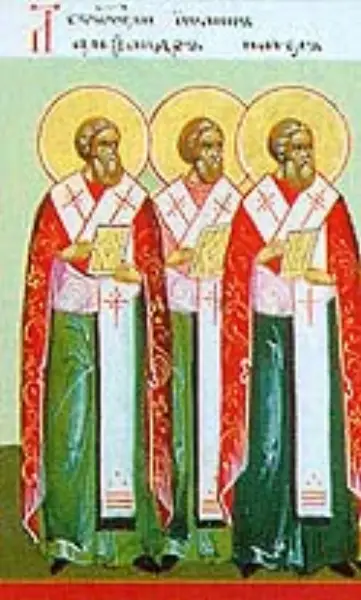
Alexander received no formal canonization, belonging to the centuries before such processes existed; his cult rests on the continuous memory of the church of Constantinople, which counted him among its first confessors of the faith. The Eastern Orthodox Church keeps his feast on 30 August, in company with the other early patriarchs of the city, and the Catholic Church honours him on 28 August. Icons show him among the patriarchs, including the famous image with John Chrysostom's predecessors. His historical shadow is thin but his symbolic weight is great: every patriarch of Constantinople since, whether in the Great Church or in exile at the Phanar, stands in a line that begins with Metrophanes' elderly vicar, the man who was bishop of Byzantium and became, by imperial decree, the first bishop of Constantinople.
Legacy
For historians Alexander is a warning and a promise: a bishop about whom romance grew almost immediately, yet whose real service can still be traced in the acts of Nicaea and the succession lists of Byzantium. For the churches he is a confessor of the Arian age, the eastern contemporary of Alexander of Alexandria and Hosius of Cordoba, who kept the Nicene faith at the court that was still making up its mind. His extreme age at accession — about seventy-three — made his pontificate a bridge rather than a reign, and the bridge held: from him to Paul I to the long line through Chrysostom to the present ecumenical patriarch. Modern students meet him chiefly through the synaxarion notices and the polemics of Gelasius, and are reminded that the greatest sees are built on the plain fidelity of old men whom legend later clothed in marvels.
Timeline
- 244
Born in Calabria, Italy, to parents George and Vryaine, according to the Synaxarion tradition
§ Introduction
- 314
Succeeds Metrophanes as bishop of Byzantium at the age of seventy-three
§ Origin and early life
- 325
Represents the aged Metrophanes at the First Council of Nicaea, where Arius and his teachings are condemned
§ Origin and early life
- 330
Becomes first bishop of Constantinople when the renamed city is elevated during his episcopacy
§ Introduction
- 337
Dies in Constantinople aged about ninety-six, having nominated his vicar Paul as successor
§ Death
- 1771
A liturgical service in his honour is printed in Venice
§ Death
The Record
- Patron of
- Constantinople/Istanbul
- Symbols
- Bishop's vestments·Icon with Patriarchs John and Paul IV
- Canonization
- Pre-congregation; venerated in Eastern Orthodoxy and the Catholic Church
Prayer
Profile text adapted from the Wikipedia article, licensed CC BY-SA 4.0.
Pray with this saint every day
Save St. Alexander of Constantinople to your favorites, read the full profile, and get feast-day reminders in the Saints app.
Get the Saints AppFree on the App Store for iPhone and iPad