
1853-1909·Feast May 7
St. Alexis Toth
Confessor and Defender of Orthodoxy in America
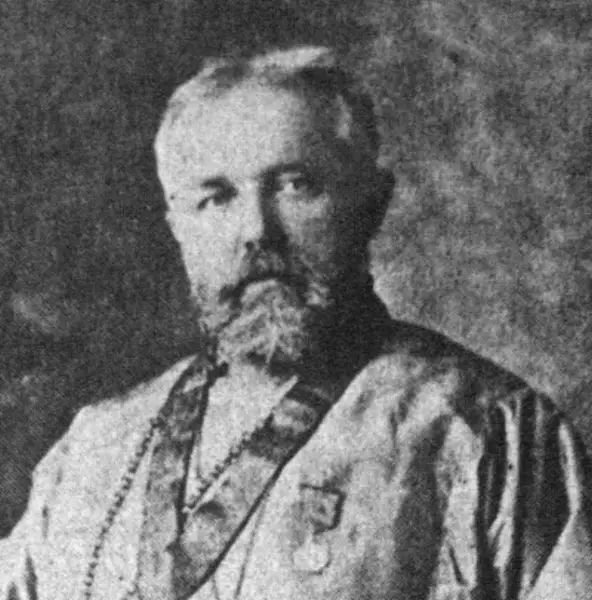
Overview
Alexis Georgievich Toth, also Alexis of Wilkes-Barre, born on 14 March 1853 at Kobylnice near Presov in the Kingdom of Hungary, was a Ruthenian Greek Catholic priest who became a Russian Orthodox missionary in the United States and the architect of the great return of Eastern Catholics to Orthodoxy. A Rusyn of the Carpathian highlands, he studied in Latin and Greek Catholic seminaries and at Charles University in Prague, married Rosalie Mihalics in 1878, and was ordained that year; widowed soon after, he served parishes, became diocesan chancellor, and taught at the Greek Catholic seminary of Presov. In 1889 he arrived in Minneapolis to serve St. Mary's Greek Catholic Church, restored its finances without drawing a salary, and then suffered the meeting that changed American church history: Archbishop John Ireland of St. Paul, hostile to ethnic parishes and unmoved by the rights of Eastern Catholics, threw Toth's credentials on the table, denied that he or his bishop were truly Catholic, and forbade his clergy to have dealings with him. Finding no support from Europe, Toth led his parish, and eventually some twenty thousand Ruthenian Catholics, into the Russian Orthodox Church.
The Complete Life
Early Life
Alexis Toth was born on 14 March 1853 to George and Cecilia Toth (Tovt) in the village of Kobylnice near Presov, in Saros County of the Kingdom of Hungary — the Carpathian homeland of the Rusyns, an Eastern Christian people in communion with Rome since the Union of Uzhhorod. His schooling followed his church's double life: a year in a Latin Catholic seminary, three in a Greek Catholic one, then theology at Charles University in Prague. He married Rosalie Mihalics on 12 March 1878 and was ordained by Bishop Nicholas Toth of Presov. His wife and child died a few years later; the widowed priest served parishes, worked as diocesan chancellor, and taught at and directed the Greek Catholic seminary of Presov.
§ Early life
Minneapolis
In 1889 the Ruthenian Catholic Church in the United States petitioned for Toth as their priest. He arrived on 15 November and was serving at St. Mary's Greek Catholic Church in Minneapolis by the 27th. The church, he discovered, was barely furnished and sunk in debt, and he set about restoring it, eventually bringing the parish to fiscal stability — while never drawing a salary. It was an unpromising mission made good by ordinary competence; the extraordinary was to follow, and from outside.
§ Early life
The Rejection by Bishop Ireland
As an Eastern Catholic, Toth paid the customary visit to the local Latin-rite bishop — there being no Eastern Catholic bishop in America. The ordinary, John Ireland of Saint Paul and Minneapolis, was an aggressive Americanizer, hostile to the ethnic parishes Toth served. By Toth's account, Ireland threw his credentials on the table, protested his presence in the city, and declared that in his view neither Toth nor his bishop was truly Catholic — flatly contradicting the Union of Uzhhorod and the papal decrees. Ireland then ordered his parishes and priests to have nothing to do with the Ruthenian priest. Toth's letters to his own bishop in Hungary reportedly went unanswered; he concluded that he and the other Eastern Catholic priests in America were to be recalled and their people absorbed into Latin congregations.
§ Conflict with Bishop John Ireland
Reception into Orthodoxy and Aftermath
Casting about, Toth and other similarly cornered priests wrote to the Russian consul at San Francisco that December of 1890, asking to be put in contact with a Russian Orthodox bishop. Letters and meetings with Bishop Vladimir Sokolovsky followed, culminating in Toth's formal entry into the Russian Orthodox Church in March 1892, parish by parish. The movement he led brought an estimated twenty thousand Eastern Catholics into Orthodoxy, contributing substantially to Orthodoxy's growth across the United States and, in time, to the formation of the Orthodox Church in America. He served for years at Holy Trinity Orthodox Cathedral and across the Ruthenian missions, and died on 7 May 1909 at Wilkes-Barre, Pennsylvania.
§ From Rome to Russian Orthodoxy
Glorification
The Orthodox Church in America glorified Alexis Toth in 1994. His relics rest at St. Tikhon's Monastery at South Canaan, Pennsylvania, and his feast is kept on 7 May. The glorification of a man whose sanctity was exercised in controversy and church transfer was itself a statement: the OCA counting him among its founders.
§ Introduction
Legacy
Toth's legacy is the American Orthodox landscape: the parishes he received, the pattern of Carpatho-Russian Orthodoxy from Minneapolis to Pennsylvania, and the long afterlife of the Ireland episode, which Catholic historians also count among the misjudgments that cost Rome the Ruthenians. He is remembered less as a controversialist than as a pastor who, refused at a chancery door, opened another — and brought a people through it.
§ Introduction
Timeline
- 14 Mar 1853
Born at Kobylnice near Prešov in the Kingdom of Hungary, son of George and Cecilia Toth
§ Early life
- 1878
Ordained to the priesthood by Nicholas Toth, the Greek Catholic Bishop of Prešov
§ Early life
- 12 Mar 1878
Married Rosalie Mihalics
§ Early life
- 15 Nov 1889
Arrived in the United States and was soon holding services at St. Mary's Greek Catholic Church in Minneapolis
§ Early life
- Dec 1890
Contacted the Russian consul in San Francisco seeking a Russian Orthodox bishop
§ From Rome to Russian Orthodoxy
- 1891
Began serving Holy Trinity Orthodox Cathedral in Wilkes-Barre, where he remained until 1895
§ From Rome to Russian Orthodoxy
- Mar 1892
Formally entered the Russian Orthodox Church with 361 fellow Eastern Catholics
§ From Rome to Russian Orthodoxy
- 7 May 1909
Died at Wilkes-Barre, Pennsylvania, honored with a shrine at St. Tikhon's Monastery
§ Death and glorification
- 29 May 1994
Glorified as Saint Alexis of Wilkes-Barre by the Orthodox Church in America
§ Death and glorification
The Record
- Patron of
- American Orthodox faithful·Ruthenians / Carpatho-Rusyns·Church musicians (his extensive choral work, by tradition)
- Symbols
- Priestly cross·St. Tikhon's Monastery shrine
- Canonization
- Glorified as a saint in 1994 by the Orthodox Church in America
Prayer
Bibliography
Show 1 sources
- ↑ Rusyn : Алексѣй Григорович Товт , romanized: Aleksy Hryhorovych Tovt ; Hungarian : Tóth Elek ; Russian : Алексей Георгиевич Товт , romanized : Aleksey Georgiyevich Tovt .
Profile text adapted from the Wikipedia article, licensed CC BY-SA 4.0.
Pray with this saint every day
Save St. Alexis Toth to your favorites, read the full profile, and get feast-day reminders in the Saints app.
Get the Saints AppFree on the App Store for iPhone and iPad