
c. 1003-1093·Feast September 30
St. Amatus of Nusco
First Bishop of Nusco
Overview
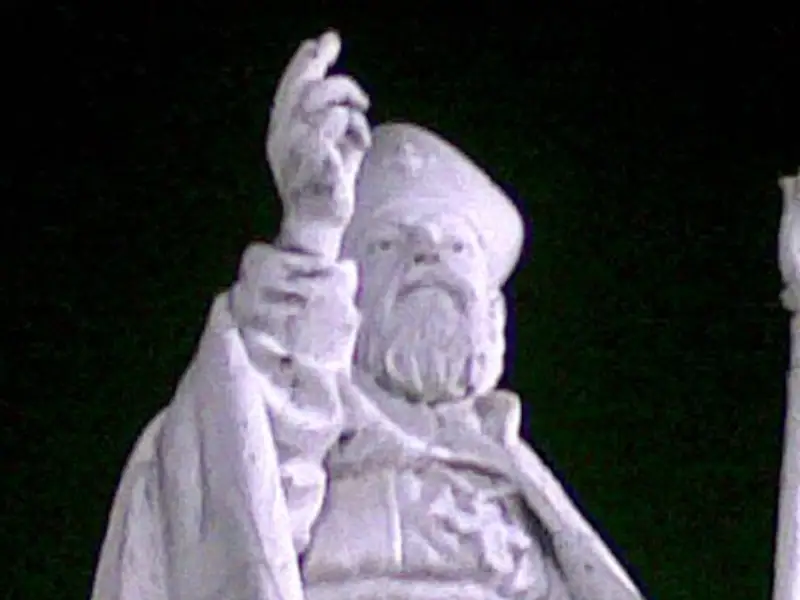
Amatus of Nusco, Italian Amato di Nusco, born around 1003, was the first bishop of Nusco in Irpinia, the mountainous interior of southern Italy. On the most probable telling, he came of noble stock and was born in the South; he gave away everything he owned to the poor, took holy orders as a priest, and then entered monastic life at the abbey of Montevergine, the community William of Vercelli had established. He probably died on 30 September 1093. Word of many miracles spread from his tomb, and a cultus grew until the Roman Catholic Church numbered him among its saints, honoring him in the Roman Martyrology on 30 September. At Montevergine the monks counted him a disciple of William, their founder, and so argued that he died on 30 September 1193 — a date a full century later than the year of 1093 most commonly accepted. Either way, he remains the apostle and patron of the little hill see he organized, remembered as a bishop who had first given everything away for the poor of the mountains.
The Complete Life
A Noble of the South
Amatus was born around the year 1003, most likely in or near Nusco itself, into what the tradition calls nobility — a word that in eleventh-century Irpinia covered the Lombard and Norman landholding families of the interior. His was the century in which the Hautevilles and their kin took southern Italy apart and rebuilt it as a Norman kingdom-in-waiting; the hill towns of Campania lived through it as through a long reorganization of everything — lordship, dioceses, monasteries. The sources' one firm claim about the young Amatus is the one hagiography most loves and biography least verifies: that he gave all his goods to the poor. In an age when wealth and sanctity were expected to meet in endowments, a bishop remembered chiefly for dispossession is making a point the medieval reader was meant to notice.
Priest, Monk, Bishop
The tradition gives Amatus the full sequence of vocations: priest, then monk at Montevergine, then bishop. The order matters. Montevergine, the abbey William of Vercelli raised on the mountain above Avellino, became in the twelfth century one of the spiritual engines of the Mezzogiorno, and Amatus's monastic profession there — before his elevation — meant that Nusco received as its first bishop a man formed in the new austerity rather than in the cathedral chapters. His see was small, poor, and inland, the kind of diocese that mattered little to chronicles and everything to its people. That he governed it without leaving a single documented act is not unusual for a first bishop of a minor see in the eleventh century; almost nothing survives from such churches, and the man was remembered by the town that kept his tomb.
Death at Nusco
Amatus probably died on 30 September 1093 — 'probably' being the operative word, since the entire chronology rests on late and thin sources. The monks of Montevergine, claiming him as a disciple of their founder William of Vercelli, argued for 30 September 1193 instead, a hundred years later; the claim served the abbey's glory and cost the chronology its clarity. Modern accounts generally follow the earlier date, which fits a birth around 1003 and an episcopate in mid-century. He was buried at Nusco, and the reports of miracles at the tomb began the process by which a local bishop became a local saint.
Cult
Amatus died, most probably, on 30 September 1093. Miracles in great number were reported where he was buried, and the cultus that gathered there grew strong enough for him to be numbered among the saints of the Roman Catholic Church, honored in the Roman Martyrology on 30 September. His body remained the centre of Nusco's devotion, and the town bears his memory in its principal church and its civic identity; Sant'Amato is still the town's festival. In 1921 the Book of Saints of the Ramsgate monks summarized his life in the few lines that remain the staple of every notice, and Italian sources such as Santiebeati add little beyond the local tradition. This profile is marked thin_source: no medieval Vita of Amatus is known, and the honest record is the bare outline given here.
Legacy
For the small church of Nusco, Amatus is the founder and patron: the bishop who chose poverty, served a mountain people and left a tomb that worked wonders. His cult is the social glue of the town to this day, and his name opens every history of the diocese. Within the wider story of southern Italian sanctity he stands with the hermit-bishops of the Norman age, men formed in the new austerity of Montevergine and William of Vercelli who carried that spirit into sees the old Lombard church had never organized. The dispute over his death year, 1093 or 1193, is itself part of his legacy, showing how a community's love can stretch a life to span its needs. He asks of the modern reader only what he asked of his first flock: simplicity, generosity to the poor, and trust in the God of the mountains.
Timeline
- 1003
Born around this year into a noble family of the Italian South
§ Introduction
- 30 Sep 1093
Probably dies at Nusco, where wonders at his tomb soon draw a growing cult
§ Introduction
- 30 Sep 1193
Montevergine's monks, claiming him as a disciple of William of Vercelli, argue this date for his death
§ Introduction
The Record
- Patron of
- Nusco, Avellino
- Symbols
- Bishop's vestments·Alms for the poor
- Canonization
- Pre-congregation; entered in the Roman Martyrology, celebrated 30 September
Prayer
Profile text adapted from the Wikipedia article, licensed CC BY-SA 4.0.
Pray with this saint every day
Save St. Amatus of Nusco to your favorites, read the full profile, and get feast-day reminders in the Saints app.
Get the Saints AppFree on the App Store for iPhone and iPad