
fl. 375 – d. c. 423·Feast October 23 (Diocese of Toul)
St. Amon of Toul
Second Recorded Bishop of Toul
Overview
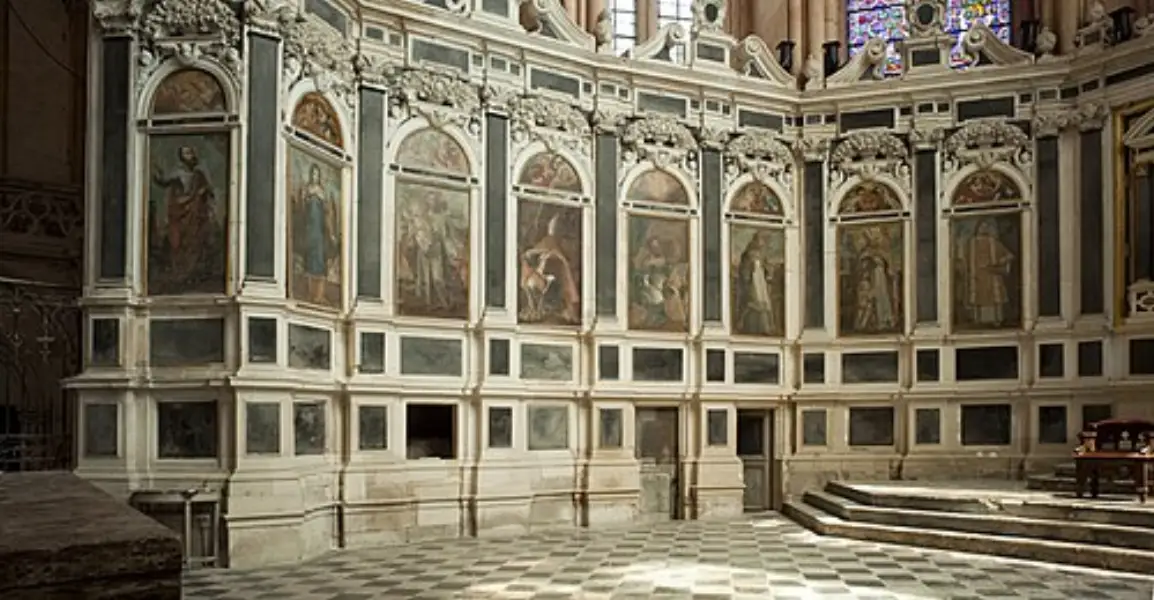
Amon of Toul, otherwise Aimo or Amand, was the second recorded bishop of Toul in Lorraine, the successor of Saint Mansuy, holding the see from around 375 to a death sometimes placed about 423 but possibly considerably earlier or later. Beyond his name and office little is now known of him, though legends gathered about the name. One tradition tells how, once Attila's Huns had been beaten at the Battle of Châlons in 451, he left Toul to get out of the path of their ravaging retreat, and how a rock by the way opened to shelter him from those who pursued him and closed again, the place, a rise overlooking the village of Goviller, still bearing the name Bois d'Amon, Amon's wood. The tradition gives him a penitential and retiring manner of life, with a cave in the Saintois forest, where he had built cells adjoining for his clergy, where a hermitage bearing his name stood at Saulxerotte, with a chapel he was said to have dedicated to the Virgin Mary and in which his relics were believed to rest. His successor in the see was Alchas. The Diocese of Toul keeps his feast on 23 October, and his painted likeness looks out from the apse of Toul Cathedral.
The Complete Life
The Second Bishop of Toul
Toul, on the Moselle below Nancy, was a bishopric from the fourth century, one of the Three Bishoprics of Lorraine, and its second recorded incumbent was Amon, called also Aimo and Amand in the sources, who succeeded Saint Mansuy, the apostle and first bishop of the city, around the year 375. The record of him is honestly thin: the ancient catalogues give the name and the succession, and the local tradition adds the rest. His death is placed around 423 by the usual reckoning, but the date could be considerably earlier or later, and the uncertainty is characteristic of the fifth-century Gaulish episcopacy, whose documentation survives only in fragments. What the church of Toul remembered about their second bishop was not deeds but a manner of life: he is believed to have lived penitentially, and to have retreated often from his cathedral city to a cave in the forest of the Saintois, south of Toul, where he had made adjoining cells for his priests, a monastic arrangement avant la lettre in the generation before Cassian.
§ Introduction
The Legend of the Rock
The best-known story of Amon belongs to the later legendary layer of his memory. When Attila, defeated at the Catalaunian plains in 451, withdrew eastward ravaging the country, Amon, says the tradition, left Toul to escape the devastating retreat, and on the road a rock opened to hide him from his pursuers and closed over him. Local people still point the place out: a small rise above the village of Goviller that bears the name Bois d'Amon, Amon's wood. The chronology is impossible for a bishop who died around 423, and the tale is a folkloric migration onto Amon's name; but legends of holy men hidden by stones are among the oldest the region tells, and the naming of a wood after him shows how deep the cult ran in the Saintois countryside. At Saulxerotte the tradition located a hermitage bearing his name, with the chapel he himself was said to have dedicated to the Virgin Mary, and his relics were believed to have been buried there; no trace of the building now remains, though the hamlet of Saint-Amon kept the name into the nineteenth century.
§ Biography
Veneration
Amon's feast is kept in the Diocese of Toul on 23 October, and his portrait, with those of Toul's other bishops, looks down from the apse of Toul Cathedral, the city's long episcopal genealogy painted in one procession. The material remains attributed to him were recorded in 1836 at the collegiate church of Saint Gengoult in Toul, where several parts of clothing and a hair-shirt of Saint Amon were reported, packed together with numerous bones inside an aged wooden box in the high altar's tomb, a description whose very candor about the jumble suggests what medieval relic-collections actually looked like. The students of the Lorraine tradition, from the Pouillié of 1711 to Durival and the Abbé Grosse, transmit the outlines given above. Amon stands in the sanctorale for what most of the early Gallic bishops stand: a name in a catalogue, a penitential memory, and a countryside that kept his name on its map for fifteen hundred years.
§ References
Timeline
- 375
Succeeds Saint Mansuy as the second recorded bishop of Toul, holding the see from around this year
§ Biography
- 423
Year sometimes given for his death, though it may have fallen considerably earlier or later; Alchas succeeds him
§ Biography
- 451
Tradition places his flight from Toul during Attila's retreat after the Battle of Châlons, hidden by an opening rock at Goviller
§ Biography
- 1836
Relics of his clothing and hair-shirt reported at the collegiate church of St Gengoult in Toul
§ Veneration
The Record
- Patron of
- The Diocese of Toul·Those who flee from war
- Symbols
- Bishop's vestments·The Bois d'Amon (Amon's wood)·Cave hermitage
- Canonization
- Pre-congregation (ancient cult in the Diocese of Toul)
Prayer
Bibliography
Show 7 sources
- 1 2 Pouillié ecclésiastique et civil du diocèse de Toul (TOME I, page 368; Benoît de Toul, 1711)
- ↑ Étude sur la relique de Saint-Amon à Saulxerotte (Bulletin paroissial de Favières-Saulxerotte, by Alphonse Dedenon, 1908) [ page needed ]
- 1 2 Mémoire sur la Lorraine et le Barrois. Suivi de la table alphabétique et topographique des lieux ( Nicolas Luton Durival , by Henry Thomas, 1753). [ page needed ]
- 1 2 Dictionnaire statistique du Département de la Meurthe contenant une introduction historique sur le pays, avec une notice sur chacune de ses villes, bourgs, villages, hameaux, censes rivières, ruisseaux, étangs et montagnes (TOME I, page
- 1 2 Katolsk.no: Amon av Toul
- ↑ Nominis.cef.fr
- ↑ Le blog de Carpinien
Profile text adapted from the Wikipedia article, licensed CC BY-SA 4.0.
Pray with this saint every day
Save St. Amon of Toul to your favorites, read the full profile, and get feast-day reminders in the Saints app.
Get the Saints AppFree on the App Store for iPhone and iPad