
1887-1918·Feast September 4
St. Anastasia Hendrikova
Lady-in-Waiting and Martyr
Overview
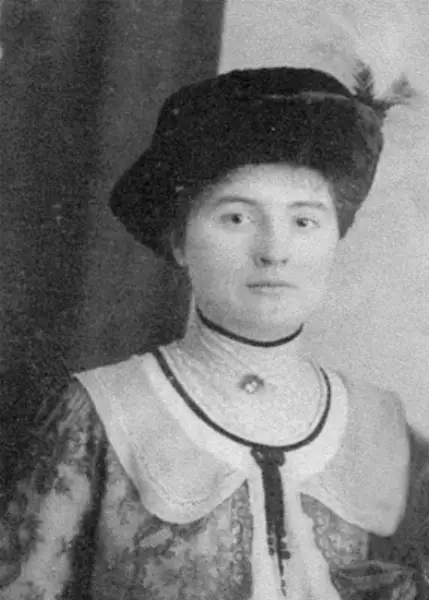
Countess Anastasia Vasilyevna Hendrikova (23 June 1887, Saint Petersburg) served Tsar Nicholas II and Tsarina Alexandra as a lady-in-waiting and died a martyr of the Russian revolution. Daughter of Count Vassili Alexandrovich Hendrikov, Grand Master of Ceremonies of the Imperial Court, and Princess Sophia Petrovna Gagarina, she received her appointment as lady of waiting in 1910 and became a kind of unofficial governess to the four young grand duchesses. Deeply attached to the imperial family, she went with them when they were exiled after the revolution — to Tobolsk and then Ekaterinburg — though her beloved sister was dying of tuberculosis and her own danger was clear; her fellow lady-in-waiting Baroness Buxhoeveden recalled that she had so dwelt upon her approaching death that it held no terrors for her. Cut off from the family at Ekaterinburg, she was imprisoned at Perm, and there, on 4 September 1918, she was taken from her cell with the tutor Catherine Schneider and others, marched into the woods on the Simbirsk road, and shot. She was canonized among the new martyrs by ROCOR in 1981.
The Complete Life
Early Life and Court
Anastasia's father was Count Vassili Alexandrovich Hendrikov, Grand Master of Ceremonies at the Imperial Court; her mother was the Princess Sophia Petrovna Gagarina, herself of the Russian nobility, whose family, the Hendrikovs, descended from the sister of Catherine I, wife of Peter the Great. Born on 23 June 1887 in Saint Petersburg, she grew up in the intimate outer circle of the court aristocracy. Named a lady of waiting in 1910, she served — in the phrase of the household — as a kind of unofficial governess to Olga, Tatiana, Maria, and Anastasia, the four grand duchesses and daughters of Nicholas and Alexandra. Her post was not ceremonial but domestic: she taught, accompanied, and cared, and the bond that resulted explains everything that followed in her life. The Hendrikovs' place among the empire's oldest court families made service to the sovereigns a hereditary habit; the young countess presented at court was doing, in her own person, what generations of her family had done.
§ Biography
Devotion and Exile
When the revolution of 1917 destroyed the world she had served, Hendrikova's choice was made instantly and without display. She went with the imperial family into exile — first to Tobolsk in Siberia, then to Ekaterinburg — although she feared for her own family. Her sister Alexandra Balashova — called Inotchka — lay ill with tuberculosis; in Baroness Sophie von Buxhoeveden's memoir the two sisters were everything to one another, and it was from Inotchka's sickbed that Nastenka had hurried back to Tsarskoe Selo when the revolution broke, to stand by the empress in her danger. News now seldom reached her. Buxhoeveden believed Hendrikova understood her peril completely, and had so dwelt upon her approaching death that it held no terror for her: though very pretty and younger-looking than her years, she welcomed death's approach, so sick of life had she grown and so far removed from earthly interests.
§ Exile and death
Perm and Death
At Ekaterinburg the Bolsheviks forcibly separated Hendrikova from the Romanov family and imprisoned her at Perm for some months. On 4 September 1918 she and the elderly tutor Catherine Schneider were fetched from their cell and brought to the prison office together with Aleksei Volkov, a valet of the Tsar's household aged about sixty, and eight other prisoners, under an escort of twenty-two guards. When Hendrikova asked where they were being taken, she was told to the central prison, and from there, the guard said, to Moscow; she repeated the conversation to her fellow prisoners and made a discreet sign of the cross with her fingers. The prisoners were formed into pairs and marched out to the town's edge and onto the Simbirsk road, past the prison they had been promised, into the woods. Volkov, who escaped and survived to testify, realized they were being taken to be shot; the women, who could not have known, went first in trust and then in terror. Hendrikova was shot outside Perm that autumn, a few weeks after the family she had followed.
§ Account of death
Canonization
Like the Romanovs and their servants killed on 17 July 1918, Hendrikova and Schneider were numbered among the martyrs canonized by the Russian Orthodox Church Outside Russia in 1981, in the great act honoring the new martyrs and confessors of Russia. The canonization of the servants alongside the sovereigns was deliberate: ROCOR's synod meant to honor not the throne but the faithfulness, the men and women who chose to stay with the imprisoned when staying meant death. The Moscow Patriarchate's own glorification of the new martyrs in 2000 included the imperial family; the servants of the household who died in the same weeks are honored in the same company of witnesses. The account of her last morning comes from Aleksei Volkov, the valet who broke from the line and escaped, the one witness the household had.
§ Introduction
Legacy
Anastasia Hendrikova's legacy is the memory of loyalty under pressure. In a century that filled the graves of Russia with people who had done nothing but remain with those they served, she stands among the named few whose choice is documented: the sister who left a dying sister, the courtier who followed a captive empress from palace to Siberian house to prison cell, and the woman whose friend saw her drifting away to higher planes before the woods outside Perm received her. Her icon is carried in the processions of the new martyrs, and her feast is kept on the day of her death, 4 September, beside Schneider's. Even her grave was taken from her: the burial the Whites made at Yegoshikha Cemetery in 1919 was destroyed when the Bolsheviks retook the city, and her memorial is kept in the calendar rather than on the ground.
§ Introduction
Timeline
- 23 Jun 1887
Born in Saint Petersburg, daughter of Count Vassili Alexandrovich Hendrikov and Princess Sophia Gagarina
§ Introduction
- 1910
Appointed a lady of waiting at the imperial court, serving as unofficial governess to the four grand duchesses
§ Biography
- 1917
After the Russian Revolution, follows the imperial family into exile at Tobolsk
§ Exile and death
- 1918
Goes on with them to Ekaterinburg, where the Bolsheviks forcibly separate her and imprison her at Perm
§ Exile and death
- 4 Sep 1918
Taken from her cell with Catherine Schneider and others and shot in the woods outside Perm
§ Account of death
- May 1919
Her body and Schneider's are recovered by the Whites and reburied in Yegoshikha Cemetery
§ Account of death
- 1981
Canonized as a martyr by the Russian Orthodox Church Outside Russia with the Romanov servants
§ Introduction
The Record
- Patron of
- Courtiers and those who serve faithfully·Victims of revolutionary violence
- Symbols
- Cross of the new martyrs of Russia
- Canonization
- Canonized as a martyr by the Russian Orthodox Church Outside Russia in 1981 (New Martyrs and Confessors of Russia)
Prayer
Bibliography
Show 7 sources
- ↑ King, Greg, and Wilson, Penny, The Fate of the Romanovs, John Wiley and Sons, Inc., 2003, p. 51
- ↑ Buxhoeveden, Baroness Sophie. " Left Behind: Fourteen Months In Siberia December 1917 – February 1919 " . alexanderpalace.org . Retrieved February 27, 2007 .
- ↑ King and Wilson, p. 144
- 1 2 3 4 Volkov, Alexei (1928). "Memories of Alexei Volkov" . alexanderpalace.org . Archived from the original on February 11, 2005 . Retrieved February 28, 2007 .
- ↑ King and Wilson, p. 504
- ↑ Rappaport, p. 377
- ↑ Genealogie ascendante jusqu'au quatrieme degre inclusivement de tous les Rois et Princes de maisons souveraines de l'Europe actuellement vivans [ Genealogy up to the fourth degree inclusive of all the Kings and Princes of sovereign houses
Profile text adapted from the Wikipedia article, licensed CC BY-SA 4.0.
Pray with this saint every day
Save St. Anastasia Hendrikova to your favorites, read the full profile, and get feast-day reminders in the Saints app.
Get the Saints AppFree on the App Store for iPhone and iPad