
1542-1572·Feast July 9
St. Andrew Wouters
Priest and Martyr, One of the Martyrs of Gorkum
Overview
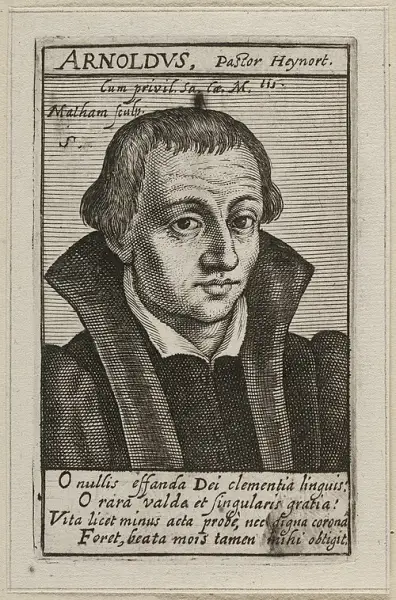
Andrew Wouters, in Dutch Andries Wouters, born in 1542, was a Dutch Catholic priest, pastor of Heinenoord in the Hoeksche Waard, and one of the nineteen Martyrs of Gorkum put to death in 1572. His early life as a priest was, by the record, scandalous: women knew him as a womanizer, and several children were his — a past that makes his martyrdom the more striking, for it was precisely this man who refused to save his life by denying his faith. During the Dutch revolt against Spain, a Calvinist rebel group took up arms against the Catholic Church in the Netherlands; in June 1572 Gorkum fell into their hands; the rebels seized two lay brothers, nine Franciscan friars, a parish priest with his assistant, and two clerics who had been in prison; four more — Wouters among them — were added in mid-June. Held at Gorkum between 26 June and 6 July, the nineteen were taken to Brielle, arriving on 8 July, and ordered to renounce their belief in Transubstantiation and in the pope's supremacy. All refused. A letter from William the Silent ordering that the priests be left unmolested was ignored, and the martyrs were hanged from the roof of a turfshed on 9 July 1572. Wouters's last words — 'Fornicator I always was; heretic I never was' — answered both his past and his judges at once. He was beatified in 1675 and canonized with his companions by Pius IX on 29 June 1867.
The Complete Life
A Scandalous Priesthood
Andrew Wouters was born in 1542 and served as the Catholic pastor of Heinenoord, in the Hoeksche Waard south of the great rivers of the Netherlands. His priesthood was, by every account including the official tradition of his canonization, a scandal: women knew him as a womanizer, and several children were his. No attempt was ever made to launder the record; his fellow martyrs and the church that venerated him accepted that the man who died at Brielle was the same man who had lived badly at Heinenoord. That honesty is the foundation of his particular fame: among the Gorkum nineteen he is the sinner whose last testimony erased nothing and excused nothing.
§ Introduction
The Martyrs of Gorkum
The Dutch revolt against Spanish rule turned, in the summer of 1572, into open war on the Catholic Church in the rebel provinces. In June Gorkum fell to the Watergeuzen, and a Calvinist rebel group seized two lay brothers, nine Franciscan friars, and a parish priest with his assistant, joining them to two other clerics who had been imprisoned; four more, Wouters among them, were added in mid-June. From 26 June to 6 July the nineteen were held at Gorkum — tortured, mocked, and pressed to deny their belief in the Real Presence of Christ in the Eucharist and the authority of the Pope. All refused. Even a letter from William the Silent, ordering that everyone in authority leave the priests and brothers undisturbed, was ignored. Moved to Brielle on 8 July, they were hanged the next day, 9 July 1572, from the roof of a turfshed, each given the chance to the end to recant.
§ Life
Beatification and Canonization
A century and a bit after their deaths, on 14 November 1675, Pope Clement X beatified the nineteen, after many cures — particularly of hernias — were attributed to their intercession. Their canonization by Pope Pius IX followed on 29 June 1867, the feast of Saints Peter and Paul, within the grand celebrations marking 1,800 years since the two apostles' martyrdoms. Wouters's individual feast is kept on 9 July, the day of his death, together with his companions.
§ Introduction
Legacy
Wouters's legacy rests on his last words: 'Fornicator I always was; heretic I never was' — the most quoted sentence among the Gorkum martyrs and one of the great testimonies of the Reformation era to the difference between a man's sins and his faith. He has become the patron of those who have fallen and must still witness, a proof that holiness at the end can be real even when the road to it was not. Brielle, the place of the martyrdom, was long a site of pilgrimage and processions before the relics of the martyrs were transferred to the Church of Saint Nicholas in Brussels.
§ Veneration
Timeline
- 1542
Born in the Netherlands
§ Life
- Jun 1572
Gorkum falls to Calvinist rebels in the Dutch revolt; Catholic clergy are captured
§ Life
- 26 Jun 1572
Imprisoned at Gorkum among nineteen clerics pressed to deny Transubstantiation and papal supremacy
§ Life
- 8 Jul 1572
Moved with the other captives to Brielle
§ Life
- 9 Jul 1572
Hanged from the roof of a turfshed at Brielle with the other Martyrs of Gorkum
§ Life
- 14 Nov 1675
Beatified in Rome with his companion martyrs by Pope Clement X
§ Veneration
- 29 Jun 1867
Canonized by Pope Pius IX on the feast of Saints Peter and Paul
§ Veneration
In Their Own Words
Fornicator I always was; heretic I never was.
The Record
- Patron of
- Those who have fallen and rise again
- Symbols
- Priestly collar·Noose of the Gorkum martyrs
- Canonization
- Beatified 14 November 1675 by Pope Clement X; canonized 29 June 1867 by Pope Pius IX
Prayer
Bibliography
Show 1 sources
Profile text adapted from the Wikipedia article, licensed CC BY-SA 4.0.
Pray with this saint every day
Save St. Andrew Wouters to your favorites, read the full profile, and get feast-day reminders in the Saints app.
Get the Saints AppFree on the App Store for iPhone and iPad