
1851-1927·Feast June 1
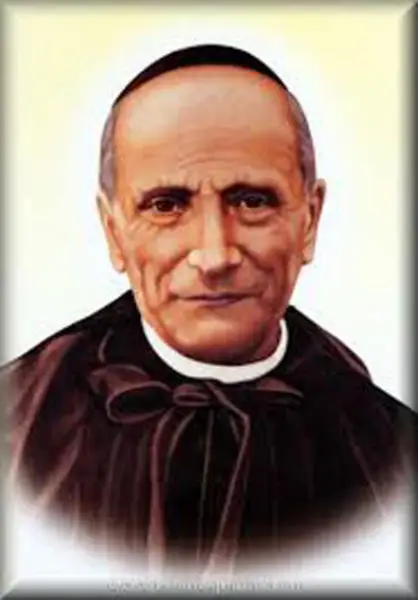
St. Annibale Maria di Francia
Priest, Founder of the Rogationists and Daughters of Divine Zeal
Overview
Annibale Maria di Francia — Hannibal Mary Di Francia — born in Messina on 5 July 1851, was an Italian priest, founder of orphanages and of two religious congregations, the Rogationist Fathers of the Heart of Jesus and the Daughters of Divine Zeal. Educated at the Cistercian College of St. At seventeen, praying before the Blessed Sacrament, he received the 'revelation of Rogate' — his conviction that the Church's vocations are won by prayer alone — anchored for him in Jesus' injunction to ask the harvest's master for laborers (Mt 9:38; Lk 10:2); this became his life's charism. Ordained priest on 16 March 1878, a few months earlier — still a deacon — he had been led by Francesco Zancone, a poor blind beggar, to the Avignone squatters on the edges of Messina, the field of apostolate he would define as a 'twofold charity,' by which he meant both evangelizing the poor and tending to their needs. With his archbishop's blessing and Don Bosco's encouragement he founded evening schools, a kindergarten, and, from 1883, the orphanages that went under the patronage of St. Anthony of Padua — the Anthonian Orphanages — where children were fed, taught a trade, and given solid moral and religious education. His periodical God and Neighbor, founded in 1908, reached a circulation of over half a million across five continents. He died in Messina on 1 June 1927, and the city called him the sleeping saint.
The Complete Life
An Orphan of Messina
On 5 July 1851 Annibale came into the world in Via Santa Maria delle Trombe, in Messina's Portalegni quarter, to a Sicilian noble family of the professional classes: his father Francis, a knight of the Marquises of St. Catherine of Jonio, served as Papal Vice-Consul and held honorary rank as Captain of the Navy; his mother, Anna Toscano, came of the family of the Marquises of Montanaro. He was the third of four children, and his father died when he was fifteen months old. His biographers make the connection directly: the experience profoundly affected his life and made him deeply empathetic toward orphans. At seven he entered the College of St. Nicholas, run by the Cistercian Fathers, where he was a devout child, introduced to the devout life by his spiritual director and given permission — exceptional in those days — to receive Holy Communion daily. At fifteen he moved on to study with the poet Felice Bisazza, and a brilliant, secure future as poet and writer seemed assured. He chose the religious life instead. His brother Francesco, later declared Venerable, followed the same path.
The Revelation of Rogate
The experience that defined him arrived at seventeen while he prayed before the Blessed Sacrament: the 'revelation of Rogate', his unshakable conviction that prayer alone wins vocations for the church. In the Gospel he lighted on the words that grounded it (Mt 9:38; Lk 10:2) — the plea that the Lord of the harvest be asked to send laborers for his harvest — words that became the chief inspiration of his life and the charism of his apostolate. He weighed the attraction against other rules: his ardor for Our Lady of Mount Carmel drew him toward the Discalced Carmelites, but Archbishop Giuseppe Guarino of Messina turned him from the idea, urging him to remain at Avignone among the poor; instead he joined the Carmelite Third Order. Given the clerical garb on 8 December 1869, he became a well-received preacher, loved especially by the simple and the lower classes for the clarity of his sermons — a gift he would keep for the poor all his life.
Avignone and the Anthonian Orphanages
A few months before he was ordained priest on 16 March 1878, Annibale, still a deacon, encountered Francesco Zancone, a blind beggar in poverty, through whose providential mediation he discovered a world previously unknown to him — the Avignone squatters living on Messina's fringe. This became his apostolate's field, and he gave it its law: the spirit of a twofold charity — bringing the poor the Gospel and tending to their needs. His archbishop blessed the work and John Bosco encouraged it; thus he opened an evening school for boys and a daytime kindergarten for girls, followed by the orphanage for girls and, on 4 November 1883, the one for boys. He placed all under the patronage of Saint Anthony of Padua, and all his institutions for poor children came to be called Anthonian Orphanages. His program was explicit: the children were to be fed and prepared for a job, and more importantly given a solid moral and religious education — the girls to sewing, knitting, and home economics after their elementary instruction. A saying of his on method endures: children should be loved with a tender, fatherly affection — the secret of secrets for winning them to God. The great earthquake of 1908 battered Messina and killed thirteen of his sisters, yet although the boys' dormitory fell in, not one orphan died — neither there nor in the girls' residence. More orphanages followed: at Bari for the orphans of the 1910 cholera, at Altamura for those of the First World War.
Pray the Lord of the Harvest
The Rogate was the axis of Annibale's spirituality. He framed it as the answer to a question his work forced upon him: what are these handfuls of orphans we look after, these handfuls we evangelize, set against the millions who wander lost and abandoned, sheep without a shepherd? I searched for an answer and found it, whole and entire, in Jesus' words: plead with the harvest's Lord to give workers to his harvest. And so I concluded that the secret key had been placed in my hands — the key to every good work and to the salvation of numberless souls. On this he raised institutions whose first fruit was prayer: in his houses, he wrote to Pius X in 1909, orphans, the poor, priests and nuns pray without ceasing for laborers chosen for the harvest of souls. He propagated the 'Servitude of Love' taught by Louis de Montfort and embodied complete abandonment into the hands of Mary. The range of his charity was proverbial — reaching even priests in difficulty and the cloistered nuns whom benefactors too often forget — and for a generation Messina repeated the saying about his house: take a seat and something to eat will come.
The Sleeping Saint
Annibale died in Messina on 1 June 1927. A few days earlier, so the tradition runs, the Blessed Virgin Mary was believed to have appeared to him with the assurance of her protection — a vision rewarding his devotion. Messina reacted at once: the moment word spread, the people took up the cry, let us go and see the sleeping saint. Papers across the whole region carried the funeral in pictures and articles; mourners numbered in the thousands; and the local authorities were quick to grant the permit burying him in the Shrine of the Evangelical Rogation, the Messina church he had raised with his own hands and dedicated to the Gospel's command that the Lord of the harvest be asked to send workers for his harvest. Bishop Angelo Paino of Messina bore witness to his reputation: everyone, he said, held him a saint — people of every walk of life, social condition and religious conviction.
Cause and Canonization
The cause moved slowly, interrupted by the war: contemporaries including Luigi Orione urged it, the diocesan investigations opened on 21 April 1945, and the process was formally opened on 14 November 1952, granting Annibale the title Servant of God. The Congress of Cardinals voted in 1979 to begin the formal cause, which opened at Messina on 8 March 1980; John Paul II promulgated the decree on his heroic virtue on 21 December 1989. The miracle for beatification was the case of Gleida Danese, a Brazilian girl doomed to die of a ruptured aorta who suddenly recovered — judged by the medical commission of June 1990 to have no possible medical explanation. He was beatified on 7 October 1990 and canonized on 16 May 2004, both by John Paul II. In 2010 Benedict XVI blessed a marble statue of the saint set in an external niche of St. Peter's Basilica near the Arch of the Bells, and his congregations — working with orphans, the deaf and blind, the aged, pregnant girls, schools, missions, and vocation centers — serve on five continents.
Timeline
- 5 Jul 1851
Born in Messina on 5 July; his father dies when Annibale is fifteen months old
§ Early life
- 1868
At seventeen, receives the 'revelation of Rogate' while praying before the Blessed Sacrament
§ Education
- 8 Dec 1869
Given the clerical garb on 8 December and soon becomes a well-received preacher
§ Education
- 16 Mar 1878
Ordained a priest on 16 March; the blind beggar Zancone leads him to the Avignone squatters
§ Priesthood
- 4 Nov 1883
Boys' orphanage opens on 4 November, after the girls'; all his works become the Anthonian Orphanages
§ Anthonian Orphanages
- 1908
The Messina earthquake kills thirteen of his sisters, though no orphan dies; his periodical God and Neighbor first appears
§ Anthonian Orphanages
- 11 Jul 1909
Writes to Pope Pius X explaining the Rogate as the charism of his institutions
§ Education
- 1 Jun 1927
Dies in Messina on 1 June; crowds flock to see the 'sleeping saint'
§ Death
- 21 Dec 1989
Pope John Paul II promulgates the decree on his heroic virtue on 21 December
§ Beatification and canonisation
- 7 Oct 1990
Beatified by Pope John Paul II on 7 October after the approved healing of Gleida Danese
§ Beatification and canonisation
- 16 May 2004
Canonized by Pope John Paul II on 16 May
§ Beatification and canonisation
- 7 Jul 2010
Pope Benedict XVI blesses a marble statue of the saint for an external niche of St. Peter's Basilica
§ Beatification and canonisation
In Their Own Words
We should love children with tender and fatherly love. This is the secret of secrets to gain them to God.
From my youth I have devoted myself to the words of the Gospel: Pray therefore the Lord of the Harvest... In my charitable institutions, orphans, poor, priests and nuns, all pray incessantly... that they may provide the Holy Church with numerous and chosen laborers for the harvest of souls.
The Record
- Major works
- God and Neighbor (periodical, founded 1908)·Writings and correspondence in 62 volumes examined for his cause
- Patron of
- Orphans and abandoned children·Vocations to the priesthood and religious life·Messina, Italy
- Symbols
- Priest's cassock·Orphan children at his side·The Gospel command, 'Pray the Lord of the harvest' (Mt 9:38)
- Canonization
- Beatified 7 October 1990 by Pope John Paul II; canonized 16 May 2004 by Pope John Paul II
Prayer
Profile text adapted from the Wikipedia article, licensed CC BY-SA 4.0.
Pray with this saint every day
Save St. Annibale Maria di Francia to your favorites, read the full profile, and get feast-day reminders in the Saints app.
Get the Saints AppFree on the App Store for iPhone and iPad