
c. 468-520·Feast December 28
St. Anthony the Hermit
Anchorite of Lérins
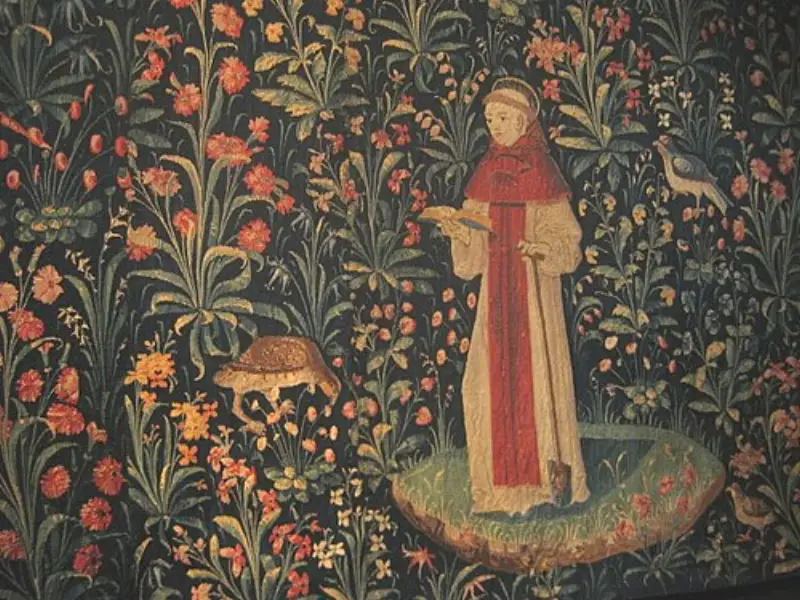
Overview
Anthony the Hermit, also called Anthony of Lérins, was a Pannonian who ended his life in the great island monastery of southern Gaul. Born around 468 in the province of Pannonia Valeria, then under the dominion of the Huns, he was orphaned of his father at eight and entrusted to Severinus of Noricum, the monk-saint who sheltered refugees along the Danube as the Roman frontier collapsed. When Severinus died in 482, the boy was entrusted to an uncle, Constantius, who was already a bishop at Lorsch in Germany; there, around the age of twenty, Anthony became a monk. In about 488 he moved to Italy to live as a hermit on the shores of Lake Como with a small company of solitaries, near the site of Saint Fidelis's martyrdom, and disciples gathered to him there. Two years before his death, still seeking greater solitude, he entered the abbey of Lérins off the coast of Provence, where his holiness and the miracles reported of him made him locally famous. He died around 520; his commemoration falls on 28 December, noted in the Roman Martyrology and kept by the Eastern Orthodox Church.
The Complete Life
A Child of the Collapsing Frontier
Anthony was born around 468 into a world that was ending. Pannonia Valeria, between the Danube and Lake Balaton in what is now western Hungary, had been Roman for four centuries; by his childhood it lay under Hunnic dominion, and the provincial order was dissolving. His father died when he was eight — the biographical fact his memory keeps — and the boy was handed to the one institution still functioning on the frontier: Severinus of Noricum, the ascetic who organized relief, ransom, and refuge for the Romans stranded along the Danube as the imperial system walked away. Anthony's childhood was therefore spent inside the emergency church of the late antique collapse, learning from a saint whose whole life was the care of the abandoned. It was an apprenticeship in what the faith is for.
From Noricum to Lorsch to Como
When Severinus died in 482, the orphan was passed on again — sent to his uncle Constantius, counted among the early bishops of Lorsch in Germany, and there, at about twenty, Anthony received the monastic habit. In 488, still a young monk, he made the choice that named him: he left for Italy to live as a hermit on the shores of Lake Como, joining a small group of solitaries near the place where, a century before, Saint Fidelis had been martyred. The site had the associations hermits sought — a martyr's memory, water, mountain, and distance. Disciples came to him there, the life says, seeking to imitate his holiness, and for the better part of three decades the Pannonian refugee was a father of hermits on an Italian lake.
The Last Solitude at Lérins
Two years before his death, Anthony moved once more — this time to Lérins, the island monastery off the Provençal coast that had been the seminary of the Gallic episcopate for a century. The move looks like a retreat from the eremitical life, but the tradition read it as its completion: the hermit seeking the greater solitude of a community's silence, ending where the cell and the cloister meet. At Lérins, the notice says, he won renown for his holy life and the wonders attributed to him, and there he died around 520. The Roman Martyrology commemorates him on 28 December; the Eastern Orthodox Church also keeps his memory, one of the many western saints whose cult the undivided Church bequeathed to both halves.
Veneration
Anthony's sanctity rests on the pre-congregation consensus of the churches: a martyrrology entry, a monastic memory, and a feast. He is kept on 28 December in the Roman Martyrology's modern typical edition, and honored in the East on the same tradition. He should not be confused — as the dictionaries must perpetually note — with Anthony the Great, the Egyptian founder of eremitical life, whose name he bore into a later and colder world.
Legacy
Anthony's historical importance lies in what he connects. He is one of the living links between the Danubian church of Severinus — the last Roman Christianity of the middle Danube — and the monastic culture of the medieval West, carrying a frontier formation through Lorsch to Como to Lérins. His life, thin as the record is, documents the great migration of sanctity in the fifth century: the movement of holy men from the collapsing provinces to Gaul and Italy, where their relics, their rules, and their stories seeded the monasticism that would shape medieval Europe. He is patron of hermits — the office his whole wandering life had been practicing.
Timeline
- 468
Born in Pannonia Valeria, then part of the Hunnic Empire; left fatherless at eight
§ Introduction
- 482
On Severinus of Noricum's death, is sent to Germany into the care of his uncle Constantius, bishop of Lorsch
§ Life
- 488
A monk of about twenty, he moves to Italy for a hermit's life on Lake Como, gathering disciples
§ Life
- 518
Seeking greater solitude two years before his death, he becomes a monk at the Abbey of Lérins
§ Life
- 520
Dies at Lérins, famed in the neighborhood for a holy life and wonder-working
§ Life
The Record
- Patron of
- Hermits
- Symbols
- Monk's habit·Hermit's cell
- Canonization
- Pre-congregation; commemorated in the Roman Martyrology
Prayer
Profile text adapted from the Wikipedia article, licensed CC BY-SA 4.0.
Pray with this saint every day
Save St. Anthony the Hermit to your favorites, read the full profile, and get feast-day reminders in the Saints app.
Get the Saints AppFree on the App Store for iPhone and iPad