
1502-1539·Feast July 5
St. Anthony Zaccaria
Priest, Founder of the Barnabites
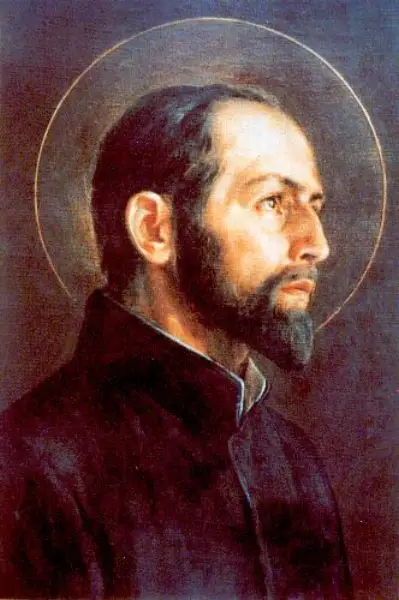
Overview
Anthony Mary Zaccaria, CRSP, born at Cremona in 1502, was an Italian priest, founder of the Clerics Regular of St Paul — the Barnabites — of the Angelic Sisters of Saint Paul and of the Laity of Saint Paul, and a leading figure of the Catholic reformation in Milan before Trent. Orphaned of his father, he studied medicine at Padua and practised briefly before theology claimed him; ordained a priest on 20 February 1529, he worked among the poor and the sick of Milan with the methods that would mark his congregations: frequent communion, the forty hours' devotion, missions and catechesis, and reform of the clergy. Around 1530, with three companions, he began the community that in 1533 was approved as the Clerics Regular of St Paul, called Barnabites from their mother church of San Barnaba. He promoted the Angelic Sisters under Countess Ludovica Torelli and organized a third order for laypeople. He died at his birthplace on 5 July 1539, aged thirty-six, worn out by labour and penance, and was canonized in 1897.
The Complete Life
Early Life
Anthony Mary Zaccaria was born at Cremona in the Duchy of Milan in 1502, into a family of the professional class: his father was a doctor who died while Anthony was still a boy, leaving him to be raised by his mother, a woman of strong piety who devoted herself to works of mercy and gave her son both religion and an education. He studied at the cathedral school and then medicine at Padua, taking his degree and practising the healing art — a fact his later iconography never forgot, and his patrons list among his titles. But medicine did not hold him. The care of bodies drew his mind to the care of souls; while still practising he studied theology, was ordained priest in 1528, and went to work in the hospitals and streets rather than a benefice. Milan in those years was a city of both great wealth and great religious neglect, and it was there that his vocation found its field.
Founder in Milan
Anthony's work in Milan joined charity to liturgical reform — the two things the pre-Tridentine church most needed and most resisted. He and his companions — laymen at first — organized the education of children, the visitation of the hospitals, and the reclaiming of the fallen; they promoted frequent communion at a time when communion was rare, and the solemn exposition of the Blessed Sacrament in the forty hours' devotion, an observance his communities are credited with fixing in the Church's practice. Around 1530 he founded with three companions the congregation approved in 1533 as the Clerics Regular of St Paul, bound to no monastic property and given to missions and the confessional; because their first house was at San Barnaba in Milan, the people called them Barnabites. Under his direction Countess Ludovica Torelli refounded the Angelic Sisters of Saint Paul, and a third order of Laity of Saint Paul carried the same reform into married life.
Spirituality
Zaccaria's spirituality was Pauline and eucharistic: Christ dying and rising in the letters of Saint Paul supplied the congregation's whole rule, and the altar its fire. His letters and sermons — collected in the order's critical editions — show a robust, unsentimental mysticism of the cross, urging his religious to desire contempt rather than consolation, and the laity to frequent the sacraments. He practised on himself what he preached: extraordinary fasts and vigils, and a penitential severity that helped wear him out before forty. The forty hours' devotion, which his communities propagated, joined prayer for peace with reparation before the exposed Sacrament — Milan was at war, and the devotion was explicitly a plea for the church's deliverance. In a corrupt age he trusted not polemic but worship renewed: frequent communion, preached missions, and clergy reformed by the discipline of community life under vows.
Final Years and Canonization
Worn by labour, travel and austerity, Anthony returned in 1539 to Cremona, his birthplace, and died there on 5 July, thirty-six years old. The congregations he founded survived him — not without crisis, as the young order's enemies in Milan moved against it — and spread through Italy and beyond, the Barnabites becoming one of the great clerics regular of the Catholic reformation. His body rests at the mother church of Saint Paul in Milan, his major shrine. The cause moved slowly: he was beatified by Pope Leo XIII on 3 January 1890 and canonized by the same pope on 27 May 1897, the founder of three distinct bodies raised to the altars in one decade, in the age that rediscovered the pre-Tridentine reformers.
Legacy
Anthony Zaccaria belongs with Cajetan and the early Theatines, Ignatius and the first Jesuits, in the generation that reformed the Catholic Church from below before the council of Trent legislated from above. His particular contributions — the clerics regular devoted to the Pauline mission, the female congregation of Angelic Sisters, the organized laity, and the propagation of frequent communion and the forty hours — passed into the ordinary practice of the modern Church, which now uses his inventions without remembering the inventor. The Barnabites carry his name through their work in parishes, schools and missions across the world. For physicians who are priests, and priests who think like physicians of souls, he is an appointed patron; for the Church of Milan, one of its reforming lights.
Timeline
- Dec 1502
Born at Cremona and baptized the same day in the cathedral, likely by his uncle, a canon of the cathedral
§ Life
- 1520
Begins studying medicine at the University of Padua after philosophy at Pavia
§ Life
- 1524
Completes his studies, returns to Cremona and practises as a physician for three years
§ Life
- 1527
Starts studying for the priesthood, continuing his theology in Bologna
§ Life
- 20 Feb 1529
Ordained a priest at a chapel within Cremona Cathedral
§ Life
- 1530
Follows Countess Ludovica Torelli to Milan and joins the Oratory of Eternal Wisdom, meeting Ferrari and Morigia
§ Life
- 4 Jan 1531
Writes Letter II to Bartolomeo Ferrari and Giacomo Antonio Morigia
§ Letters
- 1533
Encouraged by Pope Clement VII, begins community life near St. Catherine's; the Barnabites are canonically sanctioned
§ Life
- 1534
Popularizes the Forty Hours devotion at St. Catherine's; faces the first of two heresy investigations
§ Life
- 15 Jan 1535
Pope Paul III approves the Angelic Sisters of St. Paul with the bull Debitum pastoralis officii
§ The Angelic Sisters of St. Paul
- Jul 1535
Pope Paul III issues a bull of approbation confirming the young congregation's Pauline devotion
§ Life
- 25 Dec 1535
Celebrates his first Mass at the oratory of Saint Paul's monastery
§ The Angelic Sisters of St. Paul
- 1536
Steps down as General of the order; Morigia is elected Superior, and he reforms convents at Vicenza
§ The Clerics Regular of St. Paul (the Barnabites)
- 27 Feb 1536
Gives the habit to six Angelic Sisters postulants
§ The Angelic Sisters of St. Paul
- 4 Mar 1537
Appoints Paola Antonia Negri mistress of novices of the Angelic Sisters
§ The Angelic Sisters of St. Paul
- Jul 1537
Travels with the first Pauline missionaries as a second house opens at Vicenza
§ Life
- 20 Jun 1539
Writes his final letter at Guastalla, where fever has broken down his health
§ Letters
- 5 Jul 1539
Dies at three in the afternoon in his birthplace at Cremona, in his mother's arms, aged 36; buried at the San Paolo Convent in Milan
§ Life
- 1566
Twenty-seven years after his death, his body is found incorrupt
§ Veneration
- 3 Jan 1890
Beatified in Rome by Pope Leo XIII
§ Introduction
- 27 May 1897
Canonized in Rome by Pope Leo XIII
§ Veneration
The Record
- Major works
- Constitutions of the Barnabites·Sermons and letters (published in the order's critical edition)
- Patron of
- The Barnabite order·Angelic Sisters of St. Paul·Laity of St. Paul·Physicians
- Symbols
- Black cassock·Lily·Cross·Chalice and Host
- Canonization
- Beatified 3 January 1890 by Pope Leo XIII; canonized 27 May 1897 by Pope Leo XIII
Prayer
Profile text adapted from the Wikipedia article, licensed CC BY-SA 4.0.
Pray with this saint every day
Save St. Anthony Zaccaria to your favorites, read the full profile, and get feast-day reminders in the Saints app.
Get the Saints AppFree on the App Store for iPhone and iPad