
1389-1459·Feast May 2 (formerly May 10)
St. Antoninus of Florence
Dominican Friar, Archbishop of Florence
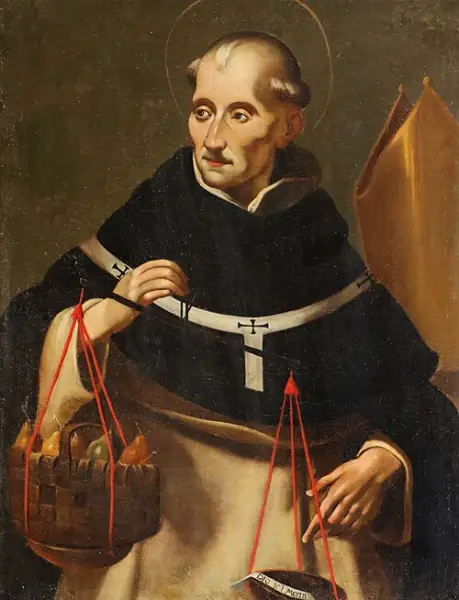
Overview
Born Antonio Pierozzi — de Forciglioni was another name for him — on 1 March 1389, Antoninus of Florence was a fifteenth-century Italian Dominican friar, reformer of his order, theologian, and Archbishop of Florence in the fifteenth century. Born to Niccolò, a notary, and Tomasina Pierozzi, prominent citizens of Florence, he lost his mother at about five and grew up around the church of Orsanmichele. He entered the Dominican Order in 1405, aged sixteen, at the newly founded priory of San Domenico in Fiesole; the habit was conferred by the community's founder, the Blessed John Dominici, making Antoninus its first candidate, and he passed his novitiate at Cortona — alongside Fra Angelico and the miniaturist Bartolomeo di Fruosino — under Bl. Lorenzo da Ripafratta. Consecrated Archbishop of Florence on 13 March 1446 at the initiative of Pope Eugene IV, he won his people's love by his energy in the plague and earthquake of 1448 and 1453, lived austerely under the Dominican Rule, visited every parish and convent yearly on foot, and served the Republic several times as ambassador to the Holy See in the 1450s. He died on 2 May 1459; Pope Pius II conducted his funeral. His Summa theologica moralis and Summa confessionalis made him a founder of modern moral theology.
The Complete Life
A Notary's Son of Florence
Antonio Pierozzi was born in Florence on 1 March 1389, in the confident decades of the Republic, to Niccolò and Tomasina Pierozzi, prominent citizens — the father a notary, the family name also given as de Forciglioni. He was roughly five years old when his mother died, and the boy spent his childhood in the shadow of Orsanmichele, the grain-market church of the guilds whose tabernacle was the devotional heart of the city. Florence in 1400 was simultaneously the richest city of Europe and the scene of one of its severest visitations of plague, and the religious temper the child absorbed was the city's own: civic, guild-bound, Marian, and anxious for reform. At sixteen he sought the new Dominican priory at Fiesole, the reform house rising above the city, where the founder, John Dominici, gave him the habit — the community's first candidate. The priory at Fiesole was built for exactly such young men, and its first novice class would furnish the century with its painter and its archbishop.
The Congregation of Tuscany
Antoninus's whole Dominican life was spent inside a reform. He made his novitiate at Cortona under Bl. Lorenzo da Ripafratta together with two fellow novices of Fiesole whose names the world kept: Fra Angelico, the future painter, and Bartolomeo di Fruosino, the future miniaturist. The community, still loyal to Pope Gregory XII, was forced by the Florentines — who had withheld obedience — to find refuge at Foligno in 1409: an early schooling in the politics of schism. The houses he went on to administer and reform at Cortona, Rome, Naples, and Florence became part of the new Dominican Congregation of Tuscany that John Dominici established to promote a stricter form of life in an order devastated by the Western Schism. Antoninus was prior of Santa Maria sopra Minerva from 1430 and vicar of the Congregation from 1433 to 1446, and in that office was involved in establishing the Priory of San Marco in Florence with friars from Fiesole — the house whose cells, Cosimo de' Medici's among them, Fra Angelico and his assistants covered in fresco, the supreme artistic monument of the Observant movement Antoninus governed.
Archbishop of Florence
His consecration as Archbishop of Florence took place at the Dominican priory in Fiesole on 13 March 1446, at the urging of Pope Eugene IV; the pope had come to admire him through the era's great church councils, at one of which Antoninus had assisted as papal theologian, and for thirteen years he governed the archdiocese. What set him apart from his contemporaries was not merely that he lived constantly within his diocese, but that each year he walked on foot to visit every parish and convent. The affection and esteem of his people he earned above all through the vigor and ingenuity with which he fought the plague of 1448 and the earthquake of 1453; indeed it was Florentines themselves who first used the diminutive Antoninus, which has since displaced Antonio. As archbishop he kept up the austere life of the Dominican Rule, and though his dealings with the Medici regime were cordial they were not always smooth; during the 1450s the Republic sent him more than once as ambassador to the Holy See during the 1450s, the friar-arbiter whom neither pope nor prince could own.
Moral Theology for a Mercantile City
Antoninus's writings made him, in the judgment of the historians, a founder of modern moral theology. The Summa theologica moralis, printed in 1477, condenses moral theology into four parts drawing heavily on Thomas Aquinas: the anthropological foundations in the soul and its powers; the different sins; the social, religious, and ecclesiastical states of life with excommunications and censures; and the cardinal virtues and gifts of the Holy Spirit. Among the three confessor's guides he produced was the Summa confessionalis, 'Curam illius habes', which came off the press in 1472 and was prized by the clergy as a working aid for centuries afterwards. The social content is what surprises readers today: Antoninus displayed a keen grasp of the questions raised by social and economic change — banking, wages, the just price, and the obligations of commerce — holding that intervention by the state in mercantile matters was a duty owed to the common good, paired with an obligation to aid the poor and needy; on women's vain dress he was prepared to make practical allowance for the social standing of women born to high rank. His Chronicon, a world history to 1360 printed in 1477, is uncritical for earlier ages but useful to historians for its account of recent events. Bede Jarrett's 1914 study, S. Antonino and Mediaeval Economics, says the judgment plainly: the archbishop was an economist before the discipline existed.
Death at San Marco
Death came to Antoninus on 2 May 1459, and Pope Pius II — Enea Silvio Piccolomini, then traveling to the Council of Mantua — conducted his funeral, an honor that recorded how far the little friar's reputation had traveled. His wish was to be buried at the priory he had founded in the city, and his body lies in the chapel of St. Antoninus at San Marco, beside the frescoes of his novice brother Fra Angelico. Canonization followed on 31 May 1523 at the hands of Pope Adrian VI, whose short reign marked him as a reformer and whose notions of radical church reform resembled the archbishop's own. The cult's artistic afterlife in Florence — the relic cult studied by Sally Cornelison, the multiplied face of the saint traced by Urte Krass — is among the best documented of the Renaissance. Pius II, himself one of the most learned men of the age, conducting the funeral of the little friar is a measure of how widely the archbishop's reputation had traveled.
The Little Archbishop
Antoninus's legacy divides between the confessional and the city. In moral theology his Summae stood in the cases-of-conscience tradition that the manuals of the following centuries descended from, and confessors used his guide until the modern era. In Florence he remained the model archbishop: resident, itinerant, austere, and engaged, the counter-image to the prince-prelate. Never part of the Tridentine calendar, his feast entered the General Roman Calendar in 1683, assigned to 10 May, and removed from it in 1969, since when the Roman Martyrology keeps him on 2 May, the day of his death. He is honored as patron of Moncalvo near Turin and of parishes from Manila to Tarlac in the Philippines, and in art he is shown in the Dominican habit with his mitre set aside, distributing food to the needy — the image the whole life confirms. The 1683 insertion of his feast into the General Roman Calendar, and its removal in 1969 to the Martyrology's 2 May, trace the changing shape of the modern calendar itself.
Timeline
- 1 Mar 1389
Born Antonio Pierozzi in Florence to Niccolò and Tomasina Pierozzi
§ Life
- 1405
Received into the Dominican Order at sixteen at the new priory of San Domenico in Fiesole, the first candidate of Blessed John Dominici's community
§ Life
- 1409
Forced with his Gregory XII-loyal brethren to take shelter at the Convent of Foligno
§ Life
- 1430
Became prior of Santa Maria sopra Minerva in Rome
§ Life
- 1433
Began serving as vicar of the Dominican Congregation of Tuscany, helping establish the Priory of St Mark in Florence
§ Life
- 13 Mar 1446
Consecrated Archbishop of Florence at the Dominican priory in Fiesole at Pope Eugene IV's initiative
§ Life
- 1448
Won the love of Florentines by combating the effects of the plague
§ Life
- 1453
Led the city's response to an earthquake, further endearing him to his people
§ Life
- 2 May 1459
Died in Florence; Pope Pius II, en route to the Council of Mantua, conducted his funeral
§ Life
- 1472
His confessor's guide Summa confessionalis, Curam illius habes was printed
§ Writings
- 1477
His Summa theologica moralis and his Chronicon, a sacred history to 1360, were published
§ Writings
- 31 May 1523
Canonized by Pope Adrian VI in Rome
§ Veneration
- 1683
His feast was inserted in the General Roman Calendar for 10 May
§ Veneration
The Record
- Major works
- Summa theologica moralis (printed 1477)·Summa confessionalis, 'Curam illius habes' (printed 1472)·Chronicon partibus tribus distincta ab initio mundi ad MCCCLX (printed 1477)·Guides for confessors (three, including the Summa confessionalis)
- Patron of
- Florence, Italy·Moncalvo, near Turin, Italy·Moral theologians and confessors
- Symbols
- Dominican habit, bishop's mitre set aside·Distributing food to the needy·Florentine lilies and a confessor's book
- Canonization
- Canonized on 31 May 1523 by Pope Adrian VI; feast inserted in the General Roman Calendar in 1683
Prayer
Profile text adapted from the Wikipedia article, licensed CC BY-SA 4.0.
Pray with this saint every day
Save St. Antoninus of Florence to your favorites, read the full profile, and get feast-day reminders in the Saints app.
Get the Saints AppFree on the App Store for iPhone and iPad