
traditional date 65 AD; probably 3rd century·Feast April 28
St. Aphrodisius
First Bishop of Béziers, Martyr
Overview
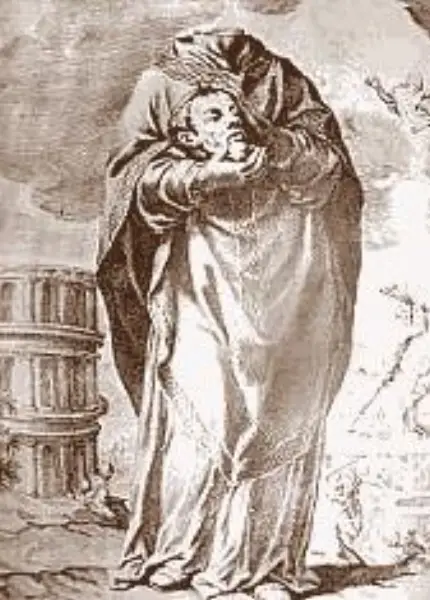
Aphrodisius — Saint Aphrodise in French — is the apostle and legendary first bishop of Béziers in Languedoc, whose cult dominates the city's religious imagination. Gregory of Tours, the earliest witness to him, reports that Aphrodisius was an Egyptian martyred in Languedoc together with his followers Caralippus, Agapius, and Eusebius. The legend that grew around him is among the most extravagant in the southern French hagiographic corpus: it makes him a prefect — or perhaps high priest — of Heliopolis who gave shelter to the Holy Family at Hermopolis while they hid from Herod; he then heard of the miracles of Jesus from Alexandrian Jews coming back from Jerusalem, traveled to Palestine, became a disciple, and received the Holy Spirit at Pentecost. Accompanying Sergius Paulus to Provence, he evangelized Narbonensis, arriving at Béziers mounted on a camel and living as a hermit in a cave before becoming the city's first bishop. Decapitated by pagans at the Roman circus — the modern Place Saint-Cyr — his head was thrown into a well, from which the water gushed; the headless bishop lifted his own head and bore it through the streets, treading on snails without breaking one, while mocking stonemasons were turned to stone, their seven heads still shown on the Rue des Têtes. The traditional date is 28 April 65, under Nero; modern scholarship, noting that the Béziers breviary of the fourteenth and fifteenth centuries presents him as a bishop and confessor who died in peace, and that the beheading and camel legends date only from the sixteenth century, holds that he was probably a martyr of the third century.
The Complete Life
An Egyptian in Palestine
The earliest stratum of the tradition is sober: Gregory of Tours, writing in the sixth century, records that Aphrodisius was an Egyptian martyred in Languedoc with his followers Caralippus, Agapius, and Eusebius. Everything beyond that belongs to legend, and the legend reaches back to the Gospels themselves: Aphrodisius is described as a prefect — or perhaps high priest — of Heliopolis who gave the Holy Family shelter at Hermopolis as they escaped into Egypt — a role the Coptic and Syriac traditions assign to several holy pagans of the flight narratives. The legend then makes him hear of the miracles of Jesus from Alexandrian Jews coming home from a pilgrimage to Jerusalem, travel to Palestine to meet him, and become his disciple; after the Resurrection he receives the Holy Spirit at Pentecost with the apostles. The construction claims for Béziers an apostolic founding through an eyewitness of the Lord, the standard aspiration of late antique and medieval city churches.
Sergius Paulus and the Camel
Sent west — the legend says in the company of Sergius Paulus, the proconsul Paul converted in Acts 13 — Aphrodisius evangelized Narbonensis with him, Sergius settling at Narbonne while Aphrodisius took the road to Béziers, where he arrived mounted on a camel. The animal is the legend's most famous and most local detail: exotic, biblical, and unforgettable, it fixed the saint in the city's memory. He settled as a hermit in a cave close to the city and stayed there a long time before becoming bishop, in the local tradition the first bishop of Béziers. His ministry as the tradition frames it was the quiet one of a cave-dwelling pastor — the historical kernel, if there is one, being an early bishop of the city whose Egyptian origin the church remembered. The camel, the cave, and the contract for a church are the three fixed points of the legend, and all three are sixteenth-century additions to an older and simpler cult.
The Head-Carrying Bishop
The martyrdom is the legend's centerpiece. Decapitated by a group of pagans at the Roman circus — the site is identified with the modern Place Saint-Cyr — Aphrodisius's head was thrown into a well, yet the water came gushing out and the headless bishop lifted his own head and bore it through the streets. He trod on snails spilled in his path without breaking one; stonemasons who mocked him as a madman were turned into stones, and visitors are still shown their seven stone heads on the Rue des Têtes. Reaching his cave, he left his head there, and on the spot arose first a chapel of Saint Peter and then the basilica of Saint-Aphrodise. The traditional date assigned is 28 April 65, in the reign of Nero. The camel, meanwhile, was kept after his master's death by a compassionate family of potters; when Aphrodisius came to be honored as a saint, the city's leaders assumed the animal's upkeep and housed it at the top of a street that after its death was named the rue du Chameau, later the rue Malbec — an origin the city also attaches to its local feasts of charity, the fêtes de Caritach.
The Breviary and the Sixteenth Century
The critical history of the cult is unusually clear. The Bréviaire de Béziers of the fourteenth and fifteenth centuries presents Aphrodisius not as a martyred cephalophore but as a bishop and confessor whose death was natural; the new legends of his beheading were created only in the sixteenth century, and the legend of the camel devised at the same time. Modern scholarship concludes that Aphrodisius was probably a figure of the third century — one of the early bishops or confessors of Narbonensian Gaul whose grave cult grew by accretion. The cult itself, whatever its layers, is fully pre-congregation: no process ever canonized him, and none was needed. His relics were carried in procession in times of drought or plague, the classic liturgical function of a city's patron, and his feast is kept on 28 April. The old martyrologies carry five saints named Aphrodisius, and the confusion of the Béziers bishop with his homonyms of Tarsus, Scythopolis, and Alexandria is a standing caution.
The Saint in the Streets
Aphrodisius's legacy is written into the street plan of Béziers. The basilica of Saint-Aphrodise stands over the cave of the legend; the Rue des Têtes shows the petrified mockers; the rue du Chameau, now rue Malbec, remembers the camel's pension; the Place Saint-Cyr marks the circus of the martyrdom. The city thus walks his legend daily, which is precisely what the sixteenth-century devisers intended. He is also a reminder, for the historian, of how much of southern French apostolic legend is late and self-conscious — and of how little that mattered to the devotion it served. The old martyrologies in fact carry five saints named Aphrodisius, of whom the bishop of Béziers is only one, a caution against conflating the Egyptian of Languedoc with his homonyms of Tarsus, Scythopolis, Alexandria, and the Hellespont. Between the basilica that bears his name and the streets that keep his legend, Béziers walks its patron's story daily, which is what the sixteenth-century devisers intended.
Timeline
- 25 May 7
Traditional birth date in Egypt, as recorded in the article's infobox
§ Introduction
- 28 Apr 65
Traditionally beheaded at Beziers with his companions, during the reign of Nero
§ Legend
- 300
Modern scholars judge him probably a figure of the third century
§ Historicity
- 858
Usuard's voyage report calls Beziers famed for its relics of the blessed Aphrodisius, first mention of his sanctuary
§ Historicity
- 1400
Presented in the breviary of this era as a bishop and confessor dying peacefully, not a martyr
§ Historicity
- 1500
New legends of his beheading and of the camel devised in the sixteenth century
§ Historicity
- 1803
The camel procession custom at Beziers revived after the revolutionary turmoil
§ Veneration
- 1830
Camel procession discontinued during the revolution of that year as a feudal and religious symbol
§ Veneration
The Record
- Patron of
- Béziers, France·Against drought and plague (relics processed)
- Symbols
- Cephalophore — carrying his own head·Camel
- Canonization
- Pre-congregation (ancient cult at Béziers; relics carried in procession in drought and plague)
Prayer
Profile text adapted from the Wikipedia article, licensed CC BY-SA 4.0.
Pray with this saint every day
Save St. Aphrodisius to your favorites, read the full profile, and get feast-day reminders in the Saints app.
Get the Saints AppFree on the App Store for iPhone and iPad