
2nd century·Feast January 8
St. Apollinaris Claudius
Bishop of Hierapolis, Apologist
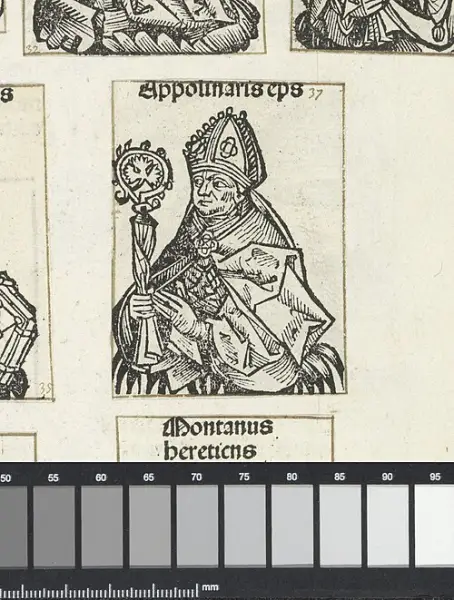
Overview
Apollinaris Claudius — called also Apollinaris of Hierapolis and Apollinaris the Apologist — was a Christian writer and leader of the second century who served as bishop of Hierapolis in Phrygia. His fame rested on polemical treatises aimed at the heretics of his day, works in which he demonstrated that their errors were borrowed entirely from the pagans. In 177 there appeared his Apologia on behalf of the Christians, addressed to the emperor Marcus Aurelius, who was reminded of his own encounter with the Thundering Legion — the storm said to have been won for him by the prayers of Christian soldiers against the Quadi. His death fell probably within Marcus Aurelius' reign, which ended in 180. Of his writings almost nothing survives beyond a few extracts, the longest of them dealing with the Passover question, where he opposed the Roman practice. Eusebius makes mention of his work and preserves the fragments; Jerome praises his learning. He is commemorated with a feast on 8 January in the East and West.
The Complete Life
Life
Claudius Apollinaris — the name in Eusebius, who is practically our only witness for him, though Jerome adds his praise — governed the church of Hierapolis in Phrygia, the great city of the Lycus valley that had already given the Church Papias and had received one of the letters in Revelation. His episcopate fell in the middle decades of the second century, the age of the apologists: Justin in Rome, Athenagoras in Athens, Tatian in the East, all writing to emperors and educated publics to clear the Christians of calumny and commend their doctrine. Apollinaris belonged to this company from the Asian side, a Phrygian bishop carrying the argument of Justin into the province where Montanism would shortly break. Eusebius records that the polemical works he aimed at the heretics of his day had made him famous; his method, Eusebius says, was historical: the errors circulating in Christian dress were shown to be borrowed entirely from the pagans, not grown from the gospel.
The Apologia of 177
In 177, the year of the martyrdoms of Lyons and Vienne, there appeared Apollinaris' Apologia on behalf of the Christians, sent to Marcus Aurelius personally. It was a bold year to write: the philosopher-emperor's own teacher Fronto's old charge of Christian crimes was in the air, and the courts of Gaul were killing bishops. Apollinaris' argument, as Eusebius reports it, turned on the emperor's own experience: he appealed to the story of the Thundering Legion, the campaign against the Quadi in which, when the legion of Melitene's Christian soldiers prayed, a storm broke the heat and the drought and delivered the army — a legend Marcus Aurelius had himself commemorated on his column. The apologist's point was elegant: you owe the Christians your victories, and you repay them with death. The work is lost; the argument survives because Eusebius thought it worth quoting.
Writings and Passover
Nothing survives of Apollinaris' books except fragments in Eusebius' history and Jerome's notices. The longest extract concerns the date of Passover: in the Quartodeciman controversy over when to celebrate Easter, Apollinaris wrote on the Asian side, defending his province's ancient custom of keeping the feast with the Jewish date, in a letter whose measured tone Eusebius preserves — citing the Gospels' chronology of the passion and refusing to make the difference a matter of communion. He wrote also against the Encratites and other heretical bodies of Phrygia, and a work against the pagans is mentioned. That so careful a writer is known only by quotations is the ordinary tragedy of second-century literature; his fragments survive because a later historian of the Church filed them, and from that file the modern reader still hears a Phrygian bishop's voice: learned, public, unafraid of the emperor.
Legacy
Apollinaris of Hierapolis represents the second-generation defence of the faith at its most civilized: no visions, no martyrdom recorded, but treatises, an apology to the philosopher on the throne, and a voice in the Church's first calendar controversy. His appeal to the Thundering Legion kept that story alive for Tintoretto to paint. His Passover fragment remains a primary document for the history of Easter, cited in every treatment of the Quartodeciman question from Hefele onward. The Churches of East and West commemorate him on 8 January, a confessor-bishop of the age before the persecutions' great roll began. For the modern apologist he is a patron of the reasoned answer: the man who met Marcus Aurelius on the ground of the emperor's own monument.
The Record
- Major works
- Apologia addressed to Marcus Aurelius (lost, fragments in Eusebius)·Treatises against heresies (lost)·Extract on the date of Passover (preserved)
- Patron of
- Apologists
- Symbols
- Bishop's vestments·Scroll of his writings
- Canonization
- Pre-congregation
Prayer
Profile text adapted from the Wikipedia article, licensed CC BY-SA 4.0.
Pray with this saint every day
Save St. Apollinaris Claudius to your favorites, read the full profile, and get feast-day reminders in the Saints app.
Get the Saints AppFree on the App Store for iPhone and iPad