
6th century·Feast July 15
St. Apronia of Toul
Benedictine Nun of Troyes and Toul
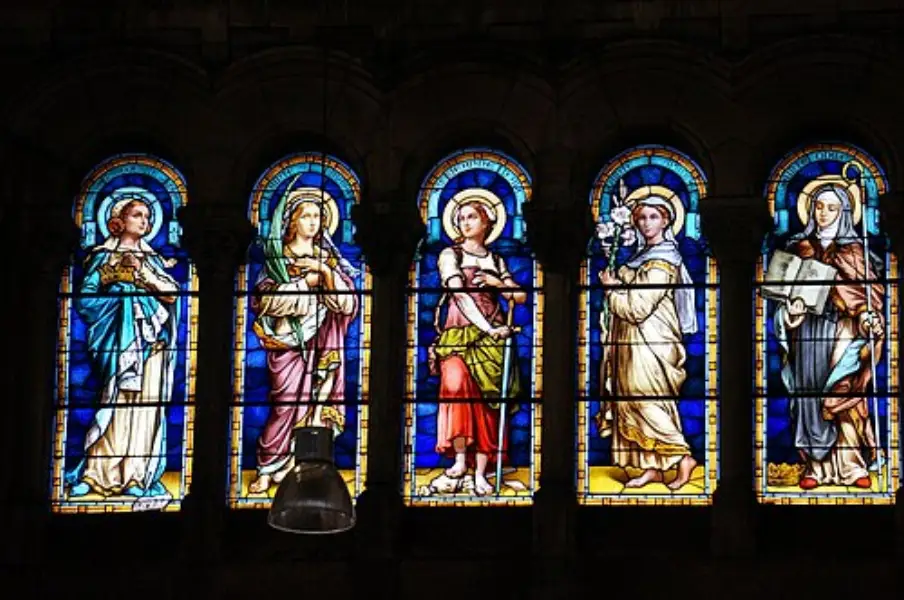
Overview
Apronia of Toul, also remembered as Evronie of Troyes, was a nun and saint of the sixth century. She was born at Tranquille, a village near Trier in the German Rhineland, and her brother was Saint Aprus of Toul, a bishop of that see in northeastern France; it was from her brother, according to the tradition, that she received the religious veil. Drawn by love of Christ to the consecrated life, she lived out her days as a nun in a convent at Troyes, in Champagne, where she died on 15 July of an unrecorded year during the second half of the sixth century. The hagiographer Sabine Baring-Gould, passing on the older life, recorded that her days on earth were virginal and angelic, patterned after those of her saintly brother, and that innocence, purity, and holiness were what she loved and kept to her dying day. Long after, in 992, her relics were solemnly enshrined at Toul by Bishop Saint Gerard, the great reforming bishop of that see, which fixed her memory in the Lorraine church. She is invoked as a patroness of women in labor and of persons in danger.
The Complete Life
A Family of the Trier Country
Apronia was born at Tranquille, a village in the territory of Trier, the great Roman city of the German Rhineland that had been a bishopric since the third century. Her family produced two saints: her brother Aprus — Aper, Évre — became bishop of Toul in Lorraine, and Apronia herself took the religious veil at his hands. The household therefore belonged to that Gallo-Frankish aristocracy of the sixth century from which the church of the Moselle and Meuse country drew so many of its bishops and abbots. Beyond the place of birth and the brother's name, the older life preserves nothing of her childhood; the medieval compilers were interested in the pattern of the saint rather than in biography, and for a woman religious that pattern was fixed: the worldly home left, the veil received, the long enclosure kept.
The Convent at Troyes
Apronia's adult life was spent as a nun at Troyes, the ancient city of the Tricasses on the Seine in Champagne, some hundred and forty kilometers southeast of Paris. Troyes had been the seat of a bishop since the fourth century and had religious houses for women by the Merovingian period. Baring-Gould's summary of her life, drawn from the older hagiography, gives her character in the idiom of the age: love of Christ drew her to the religious life, and her earthly days were spent as a virgin living an angelic existence after the pattern of her saintly brother, one who cherished innocence, purity, and holiness and held them to the end. The imitation of her brother is the one personal note that survives — a woman whose model of sanctity was a sibling she had followed from the Rhineland into the Frankish church.
Death and the Shrine at Toul
Apronia died at Troyes on 15 July, the date her calendar kept, in the second half of the sixth century; the year is unrecorded. Her cult's second act came four centuries later and in another city: in 992 Gerard, bishop of Toul — himself counted a saint, and the reformer under whom Toul became a center of the Lotharingian renaissance — solemnly enshrined her relics at Toul, drawing the sister of the diocese's early bishop back into the church her family had served. The enshrinement is the kind of event by which the memory of obscure Merovingian saints was institutionalized: bones translated, a shrine furnished, a feast entered in the local martyrology. Her major shrine remained Toul thereafter.
Patroness in Danger
Apronia's afterlife in devotion is that of a patroness of women in labor and of persons in danger — an assignment the old dictionaries record without explaining, though the dangers of childbirth in every century made such patrons a practical necessity of parish life. She is also called Evronie of Troyes, the French form that binds her to the city of her convent. Modern lists of the saints keep her feast on 15 July, and the Antiochian Orthodox archdiocese's calendar of western saints carries her as well, evidence again of a cult old enough to have crossed the later dividing lines. Her biography remains what it was in 1901 when Agnes Dunbar's Dictionary of Saintly Women printed it: a birthplace, a brother, a veil, a convent, a shrine, and a reputation preserved.
Timeline
- 992
Her relics enshrined at Toul by Bishop St. Gerard
§ Introduction
- 1877
Her life summarized by Sabine Baring-Gould in The Lives of the Saints
§ Introduction
The Record
- Patron of
- Women in labor·Persons in danger·Troyes and Toul, France
- Symbols
- Nun's veil·Lily (virginity)
- Canonization
- Pre-congregation (ancient cult; relics enshrined at Toul by Bishop Gerard in 992)
Prayer
Profile text adapted from the Wikipedia article, licensed CC BY-SA 4.0.
Pray with this saint every day
Save St. Apronia of Toul to your favorites, read the full profile, and get feast-day reminders in the Saints app.
Get the Saints AppFree on the App Store for iPhone and iPad