
c. 510-591·Feast August 25
St. Aredius
Abbot of Attane
Overview
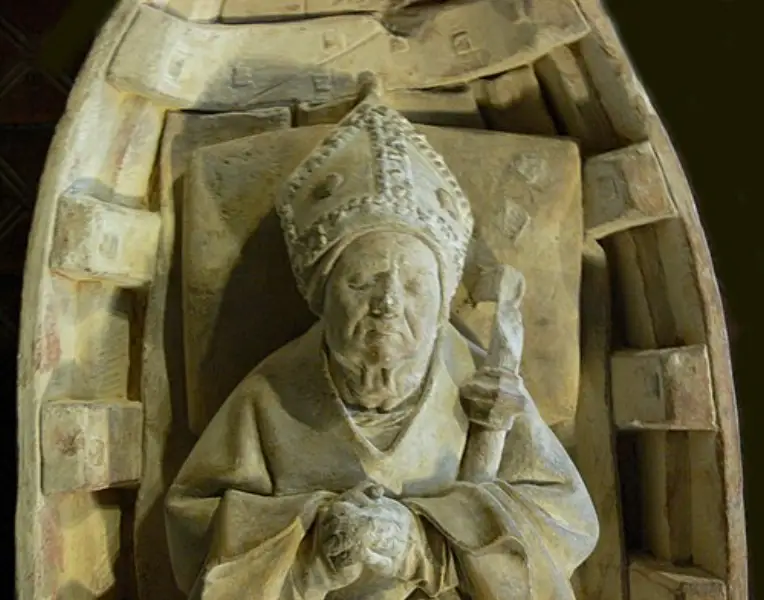
Aredius — also Yrieix, Arède d'Atane, Latin Aredius, from the Occitan Iriès — born around 510 at Limoges, was a sixth-century Frankish abbot, founder of the monastery of Attane, and chancellor to Theudebert I, king of Austrasia. His family was a prominent Gallo-Roman one of Limoges: he was son of the noble landowner Jucundus and his wife Pelagia of Limoges. In boyhood he was taught by Sebastian, abbot of the monastery at Vigeois; in youth he went to the court of Theudebert I at Trier, where by 540 he had been appointed the king's chancellor. Bishop Nicetius of Trier persuaded him to leave the dissolute life of the court; Gregory of Tours records the sign that accompanied the change — while the clerics sang psalms, a dazzling white dove circled Aredius and settled on his head, as though to show that the Holy Spirit already filled him; shy, he waved it away, and it perched on his shoulder and accompanied him to the bishop's house. When his father died, Aredius went back to the Limousin to look after his mother; having handed his estates over to her management, he spent a while living as a hermit in a cave. From 564 to 572 he founded the monastery of Attane on his inherited land on the rivers Loue and Couchou in Haute-Vienne, becoming its first abbot with his own household as the earliest monks; the house followed the rule of Saint John Cassian with later elements of Saint Basil's rule. Known for his evangelical journeys through Gaul, his foundations at Vigeois and Excideuil, his annual pilgrimages on foot to Tours and to Queen Radegund at Poitiers, and his gift of healing that drew the people 'like bees to a hive,' he more than once intervened with the Merovingian princes over oppressive taxes. He died on 25 August 591 at Attane, which was renamed Saint-Yrieix in his honor; the town that grew there became Saint-Yrieix-la-Perche. His friend Gregory of Tours wrote the principal accounts of his life.
The Complete Life
Limoges and Trier
Aredius was born around 510 to a prominent Gallo-Roman family in Limoges, in the Occitan-speaking Limousin — his birth name was the native Iriès, softened to Yrieix for Francophone ears and Latinized to Aredius for official and religious use. His father Jucundus was a noble landowner; his mother, Pelagia of Limoges, would figure large in his later life. In boyhood the abbot Sebastian of Vigeois educated him; in youth he went to the court of Theudebert I of Austrasia at Trier, and by 540 had been appointed the king's chancellor — the highest administrative office a subject could hold, and one that kept him at the center of a court Gregory of Tours describes as dissolute. There Bishop Nicetius of Trier undertook his conversion, and Gregory records the sign that attended it: during the singing of the psalms, a dazzling white dove circled Aredius and settled on his head, as though to show that the Holy Spirit already filled him. Shy, he waved it away; it fluttered off, perched on his shoulder, and accompanied him the whole way to the bishop's house.
§ Background and early years
Hermit and Founder
When his father died, Aredius went back to the Limousin to look after his mother, handing the management of his estates over to her and living for a while as a hermit in a cave. Between 564 and 572 he founded the monastery of Attane (Latin Attanum) on his inherited land on the rivers Loue and Couchou in Haute-Vienne, and became its first abbot; the first monks came from his own household, joined later by others. Gregory of Tours says the house followed the rule of Saint John Cassian, with later incorporation of elements of the rule of Saint Basil of Caesarea — the eastern monastic inheritance that shaped much of Merovingian monasticism before the Benedictine standardization. Aredius divided his own time between agricultural labor and study.
§ Monastic establishment and works
Journeys, Pilgrimages, and Healing
Aredius won renown for his evangelical journeys across Gaul and for foundations reaching beyond Attane: monasteries at Vigeois and Excideuil in Périgord, and several churches built in honor of saints whose relics he had collected — including, probably, a church of Medardus of Soissons at Excideuil. His pilgrimages were the rhythm of his year: every year he walked to Tours for the feast of Saint Martin, and every year to the Holy Cross Abbey at Poitiers to visit Queen Radegund, the royal foundress whose friendship marked his circle. His reputation for the gift of healing drew the countryside to him — Gregory of Tours, his friend and hagiographer, says people crowded to Aredius 'like bees to a hive.' Time and again he pleaded with the Merovingian princes on the people's behalf over their crushing taxes: the abbot as shield of the peasantry.
§ Monastic establishment and works
Death and Legacy
Aredius died on 25 August 591 at Attane. He bequeathed his wealth to several beneficiaries, among them the church of Saint Martin of Tours, the shrine of his annual pilgrimages. His monastery was renamed Saint-Yrieix in his honor, and the town that grew up around it took the name Saint-Yrieix-la-Perche; several other French places named Saint-Yrieix carry his name too. Gregory of Tours included him in three works — the Historiae (the History of the Franks), the Lives of the Fathers, and the Glories of the Martyrs — making Aredius one of the best-documented saints of the sixth century.
§ Hagiography and relics
Veneration
Aredius is a pre-congregation saint, venerated in the Catholic and Eastern Orthodox Churches, with his feast on 25 August, the date of his death. His relics, and the memory of his town, surfaced again in modern controversy: the commune of Saint-Yrieix-la-Perche has formally asked that the Metropolitan Museum of Art in New York hand back an Aredius reliquary which the town says was bought illegally in 1906 — a present-day dispute over a sixth-century abbot's bones.
§ Introduction
Legacy
Aredius's legacy is written on the map of the Limousin: the town of Saint-Yrieix-la-Perche and its sisters preserve his Occitan name, and the monastery he founded on his own land carried his cult for a millennium. Historically, he is a prime specimen of the Gallo-Roman senatorial aristocracy that staffed both the Merovingian chancery and the Merovingian church — chancellor and abbot in one life — and of the sixth-century fusion of monasticism, pilgrimage, healing, and political intercession that Gregory of Tours recorded from the inside. The dove on his shoulder has kept his iconography for fourteen centuries.
§ Background and early years
Timeline
- 510
Born at Limoges into a prominent Gallo-Roman family, son of Jucundus and Pelagia
§ Introduction
- 540
Appointed chancellor to King Theudebert I of Austrasia at Trier
§ Background and early years
- 564
Founds the monastery of Attane on his inherited Limousin estate, between this year and 572
§ Monastic establishment and works
- 25 Aug 591
Dies at Saint-Yrieix in the Haute-Vienne; his monastery is renamed in his honour
§ Introduction
- 1906
Reliquary of Aredius acquired by the Metropolitan Museum of Art, later contested by his town
§ Hagiography and relics
The Record
- Patron of
- Saint-Yrieix-la-Perche and the Saint-Yrieix communes of France
- Symbols
- Abbot's crozier·White dove·Bees (the crowds who sought his healing)
- Canonization
- Pre-congregation; venerated in the Catholic and Eastern Orthodox Churches
Prayer
Bibliography
Show 1 sources
- ↑ Being from an Occitan -speaking region, the abbot's birth name was one native to that language: Iriès . This was modified to Yrieix for Francophone ears, and then the Latinised Aredius adopted for official use and in religious life. The L
Profile text adapted from the Wikipedia article, licensed CC BY-SA 4.0.
Pray with this saint every day
Save St. Aredius to your favorites, read the full profile, and get feast-day reminders in the Saints app.
Get the Saints AppFree on the App Store for iPhone and iPad