
1697-1772·Feast February 28
St. Arsenius Matseyevich
Metropolitan of Rostov, Confessor
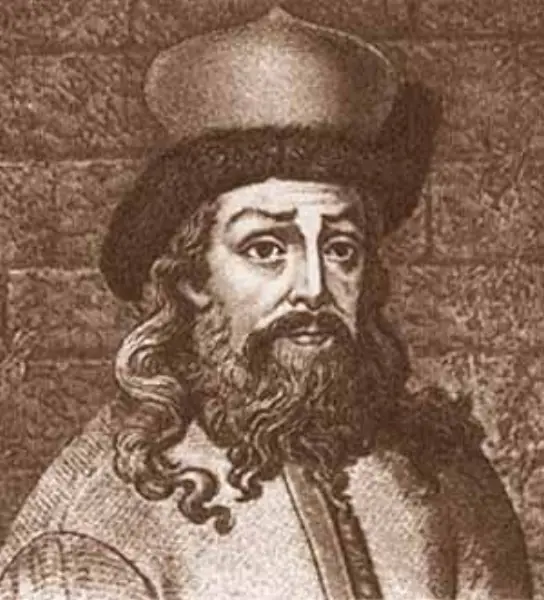
Overview
Arsenius (Arseny) Matseyevich, secular name Alexander Ioannovich Matseyevich, born in 1697 at Volodymyr and dying on 28 February 1772 at Reval (Tallinn), was metropolitan of Rostov and Yaroslavl in the Russian church — the confessor-bishop who, in 1764, spoke out when Empress Catherine II stripped the church of its lands. His secular career before that was the ordinary rise of a learned hierarch; his place in history came from his refusal, almost alone among the Russian episcopate, to accept the secularization of the monastic estates that transferred vast church lands to the crown. Deprived of his office for his protest, he was imprisoned in a fortress — confined, defrocked, and silenced — until his death eight years later. The manner of it, an old man in chains for a legal argument, made him a confessor in the church's eyes: a bishop who lost everything but the point he had made. The Russian Orthodox Church canonized him in the great council of new martyrs and confessors of 2000, and keeps his memory on 28 February, the day of his death.
The Complete Life
Vocation
Alexander Ioannovich Matseyevich — born at Volodymyr in 1697, in the western eparchies the Russian church had received with Ukraine — followed the learned path of the eighteenth-century hierarchy: the Kyiv-Mohyla schooling of most Russian bishops of the century, then office. He became bishop of Rostov and Yaroslavl and was raised to metropolitan, one of the senior hierarchs of the church at the moment when the Russian state was completing its long subordination of the church's temporal power.
§ Introduction
The Protest of 1764
The crisis came with the secularization reform of 1764, Catherine II's transfer of the monastic estates to the crown — a measure long prepared under Peter III and carried through by Catherine with the support of most of the hierarchy. Matseyevich raised his voice against the seizure of the church's land. His protest was canonical, and he made it publicly; what answered it was the annihilation of his career. He was deprived of his office and imprisoned in a fortress, where he remained until his death — a confession, in the technical sense, of a position the state would not permit and the church hierarchy would not defend.
§ Introduction
Final Years
Matseyevich died at Reval — Tallinn — on 28 February 1772, aged seventy-four or seventy-five, after some eight years of confinement. The record of his last years is thin: an imprisoned ex-metropolitan in a Baltic fortress, outliving the empress's wrath but not her reign. His death closed the last organized ecclesiastical resistance to the secularization.
§ Introduction
Canonization
The Russian Orthodox Church canonized Arsenius Matseyevich in 2000, in the great Jubilee Council that glorified the new martyrs and confessors of the twentieth century and reached back, in cases like his, to the confessors of the church against the absolutist state of the eighteenth. His commemoration falls on 28 February.
§ Introduction
Legacy
Matseyevich's memory has served ever since as the emblem of the hierarch who would not trade the church's independence for the state's favor. George Vernadsky's History of Russia carries him as the bishop broken for the church's lands. In the church's own reading he is a confessor in the line of Chrysostom — the bishop punished by the sovereign — and his canonization in 2000 was a judgment, implicitly, on every later arrangement of church and state.
§ References
Timeline
- 1697
Born at Volodymyr with the secular name Alexander Ioannovich Matseyevich
§ Introduction
- 1764
Protests Empress Catherine II's confiscation of the church's lands and is deprived of his office
§ Introduction
- 1764
Imprisoned in a fortress, where he remains until his death
§ Introduction
- 28 Feb 1772
Dies at Reval, aged seventy-four or seventy-five, after years of confinement
§ Introduction
- 2000
Canonized by the Russian Orthodox Church
§ Introduction
The Record
- Symbols
- Metropolitan's vestments·Chains (of his imprisonment)
- Canonization
- Canonized by the Russian Orthodox Church in 2000
Prayer
Profile text adapted from the Wikipedia article, licensed CC BY-SA 4.0.
Pray with this saint every day
Save St. Arsenius Matseyevich to your favorites, read the full profile, and get feast-day reminders in the Saints app.
Get the Saints AppFree on the App Store for iPhone and iPad