
died 29 January 826 or 830·Feast January 29 (Georgian Orthodox)
St. Ashot I the Great
Presiding Prince of Iberia, Kouropalates
Overview
Ashot I the Great, who died on 29 January in 826 or, more probably, 830, was the presiding prince of Iberia, the first of the Bagrationi dynasty to hold that office, which he attained around 813. From his base in Tao-Klarjeti, in the southwest of the Georgian lands, he fought to enlarge Bagratid territory and sought the Byzantine protectorate against the Arab domination of the Caucasus. Son of the nobleman Adarnase, who had founded the family's hereditary fief in Tao-Klarjeti, he at first could not win central Iberia, blocked by Arab-held Tiflis; he therefore made his seat in the duchy of Klarjeti, his patrimony, rebuilt the castle of Artanuji, and obtained from Byzantium recognition as presiding prince together with the title of kouropalates. A patron of monasticism, he protected the communities founded by Grigol Khandzteli and encouraged the settlement of Georgians in the region, shifting the center of the country's life to the southwest. He won a victory on the Ksani over the emir of Tiflis, and around 818 the caliph recognized him as prince of Iberia to counter that rebellious emir. The caliph's viceroy Khalid ibn Yazid drove him back, and he withdrew to the Nigali valley, meeting his death by assassination at the altar of a church. The Georgian church has canonized him.
The Complete Life
Early Life
Ashot was the son of Adarnase, an Iberian nobleman of the Bagratid family who had founded a hereditary fiefdom in Tao-Klarjeti, in the far southwest of the Georgian lands now in northeast Turkey, and who, once his Guaramid and Chosroid cousins — Iberia's older princely lines — had died out, left his son extensive possessions. Ashot's mother was a daughter of Prince Nerse of the old royal house. The Georgia into which he came of age had been devastated by the Arab conquest and occupation: the emirate of Tiflis held the center of the country, the old capital of Tbilisi was a Muslim city, plague had emptied districts, and the principalities of the Caucasus maneuvered among the caliphate, Byzantium and the highland tribes. Ashot's first attempts to establish himself in central Iberia, in Shida Kartli, were dashed by Arab control of Tiflis, and the failure determined his life's strategy: if the center could not be held, the southwest could be built. He settled in his patrimonial duchy of Klarjeti and began.
§ Biography
The Builder in Klarjeti
Ashot's vocation was the rebuilding of a country working inward from its edges. He rebuilt the castle of Artanuji — reputedly a fifth-century foundation of King Vakhtang Gorgasali — and made it his seat; he placed himself under Byzantine protection, receiving recognition as presiding prince of Iberia and the court title of kouropalates, which gave his new state the legitimacy of the empire; and, most distinctively, he made the church his partner. He patronized the monastic communities established by Grigol Khandzteli, the great abbot whose foundations were colonizing the wilderness of Klarjeti with lauras and hermitages, and he encouraged the settlement of Georgians in the devastated region, offering land and order to a peasantry scattered by war and cholera. The result, within a generation, was the effective transfer of the political and religious center of Iberia from the Arab-held center to the southwest: a new Georgia grew at Tao-Klarjeti while the old one lay under the emirs, and the monasteries that Ashot protected would produce the literature, art and memory of medieval Georgia.
§ Biography
War and Statecraft
From Klarjeti, Ashot fought to recover the Georgian lands. Though not always successful, he annexed much neighboring land, stretching from Tao in the southwest all the way to Shida Kartli in the northeast — Kola, Artani, Javakheti, Samtskhe and Trialeti among it; of the old Chosroid possessions only Kakheti in the east escaped him. His diplomacy matched his arms: as the local Arab emirs grew independent of the caliphate, the caliph recognized Ashot as prince of Iberia, around 818, precisely to counterbalance the rebellious emir of Tiflis, Isma'il ibn Shu'aib; and when that emir, allied with the Kakhetian prince Grigol and the highland tribes of the Mtiulians and Tsanars, moved against him, Ashot, joined by the Byzantine vassal king Theodosius II of Abkhazia, met him on the Ksani and won, clearing central Iberia of the Kakhetians. He was playing, with small means, the great game of the ninth-century Caucasus, holding the balance between Baghdad and Constantinople long enough for a Christian state to grow.
§ Biography
Martyrdom
The reversal came with the empire's reassertion. In 827 or 828 Khalid ibn Yazid, the caliph's viceroy of Arminiya, moved into the Caucasus to restore central Arab authority through the emirate of Tbilisi, and Ashot was driven from central Iberia. He withdrew to the Nigali valley in his own southwestern mountains, and there renegades assassinated him at the altar of a local church, cutting him down while he was at prayer. The eleventh-century chronicler Sumbat gives the year 826, but the evidence that Ashot was alive during Khalid's campaign makes the later date, 29 January 830, the more likely. His death at the altar gave the Georgian church its martyr-prince, a ruler killed in the very act that had underwritten his whole policy, the protection of the faith of his people. His three sons — Bagrat I, Adarnase II and Guaram — divided his holdings between them and carried the Bagratid ascendancy forward to the royal and imperial titles their descendants would bear.
§ Biography
Canonization
The Georgian Orthodox Church has canonized Ashot, honoring in him the Christian prince par excellence: the ruler who protects the church, rebuilds the nation, and dies at the altar. His cult belongs to the Georgian church's long tradition of royal sanctity, which numbers among its saints kings and queens of the medieval monarchy; Ashot, a prince rather than a king, stands at the head of the line as the restorer of the Christian state after the Arab catastrophe. His feast is kept on 29 January with the martyrs' office, the manner of his death giving the color to the commemoration. The church's judgment embraced both his works, the castles and campaigns, and his motive, the faith of Klarjeti's monastic revival, and it has never separated them: in the Georgian tradition nation-building and church-building are one work, and Ashot is its exemplar.
§ Introduction
Legacy
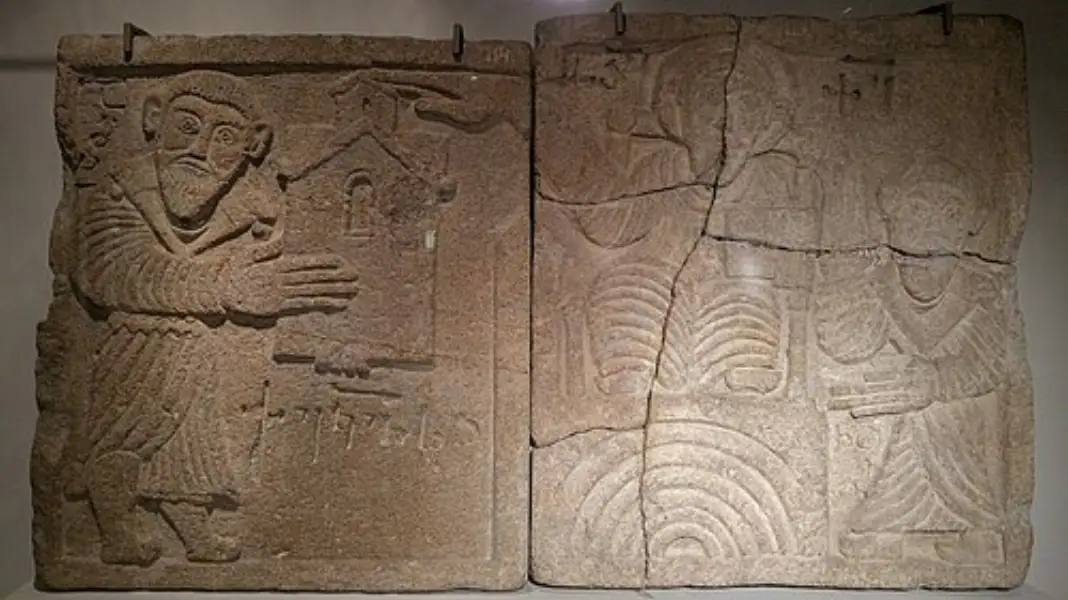
Ashot's legacy is the Georgian state itself. He was the first of the Bagratids, the dynasty that would rule Georgia, as princes, kings and queens, for a thousand years, culminating in the golden age of David the Builder and Queen Tamar; from his base at Artanuji grew the Tao-Klarjeti kingdom whose monasteries, Opiza, Khandzta, Tbeti and the rest, created Georgian letters. His strategy, rebuilding the nation from the southwestern mountains under Byzantine protection, shaped the country's map and orientation for centuries. The Georgian church honors him as a saint and martyr-prince, and the modern republic, rediscovering its medieval history, counts him among the founders of statehood; his relief stands in the national museum at Tbilisi. For a small Christian nation that has lived between empires, Ashot the Great remains the type of the ruler who used power, alliance and patience to keep a people and a faith alive.
§ Introduction
Timeline
- 813
Became the first Bagratid presiding prince of Iberia, making Klarjeti and Artanuji his base
§ Introduction
- 813
Received Byzantine protection and recognition as presiding prince and kouropalates
§ Biography
- 818
Was recognized by the caliph as prince of Iberia to counter the rebellious emir of Tiflis
§ Biography
- 818
Joined Theodosius II of Abkhazia in defeating the emir of Tiflis on the Ksani
§ Biography
- 827
Khalid ibn Yazid's campaign restored Arab authority and drove Ashot from central Iberia
§ Biography
- 29 Jan 830
Renegades killed him at the altar of a church in the Nigali valley, most likely in 830
§ Biography
The Record
- Patron of
- Georgia·The Bagrationi dynasty·Klarjeti monasticism
- Symbols
- Kouropalates' rank·Artanuji castle
- Canonization
- Canonized by the Georgian Orthodox Church
Prayer
Bibliography
Show 7 sources
- ↑ "† orthodoxy.ge † წმინდანთა ცხოვრება - წმიდა მოწამე აშოტ კურაპალატი, არტანუჯის ტაძარში წამებული (+829)" . www.orthodoxy.ge . Retrieved 2022-11-28 .
- ↑ Rapp, Stephen H. (2003), Studies in Medieval Georgian Historiography: Early Texts And Eurasian Contexts , passim . Peeters Publishers, ISBN 90-429-1318-5
- 1 2 3 Suny 1994 , pp. 29–30.
- 1 2 Suny 1994 , p. 29.
- ↑ Rapp (2003), p. 356
- ↑ Toumanoff, Cyril (1956), "Date of the death of the Kouropalates Ashot". Le Muséon , LXIX, 1—2: 83—85
- ↑ Metreveli, Roin (2003). ბაგრატიონები. სამეცნიერო და კულტურული მემკვიდრეობა [ Scientific and Cultural Heritage of the Bagrationis ] (in Georgian and English). Tbilisi: Neostudia. Table 2. ISBN 99928-0-623-0 .
Profile text adapted from the Wikipedia article, licensed CC BY-SA 4.0.
Pray with this saint every day
Save St. Ashot I the Great to your favorites, read the full profile, and get feast-day reminders in the Saints app.
Get the Saints AppFree on the App Store for iPhone and iPad