
c. 350-c. 410·Feast October 30
St. Asterius of Amasea
Bishop of Amasea, Preacher
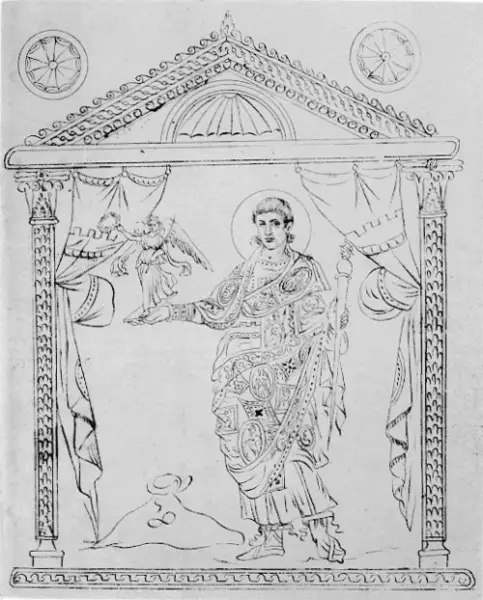
Overview
Asterius of Amasea, born in Cappadocia around 350, was made bishop of Amasea in Pontus between 380 and 390 after a first career as a lawyer, and died around 410. A younger contemporary of Amphilochius of Iconium and of the three great Cappadocian fathers, he brought to the episcopate the full training of the professional rhetorician, and significant portions of his lively sermons survive. Educated by a Scythian slave, he preached sermons rich in classical allusion and unusually full of the details of everyday life, which makes them precious to historians of art and society alike. Sixteen homilies and panegyrics on the martyrs are extant. His Oration against the Kalends festival, delivered on 1 January 400, denounces the pagan practices and abuses surrounding the New Year feast and answers the defence of it offered by Libanius — a central document for the history of the late antique New Year. He must not be mistaken for the Arian polemicist Asterius the Sophist. The Church keeps his feast on 30 October.
The Complete Life
Early Life
Asterius was born in Cappadocia around the middle of the fourth century, into the world that produced Basil, Gregory of Nazianzus and Gregory of Nyssa; he was their younger contemporary, and of Amphilochius of Iconium, the friend and correspondent of the great Cappadocians. Little is known of his life except what he lets slip in the sermons, and what he lets slip is often memorable: he was educated by a Scythian slave — a detail he preserves without shame, evidence of the talent that rose through the slave schoolroom. He practised law before the church claimed him, and like Amphilochius he brought the advocate's craft to the episcopate. Between 380 and 390 he was made bishop of Amasea, the metropolis of Pontus on the Iris river, governing a see that had suffered for the faith a generation before under Maximinus. He died around 410, an old man by his own admission, at Amasea.
Preacher of Amasea
Sixteen homilies and panegyrics of Asterius survive — a large corpus for a bishop of the period — and their character is their distinction: lively, learned, and stuffed with the observable world. He preached the martyr-panegyrics that the calendar required, on saints local and universal, with the rhetorician's full apparatus; he knew the classics well enough to quote and to answer them. His most famous sermon, the Oration against the Kalends festival, preached on 1 January 400, is a frontal attack on the pagan New Year — the masks, the feasting, the gambling, the cross-dressing, the debt and disorder — and a point-by-point rebuttal of the pagan professor Libanius, who had defended the festival's joys. Everything modern writers quote about the late Roman Lord of Misrule comes through Asterius' indignant pages. Another homily contrasts the rich man's marble baths and retinue with the beggar at his gate, a social document of the first order.
Art and Society in the Sermons
Historians mine Asterius because he looked at things. His sermon on the martyr Phocas describes the painting of the saint's exploits in an innkeeper's hall, one of the earliest discussions of Christian art and its uses; his description of a martyr's shrine festival gives the noise, the crowds and the commerce of a provincial cult; his attacks on the New Year's disguises preserve the whole repertoire of late antique misrule. He preached against the abuse of wealth with a lawyer's precision about how fortunes are made, and for the poor with details of the poor's actual condition. This habit of observation joined a theology of the martyrs as present and active: for Asterius the saint in the icon and the saint at the altar were the same person, close to the congregation and offended by their compromises. His Christianity is urban, articulate and unsentimental, the voice of a see that had kept the faith through a persecution within living memory.
Legacy
Asterius' legacy divides between the Church's memory and the academy's use. The Church honours him as a confessor-bishop of Pontus with a feast on 30 October, careful to distinguish him from Asterius the Sophist, the Arian writer whose name he shares — the two were already confused in antiquity. The academy, from the Bollandists onward, has valued him as a source without price: for the history of the Kalends and the survival of pagan festival, for early Christian art, for the rhetoric of the late empire, and for the texture of ordinary life in a provincial capital around 400. He stands with Basil and the Gregories as evidence that the Cappadocian reformation was not only doctrinal but pastoral and observational: bishops who saw their cities and said what they saw, and whose sermons therefore outlived their theology.
Timeline
- 350
Born in Cappadocia around this year; a Scythian slave later oversaw his education before he practised as a lawyer
§ Introduction
- 380
Enters episcopal office at Amasea in Pontus at some point in the decade beginning this year, having first worked as a lawyer
§ Life and work
- 1 Jan 400
Preaches his oration attacking the pagan New Year feast and Libanius's defence of it; the dated delivery anchors his career
§ Life and work
- 410
Dies at Amasea in Pontus, probably in this year, after reaching a great age according to one of his lost sermons
§ Introduction
- 787
His oration on the martyrdom of St Euphemia is cited twice at the Second Council of Nicaea as evidence for venerating images
§ Artistic references
- 1611
An edition of his homilies prepared by Philip Rubens appears in a memorial volume issued after Philip's death
§ Texts
- 1904
An American volume, Ancient Sermons for Modern Times, brings five of his sermons to English readers
§ Texts
- 1914
Two further genuine sermons, recovered from an Athos manuscript, are printed for the first time by A. Bretz
§ Texts
- 2007
The 1904 American collection of five sermons is reissued as a reprint
§ Texts
The Record
- Major works
- Sixteen surviving homilies and panegyrics on the martyrs·Oration 4, Adversus Kalendarum Festum, against the New Year festival·Homily on wealth and poverty, contrasting the rich man's baths with the beggar's hunger
- Patron of
- Preachers
- Symbols
- Bishop's vestments·Homiliary
- Canonization
- Pre-congregation; venerated in the Roman Catholic and Eastern Orthodox churches
Prayer
Profile text adapted from the Wikipedia article, licensed CC BY-SA 4.0.
Pray with this saint every day
Save St. Asterius of Amasea to your favorites, read the full profile, and get feast-day reminders in the Saints app.
Get the Saints AppFree on the App Store for iPhone and iPad