
1597-1654·Feast May 2/15 (Synaxis of Athonite Venerables, 2nd week after Pentecost)
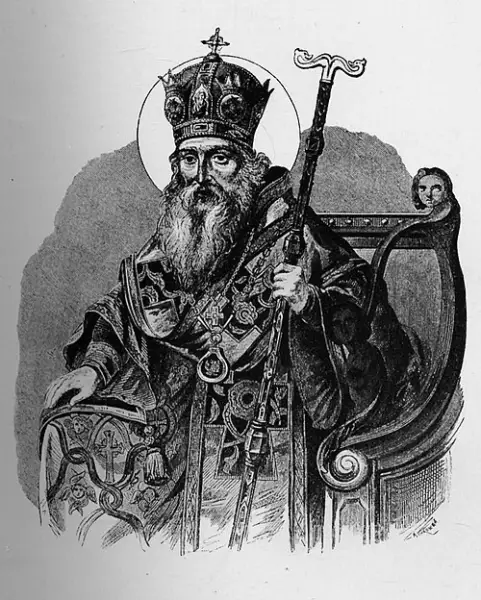
St. Athanasius III of Constantinople
Ecumenical Patriarch, Enlightener of the Athonite Synaxis
Overview
Athanasius III of Constantinople, born Alexios Patellarios in 1597 at Retimon in Crete, was twice Ecumenical Patriarch of Constantinople, in 1634 and again in 1652, and is honoured as a saint in the Athonite synaxarion. Born into an imperial noble family whose roots reached back to the Palaiologos, son of the scientist and publisher Georgios and brother of the physician Eustaphios, he lived twenty-six years in Crete, then under Venetian rule, and was educated at the Arkadi Monastery, becoming proficient in philosophy and in Ancient Greek, Latin, Hebrew, Arabic, and Italian. Consecrated metropolitan of Thessaloniki in 1631 under the patronage of Patriarch Cyril I, he was enthroned as patriarch on 25 March 1634 amid the factional storm around Cyril's Calvinist-tinged Confession, deposed after days when Cyril returned, and retired to Mount Athos, where he built the skete later occupied by the Russian St. Andrew's skete. A journey to Italy followed, where he swore fealty to the Pope in Rome, was offered a cardinalate and asked to accept the Filioque, and declined both. He was twice imprisoned over the Thessaloniki metropolis's taxes, travelled in Moldavia where he founded St. Nicholas Monastery in Galați, returned briefly to the patriarchal throne in 1652, and then left Constantinople forever, reaching Moscow in 1653, where he assisted Patriarch Nikon in the early work of the book reform. He died on 5 April 1654 at the Mhar Monastery, and was glorified by the Russian church in the 1670s; his relics were later associated with the Lubensk icon tradition.
The Complete Life
Early Life
Alexios Patellarios was born in 1597 at Retimon, modern Rethymno, in Crete, then under Venetian rule, into an imperial noble family whose roots, the tradition holds, went back to the Palaiologos, the last imperial dynasty of Byzantium. Georgios, his father, was a scientist and publisher, while his elder brother Eustaphios practiced as a physician, so the boy grew up in a household of the learned Greek diaspora, that class which kept Hellenic letters alive under the Latin rule of the island. For twenty-six years he lived in Crete, receiving his education at the Arkadi Monastery, the great Cretan house that was both a school and a stronghold of Orthodoxy under the Venetians. He emerged from it equipped as few men of his generation were: in philosophy, and in Ancient Greek, Latin, Hebrew, Arabic, and Italian, the five languages of the eastern Mediterranean's scholarship and diplomacy. This formation made him equally at home in the Ottoman capital, the Roman Curia, the courts of the Romanian princes, and the Russia of the early Romanovs, and his life would in fact carry him through all of them.
Vocation
Alexios' vocation ran through the highest and lowest stations of the eastern church. Consecrated metropolitan of Thessaloniki in 1631 under the patronage of Ecumenical Patriarch Cyril I Lucaris, he was soon caught in the greatest theological crisis of the Greek church in the seventeenth century: the publication of Cyril's Confession of the Christian faith in 1629, a document with Calvinist lines that had convulsed the Orthodox world. When a third opposition to Cyril formed in the Fanari in early 1634, Athanasius became patriarch on 25 February and received enthronement on 25 March; within days Cyril had returned from prison and unseated him. Deposed a second time in 1635, Athanasius fled to Mount Athos, where he built the skete on the site where the Russian St. Andrew's skete would be founded in 1849, the place that kept the icon known as Consolation in Sorrow and Grief. His vocation from this point forward was that of the deposed hierarch: still a bishop, without a stable throne, whose authority survived in his learning, his foundations, and the respect of the churches, and whose final service would be rendered in a country he had not expected.
Mission
The mission of Athanasius was performed in four theatres. In Italy, travelling after his deposition, he landed at Ancona, was received by the Orientalist Orazio Giustiniani, and in Rome swore fealty to the Pope, receiving offers of support in manpower and money; the Pope advised him to become a cardinal and to accept the Credo with the Filioque, and the saint declined, an episode his biographers read as diplomatic survival rather than doctrinal surrender, since in his last patriarchate he preached his dissociation from Catholicism. In Constantinople, after Cyril Lucaris was strangled in 1638 at the request of Murad IV, he was a pretender to the throne, was required by Parthenius I to renounce his claims and return to Thessaloniki, and was twice imprisoned over the metropolis's taxes, appealing in his poverty to Tsar Michael of Russia. In Moldavia, the hospodar Vasile Lupu sheltered him, and in 1643 at Galați he established the St. Nicholas Monastery, making it a metochion of St. Catherine's on Sinai, and composed there a Hymn to the Mother of God and an encomium in honor of his patron. Then came Moscow: arriving on 16 April 1653, he placed his learning at the service of Patriarch Nikon's book reform, serving in the Saviour Cathedral by the Terem Palace and at the Novospassky and Trinity-Sergius monasteries, helping to correct the Russian service books against the Greek.
Final Years
Athanasius' final years were spent in the Russia that had answered his appeals. After his voluntary renunciation of the patriarchate in July 1652, he travelled again through Moldavia, visiting Vasile Lupu at Iași and Bohdan Khmelnytsky at Chigirin, and carrying with him the deeds of those men for the Tsar, he arrived in Moscow on 16 April 1653, where Tsar Alexis received him on 22 April. He lived at the Kirillov metochion, made his divine services at the Novospassky Monastery and in the Saviour Cathedral, and in July 1653 visited the Trinity-Sergius Monastery. At the request of Patriarch Nikon he participated in the early editing of the service books, the reform whose consequences, the schism of the Russian church, he did not live to see. He died on 5 April 1654 at the Mhar Monastery, in what is now Ukraine, on the estate of the same circle of Ukrainian notables, and was buried there. The Russian church glorified him in the 1670s as an Enlightener into the Synaxis of the Athonite Venerables, his feast falling on 2/15 May in the second week after Pentecost, alongside Athanasius of Alexandria; the tradition of the Lubensk monastery, associated with his relics, gave Russian iconography the image of the patriarch 'who rested sitting'.
Legacy
The legacy of Athanasius III is unusually international. On Mount Athos his skete, later the Russian house of St. Andrew, perpetuates his name, and the icon of Consolation in Sorrow and Grief that his foundation kept became one of the venerated images of the Russian church. In Galați the St. Nicholas Monastery he founded continues. In Ukraine and Russia his cult as an Athonite enlightener was established within a generation of his death, and his participation in Nikon's reform, whatever one's judgement of that reform, ties him to the fateful turn of Russian church history in the 1650s. Historians of the Greek church under the Ottomans use his career as a case study of the age: the confession controversy of Cyril Lucaris, the poverty and imprisonment of the metropolitans, the dependence of the hierarchy on the Romanian princes and the Russian tsars, and the delicate diplomatic existence of a patriarch who could negotiate with Rome without becoming its creature. His life, read plainly, is the biography of the Greek church's seventeenth century in miniature, and his glorification by the Russian church made a Crete-born patriarch of Constantinople one of the saints of the Slavic lands.
Timeline
- 1597
Born Alexios Patellarios at Retimon on Crete to a noble family claiming descent from the Palaiologos
§ Introduction
- Mar 1629
Cyril I publishes the Eastern Confession of the Christian Faith, whose Calvinist tone soon sparks the opposition that elevates Athanasius
§ Biography
- 1631
Consecrated metropolitan bishop of Thessaloniki under the patronage of Ecumenical Patriarch Cyril I
§ Biography
- 25 Feb 1634
Becomes Ecumenical Patriarch of Constantinople as the third opposition movement against Cyril I prevails
§ Biography
- 25 Mar 1634
Enthroned as patriarch, only to be dethroned days later when Cyril I returns from prison; he flees to Mount Athos
§ Biography
- 1635
After a second deposition he sails for Italy, staying at Ancona and Venice before reaching Rome, where he swears fealty to the Pope
§ Biography
- 1637
Recalled to Constantinople
§ Biography
- 26 Jun 1638
When Cyril I is strangled at the order of Murad IV, Athanasius puts himself forward as a pretender to the patriarchate
§ Biography
- 1643
Falling ill while travelling toward Russia, he stays in Moldavia with hospodar Vasile Lupu, founds the St Nicholas Monastery at Galați, and writes the Hymn to the Mother of God
§ Biography
- Jun 1652
Returns to Constantinople and takes the patriarchal throne for a fifteen-day third tenure
§ Biography
- Jul 1652
Renounces the patriarchate voluntarily and leaves Constantinople for good, later visiting Vasile Lupu at Iași and Bohdan Khmelnytsky at Chigirin
§ Biography
- 16 Apr 1653
Reaches Moscow carrying proposals for a joint war against the Turks uniting Russia, Moldavia and the Cossack Hetmanate
§ Biography
- 22 Apr 1653
Received in audience by Tsar Alexis of Russia; he lodges at the Kirillov metochion and serves at the Novospassky Monastery
§ Biography
- Jul 1653
Visits the Trinity Sergius Monastery
§ Biography
- Dec 1653
Leaves Moscow for the Nicholas Monastery in Galați, calling on Bohdan Khmelnytsky once more along the way
§ Biography
- Feb 1654
Takes up residence at the Mhar Monastery near Lubny
§ Biography
- 5 Apr 1654
Dies at the Mhar Monastery on Thomas' Week and is buried seated on a throne beneath the ambon
§ Biography
- 1 Feb 1662
His relics are translated at the Lubensk Monastery after Metropolitan Paisios Ligarides of Gaza reports a dream vision of him
§ Veneration
- 1672
The Tsar dispatches the podyachy M. Savin to investigate the wonders reported at his relics
§ Veneration
- 1818
Bishop Methodius of Poltava petitions the Most Holy Synod for his canonisation, but the application is declined
§ Veneration
- 1922
Bolsheviks plunder the Transfiguration cathedral at Lubny, including the saint's silver throne
§ Veneration
- 1930
During the 1930s his relics are moved to Kharkiv
§ Veneration
- 1947
The relics are permanently preserved in Kharkiv's Annunciation Cathedral
§ Veneration
The Record
- Major works
- Hymn to the Mother of God (Galați period)·Encomium to Vasile Lupu·Foundations of St. Nicholas Monastery, Galați and the Athonite skete
- Patron of
- Mount Athos (among the Athonite venerables)·Mhar and Lubensk monasteries (Ukraine)
- Symbols
- Patriarchal vestments·The Mhar icon 'Consolation in Sorrow and Grief'·Enlightener's scroll
- Canonization
- Glorified as an Enlightener into the Synaxis of Athonite Venerables by the Russian Church in the 1670s
Prayer
Profile text adapted from the Wikipedia article, licensed CC BY-SA 4.0.
Pray with this saint every day
Save St. Athanasius III of Constantinople to your favorites, read the full profile, and get feast-day reminders in the Saints app.
Get the Saints AppFree on the App Store for iPhone and iPad