
c. 1070-1153·Feast May 22; June 21 (Pistoia)
St. Atto of Pistoia
Vallumbrosan Bishop of Pistoia
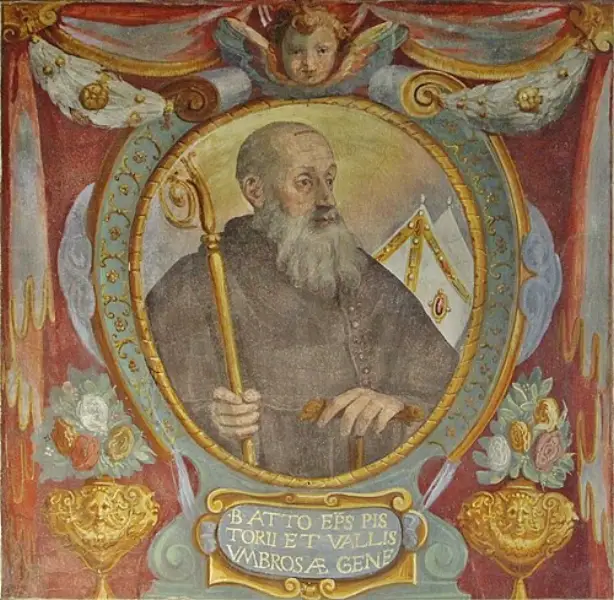
Overview
Atto of Pistoia, born about 1070 in the Iberian peninsula — a Portuguese source says Beja, while the Spanish historian Enrique Flórez thought him from Badajoz in Extremadura — was a Vallumbrosan monk, abbot, bishop, and historiographer. On pilgrimage to Italy he paused at Vallombrosa Abbey and found a welcome there from the abbot Bernardo degli Uberti. By 1100 Atto was a Vallumbrosian monk of the place, became its abbot in 1105, and was heading the whole congregation as abbot-general around 1120. As a writer he produced a life of John Gualbert, founder of the Vallumbrosans, and of Bernard degli Uberti, bishop of Parma. He became bishop of Pistoia in 1135; there he kept the rule of his order even as a bishop, acted as visitor to the monasteries, and recited the Hours of the Divine Office with his canons, as was done in the cloister. In 1145 he brought certain relics of the Apostle James the Great from Santiago de Compostela to Pistoia, and raised an altar in honor of Saint James within the cathedral of Saint Zeno to shelter them — an act with great economic and political consequences, since pilgrims soon began coming to Pistoia on the Compostela pattern, and which gave rise to the chapel of Saint James and to a hospital he built in the apostle's honor. He died on 22 May 1153. His body was found in 1337 in the church of San Giovanni in Corte and moved to the cathedral of San Zeno; for two centuries the 'fires of Sant'Atto' were lit in the Piazza del Duomo on 21 June in his honor.
The Complete Life
A Pilgrim from Iberia
Atto's origins lie at the western edge of Latin Christendom, and the sources disagree on the exact spot: a Portuguese source says he was born at Beja in the Alentejo, while the Spanish historian Enrique Flórez, writing of the Badajoz connection, placed him just across the modern border in Extremadura. The disagreement itself is revealing — a frontier region, and a man who left it young. He traveled as a pilgrim to Italy, and paused at Vallombrosa, the great abbey of Tuscany, set in the hills east of Florence and founded by John Gualbert. The abbot Bernardo degli Uberti — himself a future saint and, for a while, a cardinal — welcomed him there, and the pilgrimage turned into a vocation: by 1100 Atto was a Vallumbrosian monk. The order he joined was of the strict reforming wing of the eleventh-century church, known for its hermit-foresters and its battles against simony, and an Iberian newcomer rising to its head says much about both his ability and its openness.
Abbot, General, and Historian
Atto became abbot of Vallombrosa in 1105 and abbot-general of the congregation around 1120, governing the order's dispersed houses in the decades when it was at its greatest extent. His work as abbot was matched by his work as a writer: he composed lives of John Gualbert, the founder of the order, and of Bernard degli Uberti, his own patron and the bishop of Parma — the historiographer's office the sources give him. In 1133 or thereabouts he was consecrated and by 1135 installed as bishop of Pistoia, the small, faction-ridden Tuscan city that was to be his last and longest assignment. As bishop he went on living under his order's rule, made the rounds of the monasteries as visitor, and recited the Hours of the Divine Office with his canons, as was the custom already in the cloister — a monk's discipline carried into the episcopate. The Vallumbrosan habit kept in the episcopate, and the recitation of the Hours with his canons, marked him as a monk-bishop in an age that was producing the communes.
The Relics of Saint James
The public event of Atto's episcopate came in 1145: from Santiago de Compostela he brought certain relics of the Apostle James the Great back to Pistoia, and raised an altar in honor of Saint James within the cathedral of Saint Zeno to shelter them. The results were substantial. Before long pilgrims were coming to Pistoia to venerate the saint, following the Compostela model itself, and the city's economy and politics bent around the new shrine: the chapel of Saint James arose in the cathedral, adorned within a generation by the jewel of the Pistoiese Romanesque, and Atto built a hospital in the apostle's honor to serve the pilgrims who came. Meanwhile he managed the city's relationship with its municipal authorities — often marked by breakdowns and clashes, in a commune-age Italian bishopric — until his death on 22 May 1153. The hospital he built in the apostle's honor served the pilgrims the new shrine drew, completing the Compostela pattern transplanted into Tuscany.
Fires of Sant'Atto
Atto's body was found in 1337 inside the church of San Giovanni in Corte and moved to the cathedral of San Zeno, where Pistoia keeps him. His cult, formally ratified when Pope Clement VIII canonized him on 24 January 1605 at Saint Peter's, had long been municipal: from the middle of the seventeenth century to the beginning of the nineteenth, every 21 June saw the so-called fires of Sant'Atto in the Piazza del Duomo in his honor, with people from the neighboring districts flocking to a square illuminated by countless torches displayed from ornate window sills. The feast, which Pistoia keeps alongside the general one of 22 May, and the chapel of Saint James that his relic-translation called into being, remain the two monuments of his episcopate — one of light, one of stone. The fires of Sant'Atto, torches in the Piazza del Duomo on 21 June for two centuries, were the civic form his cult took after the canonization.
Timeline
- 1070
Born around this year in Beja in the Taifa of Seville, though one Spanish tradition places his birth in Badajoz
§ Life
- 1100
By this year a Vallumbrosian monk at Vallombrosa, having stopped there as a pilgrim from Iberia
§ Life
- 1105
Became abbot of Vallombrosa
§ Life
- 1120
Became abbot-general of the Vallumbrosan congregation around this year
§ Life
- 1133
Consecrated a bishop around this year
§ Life
- 1135
Made Bishop of Pistoia in Tuscany
§ Life
- 1145
Brought back relics of the Apostle James from Compostela and had an altar in Saint James's honor installed within the cathedral of Saint Zeno
§ Life
- 22 May 1153
Died at Pistoia after two decades as bishop
§ Life
- 1337
His body was found in the church of San Giovanni in Corte and moved to the cathedral of San Zeno
§ Life
- 24 Jan 1605
Canonized by Pope Clement VIII at Saint Peter's Basilica
§ Life
The Record
- Major works
- Life of St. John Gualbert·Life of St. Bernard degli Uberti, bishop of Parma
- Patron of
- Pistoia, Italy·Pilgrims and hospital workers
- Symbols
- Episcopal attire and pastoral staff·Benedictine (Vallumbrosan) habit
- Canonization
- Canonized on 24 January 1605 by Pope Clement VIII
Prayer
Profile text adapted from the Wikipedia article, licensed CC BY-SA 4.0.
Pray with this saint every day
Save St. Atto of Pistoia to your favorites, read the full profile, and get feast-day reminders in the Saints app.
Get the Saints AppFree on the App Store for iPhone and iPad