
died 1027·Feast October 15
St. Aurelia of Regensburg
Virgin and Solitary
Overview
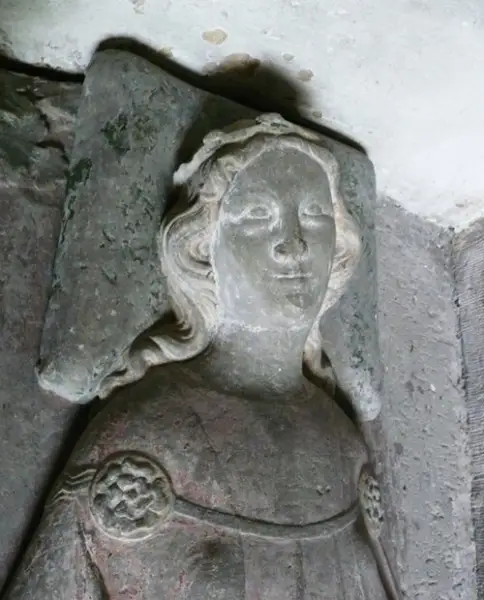
Saint Aurelia of Regensburg, also known as Aurelia of Ratisbon, was an eleventh-century German saint, a virgin and solitary who died in 1027. Local tradition makes her a daughter of Hugh Capet, first king of the Franks and head of the Capetian line. Fleeing a marriage her parents had arranged despite her unwillingness, she slipped away dressed as a pilgrim and traveled until she reached Regensburg. It was there that Saint Wolfgang, bishop of Ratisbon, penetrated her disguise — tradition credits him with the discernment that both discovered her and directed her — and at his counsel she took up the solitary life, joining St. Emmeram's Abbey just outside Regensburg, where she stayed roughly fifty-two years. Her hidden life within the abbey's orbit was the ordinary material of medieval sanctity: prayer, labor, and the refusal of every return to the world she had renounced. By the time she died in 1027, her reputation for sanctity — several miracles were cited as proof — had spread widely; her relics were enshrined, and the hermitage became a chapel that soon ranked among the region's popular pilgrimage sites. Her name comes from the Latin aureus, 'golden,' and she has been invoked against fevers.
The Complete Life
The Fleeing Princess
The local tradition of Regensburg makes Aurelia a daughter of Hugh Capet, the founder of the Capetian dynasty and king of the Franks from 987. Her parents arranged a marriage she would not accept, and rather than submit she fled — disguised as a pilgrim, the classic stratagem of the medieval woman escaping the marriages of dynastic politics. Her route took her to Ratisbon, the Bavarian episcopal city on the Danube, far from the Capetian domains.
§ Life
Solitary at St. Emmeram's
At Regensburg she came under the eye of Saint Wolfgang, the great bishop of Ratisbon, who saw through her pilgrim's disguise. What he said fixed her resolve: she embraced the solitary life and took her place at St. Emmeram's Abbey, the ancient house on the city's edge, spending close to fifty-two years there. The length is the story: a lifetime spent in the one renunciation, within the compass of one abbey, from her arrival until her death in 1027.
§ Life
Death and Shrine
By the time of her death the reputation of her sanctity was widespread, evidenced by several miracles. Her death came in 1027, answered with the standard medieval liturgy of recognition: her relics were enshrined, and the hermitage she had occupied was turned into a chapel that drew crowds of pilgrims. Her cult was local, strong, and long — the standard form of the holy woman's afterlife in the German church.
§ Introduction
Veneration
Aurelia is a pre-congregation saint, venerated in the Roman Catholic Church and the Eastern Orthodox Church, with her feast on 15 October. She has been invoked against fevers, one of the small patronages by which local cults answered the ordinary fears of the people who kept them. Her name, from the Latin aureus, 'golden,' was carried in the Regensburg tradition alongside the royal pedigree.
§ Introduction
Legacy
Aurelia's legacy is the chapel at Regensburg and the legend of the Capetian princess who refused to be traded in marriage. Historians would note that Hugh Capet's daughters are otherwise accounted for; the tradition, whatever its genealogy, preserves a truth about the age — that royal women were marriage-chattels, that flight was their one recourse, and that the church's houses were the places flight could end. For the people of Regensburg, the golden-named solitary of St. Emmeram's was a saint who chose her own life at the price of hiding it.
§ Life
Timeline
- 975
Enters St. Emmeram's Abbey near Regensburg as a solitary, where she remains about fifty-two years
§ Life
- 1027
Dies at Regensburg with a widespread reputation for sanctity and attested miracles
§ Life
- 1027
Relics are enshrined and her hermitage becomes a popular pilgrimage chapel
§ Life
The Record
- Patron of
- Against fevers
- Symbols
- Pilgrim's disguise·Virgin's crown·Chapel at her hermitage
- Canonization
- Pre-congregation; venerated in the Roman Catholic and Eastern Orthodox Churches
Prayer
Bibliography
Show 3 sources
Profile text adapted from the Wikipedia article, licensed CC BY-SA 4.0.
Pray with this saint every day
Save St. Aurelia of Regensburg to your favorites, read the full profile, and get feast-day reminders in the Saints app.
Get the Saints AppFree on the App Store for iPhone and iPad