
1794-1814·Feast December 17
St. Avakum the Deacon
Serbian Orthodox New-Martyr
Overview
Avakum the Deacon — born Lepoje or Ljepotan Prodanović about 1794 in a village of Knešpolje near the Moštanica Monastery in the Bosnia Eyalet — was a Serbian Orthodox monk and deacon who joined Hadži-Prodan's rebellion of 1814 and was martyred for refusing to convert to Islam. Educated and made a deacon under Ðenadije Šuvak, he left Bosnia with Ðenadije, Ðenadije's son Stojan, and his own mother after Turkish pressure to pay the globa, the arbitrary fines imposed on Christians, and the family made their way on foot across Bosnia to the Trnava Monastery near Čačak, where they settled alongside Pajsije Ristović, the hegumen living as its sole occupant, and helped him with the work. Described in the sources as young and beautiful, Avakum was among the organizers of the Trnava clergy when, after the failure of the First Serbian Uprising and the Ottoman reign of terror that followed it, the people rose again in 1814 under Hadži-Prodan Gligorijević. Pajsije, once taken, was impaled; choice was given to some of the captured rebels: convert to Islam or die on the stake. Ðenadije and his son chose conversion; Avakum refused. Walking the Belgrade streets with the impalement pole, he was stopped by his mother, who begged him to save his life; he went on, was imprisoned in the Nebojša Tower, and at the place of execution refused again — and because of his fearlessness and faith the Turks chose to drive a knife into his heart so that he would already be dead when the pole did its work. He and Pajsije were proclaimed New-Martyrs with commemoration on 17 December, venerated especially at Trnava.
The Complete Life
A Deacon of Moštanica and Trnava
Lepoje Prodanović — the sources give his name as Lepoje or Ljepotan — was born about 1794 in a village of Knešpolje, in the hill country near the Moštanica Monastery in what was then the Bosnia Eyalet of the Ottoman Empire. He was educated and ordained deacon under Ðenadije (or Genadije) Šuvak. The life available to a Christian family under Ottoman rule was narrowing in exactly these years: the pressure to pay the globa, the arbitrary fines levied on Christians, pushed Ðenadije into leaving, and he took with him his son Stojan, Avakum, and Avakum's mother, in search of somewhere quieter. On foot they crossed Bosnia and made their home at the Trnava Monastery near Čačak, in Serbia, whose hegumen Pajsije Ristović had until then been its only occupant; the newcomers joined him and helped with the work of the house. The sources describe Avakum, in a detail they plainly considered significant, as young and beautiful.
Hadži-Prodan's Rebellion
When the failed First Serbian Uprising went down in 1813, the Ottomans answered with terror against the Serbs, and the people resolved on another revolt, now under Hadži-Prodan Gligorijević. Among those who organized the rising were the clergy of Trnava itself: the hegumen Pajsije, the hieromonk Genadije, the deacon Avakum, and the priest Radovan Vujović — a monastery in arms, in the pattern of the Serbian uprisings, in which monks were regularly among the leaders. The rebellion was quickly crushed, and with the help — remembered bitterly — of the former rebel leader Miloš Obrenović, who judged revolt premature at that moment and was already preparing the rising of 1815 that would succeed. Pajsije was impaled upon capture. The choice offered to some of the captured was conversion to Islam or the stake: Genadije and his son chose conversion. Avakum refused. A monastery in arms was the pattern of the Serbian uprisings, and the clergy of Trnava were among the organizers of the second rising as they had been of the first.
The Streets of Belgrade
The Turks tried to convince him, and the attempt was public: Avakum was walked through the Belgrade streets with the impalement pole carried before him, and his mother stopped him there and told him to save his life. The scene — the young deacon, the mother, the pole — is the center of every retelling. He was imprisoned at the Nebojša Tower, the Danube fortress that served the Ottomans as a prison for the Serbian rebels. At the final site the Turks tried again to convince him, and Avakum refused once more; then, moved by his fearlessness and faith, they chose to drive a knife into his heart so that he would die before impalement — the one mercy the record of his death contains. He died on 30 December 1814, aged about twenty. The Nebojša Tower, where he was held, was the Ottomans' prison for the Serbian rebels, and his imprisonment there belongs to the standard record of the pashaluk.
The New-Martyrs of Trnava
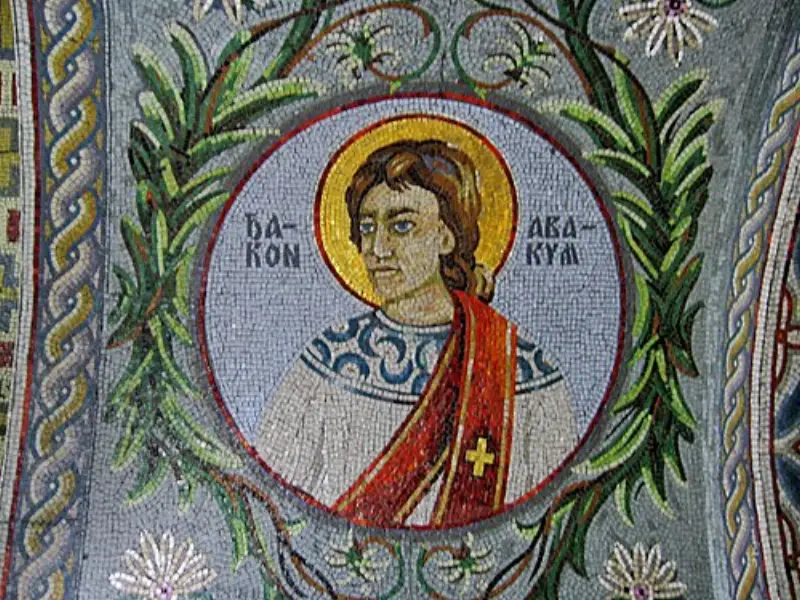
Avakum and his hegumen Pajsije were proclaimed New-Martyrs — novomučenici, the class of Orthodox martyrs under Ottoman rule — with a common commemoration on 17 December, and the commemoration is especially venerated in the village of Trnava, whose local school is named for him. The Serbian Orthodox Church has gathered his memory into its calendar of the revolutionary era's martyrs, alongside the greater names of the uprisings, and his icon shows him young, in the deacon's orarion, with the pole of his sentence. The details of his death were preserved in the Serbian memorial literature of the nineteenth century — Milićević's Pomennik above all — and the modern studies of the church in the Belgrade pashaluk carry him as a case study in the price of the second rising. What his cult keeps is the scene his biographers all return to: the mother in the street, and the son who went on.
Timeline
- 1794
Born Lepoje Prodanović around this year in Knešpolje, near the Moštanica Monastery in the Bosnia Eyalet
§ Introduction
- 1813
Following the defeat of the First Serbian Uprising, Ottoman forces unleashed a campaign of terror against the Serbian population
§ Introduction
- 1814
Joined Hadži-Prodan's rebellion with the Trnava clergy; the revolt was quickly suppressed and Pajsije was impaled
§ Introduction
- 30 Dec 1814
Refusing to convert to Islam and imprisoned in the Nebojša Tower, he was killed in Belgrade when his heart was pierced
§ Introduction
The Record
- Patron of
- Trnava Monastery and village, Serbia·Those pressured to deny their faith
- Symbols
- Deacon's orarion·The impalement pole
- Canonization
- Proclaimed a New-Martyr (novomučenici) of the Serbian Orthodox Church, commemorated 17 December with St. Pajsije
Prayer
Profile text adapted from the Wikipedia article, licensed CC BY-SA 4.0.
Pray with this saint every day
Save St. Avakum the Deacon to your favorites, read the full profile, and get feast-day reminders in the Saints app.
Get the Saints AppFree on the App Store for iPhone and iPad