
1230 – 1262·Feast January 19
St. Beatrice d'Este
Betrothed bride who chose the convent at Ferrara
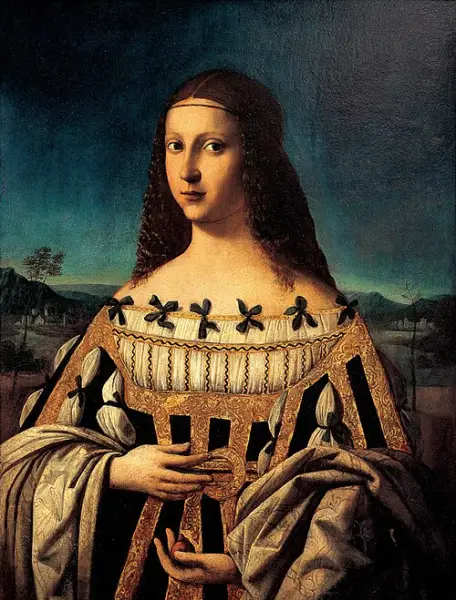
Overview
Beatrice II d'Este was born in 1230 into one of the great houses of northern Italy, a family that traced its descent from the Norman Dukes of Apulia; her father was Marquis of Ferrara, and she was named for her aunt, the Blessed Beatrice d'Este. Her life was redirected by a single bereavement. Betrothed to Galeazzo Manfredi of Vicenza, she lost him to wounds received in battle shortly before the day appointed for their wedding. She refused to return to her family home. Attended by some of her maidens, she withdrew instead to Sant'Antonio in Polesine at San Lazzaro, a Benedictine convent just beyond Ferrara's walls, and gave her life to God's service there, living out the remaining years of a life that ended on 18 January 1262. Her cult endured for five centuries before papal approval came: Clement XIV beatified her in 1774, and Pius VI assigned the keeping of her feast to 19 January, the day after her death.
The Complete Life
Daughter of the Marquis of Ferrara
Beatrice belonged to the Este, the family that ruled Ferrara and traced its line back to the Norman Dukes of Apulia. She was born in 1230 at Calaone, in the Euganean hills of the Paduan territory, a daughter of the Marquis of Ferrara. Her very name bound her to the family's holiest memory: she was the niece of the Blessed Beatrice d'Este, and she received her aunt's name in her honor. That inheritance of expectation shaped a childhood we can glimpse only in outline, for the record of her early years is thin. What is certain is that she grew up as a prize of dynastic politics. Marriage was the instrument by which the great houses of thirteenth-century Italy joined their fortunes, and a marquis's daughter could expect to be given in marriage to consolidate an alliance. In due course a match was arranged with Galeazzo Manfredi of Vicenza, a lord of a neighboring territory. The betrothal promised her a future as the lady of another court, within the network of nobility into which she had been born, and for a moment it seemed that the pattern of her ancestors would simply repeat itself in her.
§ Saint Beatrice d'Este
The Broken Betrothal
The marriage never took place. Galeazzo Manfredi succumbed to wounds he had suffered in battle, and he died just before the day set for the wedding. A bride left at the threshold of marriage could have returned in honor to her father's house and awaited another match; dynastic alliances were remade as fast as they were broken. Beatrice chose otherwise. She refused to go home. Attended by some of her maidens, who left their own world to follow her, she turned instead to Sant'Antonio in Polesine near San Lazzaro, a Benedictine house on the outskirts of Ferrara, and bound herself by that rule to the service of God. The decision transformed a bereavement into a vocation. The young woman who had been prepared to preside over a noble household now embraced the discipline of poverty, obedience, and enclosure that Benedict's rule imposed, and the mourning of a cancelled wedding became the lifelong devotio of a nun. Her maidens' choice to remain with her suggests the force of her character: she led even where the world expected her to be led, and grief, in her hands, became a form of command over her own life.
§ Saint Beatrice d'Este
A Cult Approved at Last
Beatrice died on 18 January 1262, having spent her remaining years in the convent where her widowed grief had carried her. She was still in her early thirties. The holiness ascribed to her at the convent did not fade with her death; it became a cult, kept alive generation after generation by the religious community she had joined and by the devout of Ferrara. Five centuries passed between her burial and her formal recognition, a delay that speaks to the different rhythms of medieval and modern canon law. Approval finally came in the age of the Enlightenment popes: on 16 July 1774, Pope Clement XIV ratified her cult, enrolling her among the blessed. His successor Pius VI then permitted her festival to be observed on 19 January, fixing the date by which the Ferrarese have remembered her ever since, the day after the anniversary of her death. Later devotion has kept her memory close to that of the aunt whose name she bore, and the two Beatrices of the Este line remain woven together in the piety of the region, a family's sanctity handed down through two generations of women who renounced the world's marriages for the service of God.
§ Saint Beatrice d'Este
Timeline
- 1230
Born at Calaone, now a hamlet of Baone in the Paduan territory, into the Este family.
§ Saint Beatrice d'Este
- 18 Jan 1262
Died at the convent of Sant'Antonio in Polesine near Ferrara, where she had lived under the Benedictine rule.
§ Saint Beatrice d'Este
- 16 Jul 1774
Beatified by Pope Clement XIV, whose approval confirmed her centuries-old cult.
§ Saint Beatrice d'Este
The Record
- Canonization
- Beatified 16 July 1774 by Pope Clement XIV; Pope Pius VI afterwards permitted her festival to be kept on 19 January.
Prayer
Bibliography
Show 4 sources
- Mostardi, Faustino. La Beata Beatrice II d'Este. Venice: Fondazione Cini, 1963.
- Bibliotheca Sanctorum, "Beatrice." Praglia Abbey (Padua, Italy), vol. II, col. 994, 1962.
- Sautto, Alfonso. Le tre Beatrici d'Este. Associazione Cattolica di Cultura, Monastero di Sant'Antonio di Ferrara, 1933.
- Thurston, Herbert. "Beatrix." The Catholic Encyclopedia, Vol. 2. New York: Robert Appleton Company, 1907.
Profile text adapted from the Wikipedia article, licensed CC BY-SA 4.0.
Pray with this saint every day
Save St. Beatrice d'Este to your favorites, read the full profile, and get feast-day reminders in the Saints app.
Get the Saints AppFree on the App Store for iPhone and iPad