
c. 1050 – 1126·Feast October 16
St. Bertrand of Comminges
Reforming bishop who rebuilt a mountain see
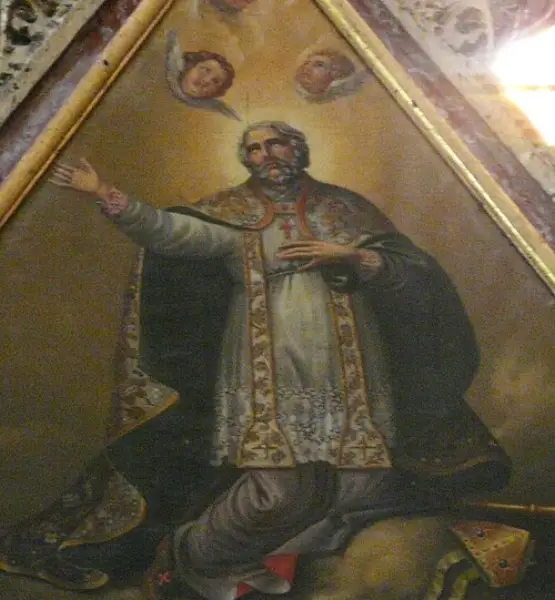
Overview
Bertrand of Comminges, born Bertrand de l'Isle around 1050 at L'Isle-Jourdain, served as Bishop of Comminges in the diocese of Toulouse for nearly half a century and gave his name to the commune of Saint-Bertrand-de-Comminges. His father, Raymond Atton, was a military officer and lord of L'Isle-Jourdain, and his mother, Gervaise Emma Taillefer, was a daughter of Count William III Taillefer of Toulouse, so that William IV and Raymond IV of Saint-Gilles were his cousins. Raised for knighthood, he turned instead to religion, becoming a canon of Saint Augustine in Toulouse, then archdeacon of Toulouse around 1070, and archdeacon of Lugdunum Convenarum between 1078 and 1080, holding that office until his death. In his mountain diocese he carried the Gregorian program through his mountain see, restoring discipline among the clergy and moral seriousness among the people, and he sat with the reform councils at Bordeaux in 1093, Clermont in 1095 and Poitiers in 1100. He revived the ancient city of Lugdunum Convenarum, rebuilt its cathedral with its Romanesque cloister, and made it a station on the pilgrim road to Santiago de Compostela. He died in 1126, was beatified around 1220, and was canonized by Clement V in 1309.
The Complete Life
A knight's son of L'Isle-Jourdain
Bertrand first saw the light at L'Isle-Jourdain about the year 1050, in the country between Toulouse and Gascony, into a family that joined the profession of arms to the highest comital blood of the south. His father, Raymond Atton, was a military officer and lord of L'Isle-Jourdain; his mother, Gervaise Emma Taillefer, was a daughter of Count William III Taillefer of Toulouse. Through her, Bertrand counted among his cousins two of the commanding figures of the age, William IV and Raymond IV of Saint-Gilles. A single sentence about his upbringing explains much of what followed: he was raised to be a knight. The education of a young noble of Languedoc in the mid eleventh century meant horses, weapons, and the courts of castles; it did not ordinarily end in a cathedral. That Bertrand, in adulthood, turned from that inheritance to religious life was therefore a genuine conversion of state, the more striking in a family whose power rested on the sword. The choice took him out of the lineage of crusaders and into the lineage of the Gregorian church, and the whole of his long career was spent proving that the discipline of the churchman could be as exacting as the discipline of the soldier.
§ Early life
Canon and archdeacon
The religious vocation of Bertrand unfolded through the regular and secular clergy of the Toulousain in orderly stages. He became first a canon of Saint Augustine in Toulouse, joining a community living under a rule that was, in that reforming century, the chosen instrument of the austere party in the church. From that base he rose by election and appointment through the offices of the diocese: he became archdeacon of Toulouse around the year 1070, and then, taking office between 1078 and 1080, archdeacon of Lugdunum Convenarum, the ancient episcopal city in the Pyrenean foothills. This last charge he maintained until his death, a tenure of some five decades in one of the most difficult corners of the French church. Lugdunum Convenarum, the old Roman capital of the Convenae, had fallen far from imperial splendor; it stood as a mountain see, poor and scattered, whose clergy and laity lived at a distance from the reformed discipline that the reforming popes were trying to impose. It was to this inheritance that Bertrand gave his whole adult life, first as archdeacon and then, for almost half a century, as bishop. The stages by which he passed from knighthood to canonical life to high office show a man who had chosen the church not as a career but as a permanent station.
§ Religious life
Gregorian reform in the mountains
The mission of Bishop Bertrand was the Gregorian reform, carried into a diocese where it met every natural obstacle. His program was precise: in his mountain diocese he carried out the Gregorian program, touching the discipline of the clergy on the one hand and the religious and moral conduct of the people on the other. The two halves of that sentence correspond to the two great campaigns of the reforming papacy: the reform of clerical life, with its insistence that the clergy live according to their state, and the reform of the Christian people, whose marriages, violence and usury the eleventh-century church had begun to regulate with new rigor. Bertrand did not labor alone or in theory. He sat with the reforming bishops at Bordeaux in 1093, at Clermont in 1095 and at Poitiers in 1100, gatherings at which the bishops of the French south assembled to promulgate and enforce the reform legislation; his presence at Clermont places him in the orbit of the council at which Pope Urban II preached the First Crusade. Alongside the legislative work ran the pastoral: during his long episcopate Lugdunum Convenarum itself came back to life and turned into a station on the pilgrim road toward Santiago de Compostela, the great route that crossed his own territory.
§ Religious life
The spirituality of a reforming bishop
The spirituality that can be discerned in Bertrand's life is that of the Gregorian church at its best: a spirituality of order, of the liturgy, and of the sanctification of a whole people rather than of a solitary soul. His formation as an Augustinian canon gave him the framework. The canonical life, rooted in the rule attributed to Saint Augustine, joined the common table and common prayer of monasticism to active pastoral service, and it was the form of life most favored by the reformers of the generation before Bertrand for cathedral clergy. As bishop he made that ideal the standard of his diocese, insisting on the discipline of his clergy not as an end in itself but as the condition of a worthy liturgy, and he linked his program explicitly to the moral life of the laity, which he undertook to reform as well. His rebuilding of the cathedral, with its Romanesque cloister, belongs to the same spirit: a cathedral worthy of the sacraments, in the conviction that beauty and order in the house of God teach what sermons alone cannot. The pilgrim station he established on the Compostela road extended the same principle outward, setting his mountain city within the great network of prayer that bound the Christian west together. He lived as he legislated, and the locality judged him a saint upon his death.
§ Religious life
A death after half a century of rule
Bertrand's episcopate was among the longest of its century: almost half a century, from his accession as archdeacon and bishop in the late 1070s to his death in 1126. He died at Lugdunum Convenarum, the city whose fortunes he had made his own, and which would in time take his name, becoming Saint-Bertrand-de-Comminges. As soon as he died the locality reckoned him a saint. No one waited for formal processes in the devotion of the people among whom he had labored for fifty years; the judgment of a mountain diocese on a bishop who had rebuilt its cathedral, reformed its clergy and set it on the pilgrim map was immediate and favorable. His tomb stands in the cathedral, where he is depicted on a panel of it, an image that has become the standard representation of the saint. The cathedral he rebuilt was later dedicated in his honor, and it stands today as one of the UNESCO World Heritage Sites of the Routes of Santiago de Compostela in France, a dual monument to his pastoral achievement and to the pilgrim movement he served. His feast is kept on October 16, and he remains the patron of the commune that bears his name.
§ Death and legacy
A cause slow and sure
The canonization of Bertrand took more than a century and a half, and its history illustrates how causes proceeded before the modern congregation. Around 1167, some forty years after his death, the Archbishop of Auch engaged a cleric named Vital to compose Bertrand's life, dispatching it to the Curia to open the cause of his canonization. The first attempt failed: the cause for beatification was rejected, a common fate for local causes that lacked documentary support or papal favor. The cause lay dormant until Pope Honorius III opened an investigation in 1218, and the same pontiff is credited with beatifying Bertrand between 1220 and 1222, although no document from that period attests the act. The last step came in 1309, when Pope Clement V, who had himself been Bishop of Comminges and thus Bertrand's successor in the see, raised him to the sainthood. The papal connection was decisive: a pope who had sat in the bishop's own chair and knew the memory of the mountain church could act where earlier pontiffs had hesitated. Bertrand's path to the catalog of the saints thus ran from local devotion through a rejected cause, a disputed beatification, and a canonization secured by affection for the see, the whole process spanning the reigns of a dozen popes.
§ Death and legacy
Saint-Bertrand-de-Comminges
The legacy of Bertrand is inscribed in the name of a city. Lugdunum Convenarum, the Roman capital that had dwindled to a mountain bishopric, revived under his long rule and took his name after his death, and it stands today as the commune of Saint-Bertrand-de-Comminges in the department of Haute-Garonne. The cathedral he rebuilt, with its Romanesque cloister, later dedicated in his honor, is listed among the UNESCO World Heritage Sites of the Routes of Santiago de Compostela in France, so that the pilgrim road he served has become the means by which his work is honored by the world. Within the cathedral his memory is guarded in stone: Cardinal Pierre de Foix, who held the see of Comminges between 1422 and 1442, raised a magnificent tomb to his memory, two centuries after the canonization, a mark of how deeply the see identified with its reforming bishop. He is depicted on a panel of his tomb in the cathedral, and the commune of Saint-Bertrand-de-Comminges retains him as its patron, celebrating his feast on October 16. Of the bishops of Comminges across fifteen centuries, he is the one whose name the church and the region have agreed to remember, a distinction earned by fifty years of patient labor in a hard country.
§ Death and legacy
Timeline
- 1050
Born at L'Isle-Jourdain to Raymond Atton, a military officer, and Gervaise Emma Taillefer, daughter of Count William III of Toulouse.
§ Early life
- 1070
Serves as a canon of Saint Augustine at Toulouse before becoming archdeacon of the city around this year.
§ Religious life
- 1080
Takes office as archdeacon of Lugdunum Convenarum between 1078 and 1080, a charge he keeps until his death.
§ Religious life
- 1093
Attends the reform council held at Bordeaux.
§ Religious life
- 1095
Attends the reform council held at Clermont.
§ Religious life
- 1100
Attends the reform council held at Poitiers.
§ Religious life
- 1126
Dies at Lugdunum Convenarum after an episcopate of almost half a century during which the city revived and the cathedral was rebuilt.
§ Religious life
- 1167
The Archbishop of Auch commissions the cleric Vital to write his life and forwards it to the Curia for canonization.
§ Death and legacy
- 1218
Pope Honorius III opens an investigation into his cause after a first bid for beatification had been rejected.
§ Death and legacy
- 1220
Beatified by Pope Honorius III between 1220 and 1222, though no document of the time records the act.
§ Death and legacy
- 1309
Canonized by Pope Clement V, who had himself previously been Bishop of Comminges.
§ Death and legacy
The Record
- Major works
- Rebuilt cathedral of Lugdunum Convenarum with its Romanesque cloister·Revival of Lugdunum Convenarum as a pilgrim station toward Santiago de Compostela
- Patron of
- Patron of the commune of Saint-Bertrand-de-Comminges
- Symbols
- Bishop's mitre and crozier·Model of his cathedral·Pilgrim's staff of the Compostela road
- Canonization
- Canonized in 1309 by Pope Clement V, himself a former Bishop of Comminges; beatified around 1220 by Pope Honorius III
Prayer
Bibliography
Show 3 sources
- St. Bertrand of Comminges. Catholic Online.
- Bertrand de l'Isle Jourdain. Parish of Saint-Bertrand.
- Monks of Ramsgate. Bertrand of Comminges. In Book of Saints. 1921. CatholicSaints.Info, 1 September 2012.
Profile text adapted from the Wikipedia article, licensed CC BY-SA 4.0.
Pray with this saint every day
Save St. Bertrand of Comminges to your favorites, read the full profile, and get feast-day reminders in the Saints app.
Get the Saints AppFree on the App Store for iPhone and iPad