
1931 – 1979
St. Bishoy Kamel
Coptic priest and founder of churches across three continents
Overview
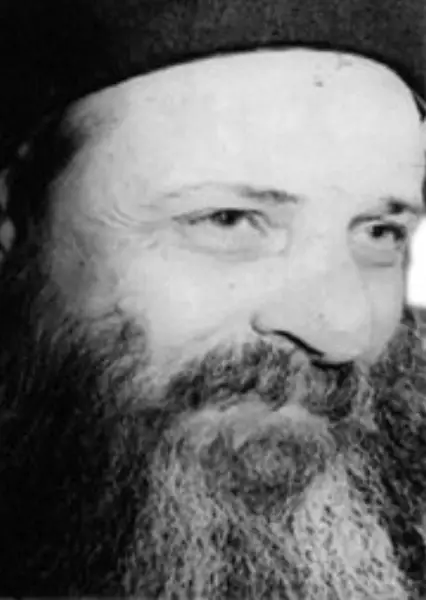
Bishoy Kamel, born Samy Kamel in 1931 in the Nile Delta village of Sers el-Lyan, became one of the most beloved priests of the Coptic Orthodox Church of Alexandria in the twentieth century. Raised first in the countryside and then in Damenhour, he excelled academically, earning a science degree from Alexandria University in 1951 and, three years later, an advanced qualification in literature that led to an instructorship at the university's college of education. His life turned in 1959 when Pope Cyril VI, whom he had never met, singled him out after a chance encounter and announced that he would ordain him to the priesthood within the week. Following a hastily arranged marriage, Samy became Father Bishoy, the first pastor of a new church in the Sporting district of Alexandria. Over the following two decades he founded that parish and many others in Alexandria, ministered to the growing Coptic diaspora in Los Angeles beginning in 1969, and helped establish communities in New Jersey, Denver, Houston, Europe, and Australia. A teacher by training and instinct, he ran Sunday schools and free tutoring for poor children. Married yet celibate with his wife Angel, he was marked by a disarming humility and a preacher's careful use of Scripture, church history, and the saints. Diagnosed with cancer in 1976, he bore three years of illness with a patience that itself became a ministry, and he died in Alexandria on March 21, 1979, at the age of forty-seven.
The Complete Life
A Delta Childhood and a Scholar's Beginnings
Samy Kamel entered the world on December 6, 1931, in Sers el-Lyan, a village in the Monufia Governorate of the Egyptian Delta. While still a child he moved with his family to Damenhour, where he received his earliest schooling. His academic gifts soon carried him further: he enrolled at Alexandria University and completed a Bachelor of Science there in 1951. Rather than resting on that achievement, he took a post as a teacher in a local school while continuing his own studies in the evenings, a pattern of disciplined self-formation that would mark his whole life. In 1954 he added an advanced degree in literature to his credentials, and the university responded by appointing him an instructor at its college of education. By his mid-twenties he possessed everything that might have promised a comfortable secular career in postwar Alexandria: scientific training, literary cultivation, and a university position. Nothing in this record announced a future priest. Yet the habits formed in those years, the teacher's patience with slow learners, the scholar's respect for texts and sources, and the discipline of study pursued alongside full-time work, would define his later ministry. When he eventually stood in a pulpit, he preached as a scholar teaches, drawing steadily on the Bible, on church history, on tradition, and on the recorded lives of the saints, so that his sermons carried the weight of the whole Church rather than his own opinions.
§ Life
Chosen by a Pope He Had Never Met
The decisive turn of Samy Kamel's life came in 1959, through what the record calls simply a chance encounter. Pope Cyril VI, the patriarch of the Coptic Orthodox Church, met the young educator unexpectedly and, although the two had never crossed paths before, resolved at once that this man should serve at the altar. The Pope traced the sign of the cross on Samy's head and declared that God had shown him this young man was to become a priest, promising ordination the very next Sunday. The summons demanded everything at once. Coptic priests of the secular clergy marry before ordination, and so a wedding was swiftly arranged, after which Samy was ordained within the week and received the priestly name Bishoy. The speed of the transaction is striking: days separated a layman's university lecture hall from the sanctuary of a new church rising in the Sporting district of Alexandria. There was no novitiate, no long probation, only a patriarch's conviction that he had been shown a sign. For his part, the new priest submitted to the call without apparent hesitation, exchanging an academic career for a parish that existed, at that moment, chiefly as a building project. That act of obedience, accepting an office he had not sought at a pope's word, became the foundation on which the whole of his subsequent service was built.
§ Life
Founding Parishes in Alexandria and Beyond
Father Bishoy's first charge became the St. George Coptic Orthodox Church in Sporting, Alexandria, and it grew rapidly under his care. Convinced that a single priest could not carry so large a flock, he pressed for associate clergy at the church. Advisers counseled against the step, but he persisted, and in time five priests served the parish side by side, all of them, the record notes, still overworked. His founding energy reached across the city: St. George in Hadara, the Church of Archangel Michael in the Mustafa Kamel district, St. Takla Hemanout in Ibrahimeya, the church of St. Mary and St. Cyril in Cleopatra, and St. Peter's in Sidi Bishr all trace their origins to him. Alongside the bricks and mortar ran a quieter apostolate. He taught Sunday school, offered free tutoring to children whose families could not pay, and after the evening services of Christmas, Epiphany, and Easter he went out among the needy of his congregation, believing that the meaning of the Church's feasts is learned by sharing them. In 1969 his mission crossed an ocean: sent to minister to Copts in Los Angeles, he first worked from a building shared with the Syriac Orthodox Church, then labored to raise funds for a former Russian Orthodox church on Robertson Boulevard, gathering donations from new immigrants toward the purchase.
§ Life
Humility, Celibate Marriage, and a Quiet Voice
The interior life of Father Bishoy Kamel impresses as much as his achievements. He is described as displaying an unusual degree of humility, a quality that expressed itself in a persistent concern for his own salvation even as he labored for the spiritual welfare of others. Most striking is the arrangement of his marriage: though wed to his wife Angel for years, the two lived together in continence, a mutual consecration that placed the demands of the pastoral office above domestic ordinary life. As a preacher he worked in the manner of a scholar-pastor, citing the Scriptures, the annals of the Church, received tradition, and the biographies of the saints, so that his teaching stood within the great stream of Coptic memory rather than beside it. His physical voice is remembered as low, almost weak, an instrument that might have seemed a defect in another man, yet his congregation received it with real appreciation, hearing in its gentleness something of the man himself. The famous episode of the lost envelope belongs to this same portrait: carrying twenty-three thousand dollars in cash toward a mortgage for the Los Angeles church, he left the unmarked envelope in a taxi seat and discovered the loss only at the bank. He returned home expecting to be suspected of theft, and the money was restored to him after midnight by the driver, who had searched the city to find the minister he had carried.
§ Life
Three Years of Illness Borne as Ministry
In 1976 physicians diagnosed Father Bishoy with cancer. What followed was three years of struggle with the disease, ended by a peaceful death on March 21, 1979, when he was forty-seven years old. The record of those final years is unusually illuminating, because it comes from a fellow priest who watched them closely. Fr Tadros Malaty later recalled that the days of the illness, even those spent confined to his sickbed, ranked among the most effective of Father Bishoy's entire service, a fact of which the dying man himself remained unaware. God, Malaty wrote, had hidden from Father Bishoy's eyes the power that his suffering carried; many people drew comfort in their own sicknesses and troubles simply from seeing him in pain, or from hearing reports of his patience and joy. Here the profile of the humble preacher finds its completion: the man who spent his strength teaching children and founding churches spent his last strength bearing witness, and the witness worked precisely because he did not see it working. He died in Alexandria, the city of his university years, his priesthood, and his many foundations, and was buried there. He left behind religious writings, including the books Under the Feet of the Cross and With Christ Crucified, which preserve something of the voice his congregation found so compelling.
§ Final years and legacy
A Coptic Diaspora Shaped by His Foundations
The institutional legacy of Father Bishoy Kamel is unusually wide for a priest who died before his fiftieth birthday. Beyond the string of Alexandria parishes he planted, his work reached the Coptic emigration directly: he helped establish Coptic churches in Jersey City, New Jersey, including St. George and St. Shenouda, and contributed to foundations in Denver and Houston, as well as to communities in parts of Europe and Australia. Where Copts settled in the second half of the twentieth century, his pattern of parish planting, Sunday schools, free tutoring, and visitation of the poor traveled with them. His major shrine is the St. George Coptic Orthodox Church in Sporting, Alexandria, the first congregation he served and the one most identified with him; he is buried in Alexandria. He is venerated in the Coptic Orthodox Church and in the Ethiopian Orthodox Tewahido Church, and his memory is kept in Coptic communities well outside Egypt. The books he wrote continue to be read, and the testimony of priests who knew him, notably Fr Tadros Malaty's study of his pastoral work, has carried his example to a wider audience. Perhaps his most durable monument is the simplest: a conviction, demonstrated in a Los Angeles taxi episode and in a cancer sickbed alike, that God works through servants too humble to notice their own effectiveness.
§ Final years and legacy
Timeline
- 6 Dec 1931
Born Samy Kamel on December 6 in Sers el-Lyan, Monufia Governorate, Egypt.
§ Life
- 1951
Received a Bachelor of Science degree from Alexandria University.
§ Life
- 1954
Earned an advanced literature degree and was appointed instructor at Alexandria University's college of education.
§ Life
- 1959
Chosen by Pope Cyril VI after a chance encounter and ordained a priest following a swiftly arranged marriage.
§ Life
- 1969
Sent to Los Angeles to serve the Coptic faithful there, eventually securing a former Russian Orthodox building on Robertson Boulevard.
§ Life
- 1976
Diagnosed with cancer, beginning a three-year illness borne with patience and joy.
§ Final years and legacy
- 21 Mar 1979
Died peacefully on March 21 in Alexandria at age forty-seven and was buried there.
§ Final years and legacy
In Their Own Words
God has given us a sign that you are to be a priest. I shall ordain you next Sunday.
God had hidden from [Fr Bishoy's] eyes the power of his service during his sickness. Many people found comfort in their sickness or by troubles merely seeing [him] in pain or hearing about his patience and joy!
The Record
- Major works
- Under the Feet of the Cross·With Christ Crucified
- Canonization
- Venerated in the Coptic Orthodox Church and the Ethiopian Orthodox Tewahido Church; formal canonization data not recorded
Prayer
Bibliography
Show 4 sources
- Watson, John H. (2002). "The Transfigured Cross: A Study of Fr Bishoy Kamel (6 December 1931–21 March 1979)". Coptic Church Review 23 (1 & 2): 14.
- "Fr. Bishoy Kamel". Saint Abanoub Coptic Orthodox Church. Retrieved 2018-02-16.
- Billatos, Ehab S. "Father Bishoy Kamel: The Servant of Children". Mighty Arrows Magazine, July 2001.
- Malaty, Tadros (1995). Pastoral Work in the Life of Fr Pishoy Kamel. Translated by Doss, H.; Youssef, M.; Ibrahim, I.; El-Agamy, N. Santa Monica, CA: St Peter & St Paul's Coptic Orthodox Church, p. 13.
Profile text adapted from the Wikipedia article, licensed CC BY-SA 4.0.
Pray with this saint every day
Save St. Bishoy Kamel to your favorites, read the full profile, and get feast-day reminders in the Saints app.
Get the Saints AppFree on the App Store for iPhone and iPad