
martyred 307 at Tarsus·Feast December 19
St. Boniface of Tarsus
Roman Martyr at Tarsus with Aglaida
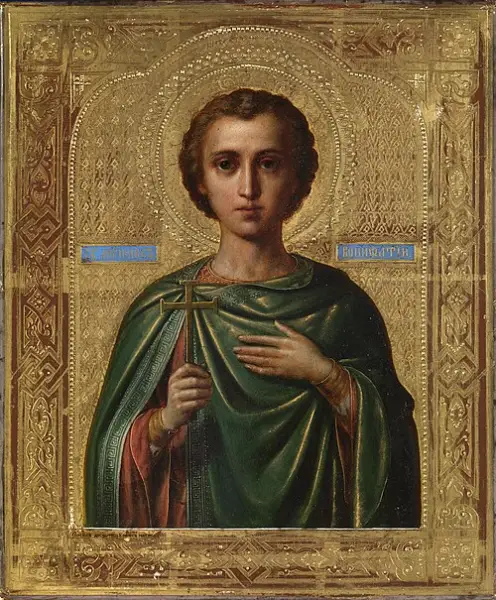
Overview
Boniface of Tarsus is known only through legend. A slave of the wealthy Roman lady Aglaida, he served as the steward of her household, and the two of them, both pagans, lived a life of debauchery together; some versions of the story make them lovers. Yet even in that state Boniface was open-handed toward the poor, welcoming to strangers, and moved by the misfortunes of others. When reports reached Rome of healing miracles worked through the relics of the martyrs, Aglaida sent him east to obtain some. Arriving at Tarsus in Cilicia, he found the authorities there putting Christians to torture, and instead of gathering relics he publicly confessed himself a Christian. After suffering a series of tortures he was beheaded with a sword, and it was his own body that was carried back to Rome as the relics he had been sent to fetch. The story so affected Aglaida that she became a Christian herself, built a church in his memory, now known as the Church of Santi Bonifacio e Alessio, gave her wealth to the poor and lived fifteen years in a monastery, receiving a reported gift of expelling evil spirits. The account was judged wholly fabulous by the compilers of the 1969 Roman Calendar, who removed his feast, though the East still honours both martyrs on 19 December, and he is invoked against drunkenness.
The Complete Life
A Slave's Household in Rome
Everything known of Boniface before his martyrdom comes from the legendary passio, and the picture it draws is deliberately paradoxical. He was a slave, the property of a rich Roman woman named Aglaida, and he managed her household as steward, occupying a position of trust within a great house. Both master and slave were pagans, and the legend is frank about their morals: they lived in debauchery together, and some tellings of the story describe them as lovers. The point of this unsparing introduction is theological rather than biographical, for the ancient authors of such accounts loved to show grace seizing the least promising subjects. Alongside the vice, the legend credits Boniface with genuine natural virtues. He was generous with Aglaida's abundance toward the poor, hospitable to strangers who came to the door, and quick to feel compassion for anyone struck by misfortune. These dispositions, the story implies, were the soil in which faith would later take root. It is impossible to verify any detail of this Roman period, and modern scholarship treats the whole narrative as fabulous. Yet the figure of the compassionate steward, converted in a single moment at Tarsus, has carried the memory of this martyr through seventeen centuries of devotion in both East and West.
§ Biography
The Errand to Tarsus
The hinge of the legend is a commission concerning relics. Reports had reached Rome of healings worked in connection with the relics of the martyrs, and Aglaida resolved that her house should possess such a treasure. She chose Boniface for the errand, and he travelled east to Cilicia, to the city of Tarsus, famous as the birthplace of the Apostle Paul. There, instead of negotiating for bones, he walked into an ongoing persecution: the local authorities were torturing Christians in public. What he saw did not horrify him into silence but drew out of him an act of self-declaration. He announced openly that he too was a Christian, joining himself to the victims he had come to honour. The consequences followed at once. He was subjected to a series of tortures, at the end of which he was beheaded with a sword. In the ironical fulfilment that gives the story its shape, the martyr's own body became the relic that was carried back to Rome. When the remains reached Aglaida, the legend reports her conversion; she built a church in his memory, known today as the Church of Santi Bonifacio e Alessio in Rome, distributed her wealth to the poor, and spent fifteen years in a monastery, where she was said to have received the divine gift of expelling evil spirits.
§ Biography
Ice Saint and a Removed Feast
The veneration of Boniface of Tarsus has had two distinct histories. In the East, the Orthodox Church keeps him together with his convert mistress on 19 December, under the title of the Martyr Boniface at Tarsus in Cilicia and Righteous Aglaida of Rome, and the faithful invoke him against drunkenness, an application that grows out of the intemperance of his pagan years. In the West his fortunes were uneven. During the twelfth century his name, unaccompanied by Aglaida's, was inserted into the General Roman Calendar on 14 May with the humble rank of a 'simple' feast. That date had a folk consequence: since a spell of cold weather was then thought to strike often from 12 to 14 May, Boniface became one of the three Ice Saints of Switzerland, Poland, Bohemia and eastern Germany, a tradition familiar even to Martin Luther. Rome's official judgement, however, turned against the legend. In 1955 Pope Pius XII reduced the feast to a mere commemoration within the ferial Mass, and in 1969, judging the narrative wholly legendary, the calendar's revisers removed him altogether; nor is he counted among the nine saints of that name whom the Roman Martyrology recognises. Popular devotion, above all in central Europe, has not entirely followed.
§ Veneration
Timeline
- 307
Sent by his mistress Aglaida from Rome to Tarsus to fetch relics of the martyrs, whose reported healing miracles had reached her.
§ Biography
- 307
Executed by the sword at Tarsus after openly confessing himself a Christian while the authorities there were torturing believers.
§ Biography
- 1150
His name, without Aglaida, entered the General Roman Calendar on 14 May with the lowest rank of feast.
§ Veneration
- 1955
Pope Pius XII lowered the observance to a commemoration within the ferial Mass.
§ Veneration
- 1969
The revised General Roman Calendar dropped him entirely, judging the story wholly fabulous.
§ Veneration
The Record
- Patron of
- Invoked against drunkenness·One of the Ice Saints of central European folk tradition (feast 14 May)
- Canonization
- Pre-congregation; retained in the Eastern Orthodox calendar on 19 December but removed from the General Roman Calendar in 1969
Prayer
Bibliography
Show 6 sources
- "Martyr Boniface at Tarsus in Cilicia, and Righteous Aglaïa of Rome". OCA.
- "The Holy Martyr Boniface and Saint Aglaïs". Holy Transfiguration Monastery, Brookline, Massachusetts.
- "Martyr Boniface at Tarsus, in Cilicia". Pravoslavie.
- Calendarium Romanum (Libreria Editrice Vaticana, 1969), p. 123.
- Martyrologium Romanum (Libreria Editrice Vaticana 2001, ISBN 978-88-209-7210-3), p. 675.
- Flaskamp, Franz (1964). "Der h. Bonifatius im Blickfelde Luthers". Archiv für Kulturgeschichte 46: 219–226.
Profile text adapted from the Wikipedia article, licensed CC BY-SA 4.0.
Pray with this saint every day
Save St. Boniface of Tarsus to your favorites, read the full profile, and get feast-day reminders in the Saints app.
Get the Saints AppFree on the App Store for iPhone and iPad