
c. 515 – 600·Feast October 11
St. Cainnech of Aghaboe
Irish Abbot, Missionary and One of the Twelve Apostles of Ireland
Overview
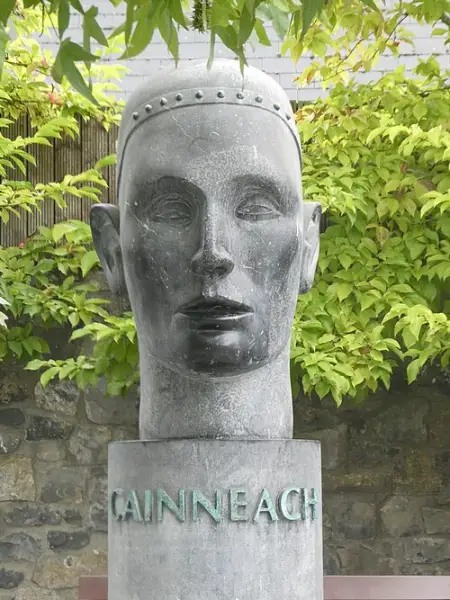
Saint Cainnech of Aghaboe — Saint Canice in Ireland, Saint Kenneth in Scotland, Sanctus Canicus in Latin — was an Irish abbot, priest, missionary and monastic founder of the early medieval period. Born at Glengiven near Dungiven in Ulster in 515 or 516, son of the professional bard Lughadh Leithdhearg of the Corco-Dalann people and of Maul (Mella), a woman of marked sanctity, he spent his boyhood tending flocks before entering Finnian's school at Clonard in 543, where he became one of the Twelve Apostles of Ireland and formed a lasting friendship with Columba. Study under Mobhí Clárainech at Glasnevin ended when plague dispersed that community, and he was ordained priest at Cadoc's Llancarfan in Wales in 545. After Rome and the pope's blessing, he returned in 550, converted his foster brother Geal-Breagach, and founded Drumachose near Limavady. Joining Columba in Scotland in 565 with, per Adomnán, a miraculously calm crossing to Iona, he built a church at modern Saint Andrews, cells on Ibdon and Eninis, an oratory at Loch Laggan and a monastery in Fife. Back in Ireland, King Colmann of Ossory granted him Aghaboe, his principal monastery; in 597 he is said to have overcome the last bastion of druidic rule at Kilkenny. He retired in old age to an island in Loch Cree to write his Gospel commentary, the Chain of Cainnech, and died at Aghaboe in 599 or 600. He is the patron of the shipwrecked.
The Complete Life
A Bard's Son Tending Flocks
Cainnech entered the world in 515 or 516 at Glengiven, close to modern Dungiven in Ulster, within the Cenél nEógain territory of the Northern Uí Néill; his full name was Cainnech moccu Dalánn, the final element naming his kin group rather than his father. That father, Lughadh Leithdhearg, belonged to the Corco-Dalann or Ui Dalainn, a people whose ancestor Dalann was traced back through Fergus, King of Ulster, to Ross and Rudhraighe, and who came from an island the sources call Insula Nuligi, usually identified as Inis-Doimhle or Inis-Uladh — today Little Island in the River Suir southeast of Waterford. Lughadh was no farmer but a distinguished bard, a highly trained professional poet who traveled for his living; settling at Glengiven in what is now County Londonderry, he found favor and protection with the chief of Cianachta and became tutor to the chieftain's son, Geal Breagach. Cainnech's mother, Maul or Mella, attained what the old accounts call an eminent degree of sanctity, and a church near Kilkenny city, Thompleamoul or Capella Sanctae Maulae seu Mellae, was dedicated under her invocation. The boy's own early years were spent watching his chieftain's flocks — a shepherd childhood that hagiographers loved to compare with David's — in an Ireland where the druid tradition was collapsing as the new faith spread and where the study of Latin and Christian theology was flowering in the monasteries he would soon join.
§ Cainnech's background
Schooling Among the Twelve
The year 543 brought Cainnech to Clonard, where he enrolled as a pupil in Finnian's monastic school, then near the peak of its renown, and across the sixth century its classrooms trained several of the greatest names the Irish church ever produced. Twelve students of Finnian of Clonard earned the collective title of the Twelve Apostles of Ireland, and Cainnech stood among them, alongside future luminaries such as Columba, Ciarán of Clonmacnoise and Brendan of Birr. It was there that his friendship with Colmcille — Columba — began, an association that would shape the second half of his life. From Clonard he moved in 544 to the school of Glasnevin, studying under Mobhí Clárainech in company with Kieran of Clonmacnoise and Comgall of Bangor. Plague scattered that community, and Cainnech crossed to Wales, entering Cadoc's monastery of Llancarfan in Glamorganshire, where he received priestly ordination in 545. Formation finished, he made for Rome to seek the pope's blessing — the widest horizon an Irish churchman of his rank could reach. On the way home in 550 he stopped at Glengiven and won over his own foster brother, Geal-Breagach — the boy his father had once tutored — who afterward assisted him in founding Drumachose, near Limavady. Learning, ordination, Rome and a first foundation: by his mid-thirties the shape of his life was set.
§ Early life
Apostle to Ireland and the Picts
In 565 Cainnech sailed for Scotland, where he is remembered as Kenneth, to join his old Clonard companion Columba. Adomnán — Iona's ninth abbot, dead in 704, whose Life of St. Columba comes closest to a contemporary record of Cainnech — recounts the landing with relish. Columba had foretold the coming, before nightfall, of a certain holy and excellent man; and although that day's sea ran perilous and stormy, God gave Cainnech a calm and safe passage over it, Columba received him that evening with full honor and hospitality. The mission that followed ranged widely across Pictish and Gaelic Scotland. Cainnech built a church at the place now known as Saint Andrews; he established monastic cells on Ibdon — plausibly South Uist, an island whose conversion he may have significantly advanced — and on Eninis; he put up an oratory, Lagan-Kenny, beside Loch Laggan, ruins of which appear on Ordnance Survey maps; and in Fife he established a monastery along the River Eden. His name lingers across the western seaboard — in the ruins of the ancient church Kil-Chainnech on Tiree, in a burial ground of the same name on Iona, and in Inch Kenneth off Mull. Returning to Ireland, he divided his time between County Meath and Ossory, in present-day County Laois, where he stood well with the ruler, Colmann son of Feradach; the king's grants of territory included Aghaboe — the field of the Ox — which was to serve as his principal monastery.
§ Scotland
Kilkenny, Loch Cree and Aghaboe
The closing decades of Cainnech's life belong chiefly to Ossory and to the place that still bears his name. Kilkenny — in Irish Cill Chainnigh, the church of Cainnech — began as a church he erected or that was dedicated to him, the name later spreading to the townland and parish, and the district was among the last corners of Ireland to accept Christianity. Tradition asserts that in 597 he led a Christian force against the final bastion of druidic rule in the country: the last Archdruid of Ireland had withdrawn with his Council to a mound at Kilkenny for safety, and Cainnech, marching an army there, overcame them and founded a monastery near the site of the present Church of Ireland cathedral of St Canice. Whatever history lies beneath the legend, the topography honors it. Growing old, the saint retired to an islet in the vanished Loch Cree, and there wrote out commentary covering all four Gospels, a work long preserved in his church and known through the Middle Ages as the Glas-Chainnigh — Kenneth's Lock, or the Chain of Cainnech. He died at Aghaboe in 599 or 600, aged about eighty-four or eighty-five, and was buried at the abbey there. His principal house outlived him grandly: Aghaboe grew so important that in the seventh century it sent Feargal as a missionary to Salzburg in Austria, and it housed the episcopal see until Norman influence moved it to Kilkenny in the twelfth century. In 1346 Diarmaid Mac Giollaphádraig burned the town and destroyed Cainnech's shrine together with his relics.
§ Chain of Cainnech
Patron of the Shipwrecked
Cainnech's legacy is written across two countries and a scatter of continents. Within Ireland he serves as patron of Aghaboe and, sharing the honor with Ciarán of Saigir, as one of the two patrons of Kilkenny city and of the historic kingdom of Osraige; his feast is kept on 11 October in the Roman Catholic and Eastern Orthodox calendars, with the Orthodox additionally commemorating him on 1 or 14 August. The Anglican Communion venerates him likewise. His most tender patronage, though, belongs to those in peril on the sea: Cainnech is the patron saint of the shipwrecked, an office that recalls the calm crossing Adomnán said God gave him over a stormy sea. The Eastern Church sings a troparion in his honor that names him Lover of the Desert, composer of sacred verse, father of monks and founder of monasteries, ranking him with Ireland's Enlightener. Place names carry his memory far beyond his native island: Kilkenny city and county; St Canice's in Finglas, Dublin; the church of Cennych at Llangennech in Carmarthenshire; Kilchenzie in Cantyre and the Scottish sites of Tiree, Iona and Loch Laggan. Emigration spread him wider still, to churches and schools in New South Wales and Sydney in Australia, Nevada City in California, Plymouth in Michigan, Kilkenny in Minnesota, Westport and Lockington and Sandy Bay — a saint of the sixth century whose congregations now ring the world.
§ Patronage
Timeline
- 515
Born at Glengiven near Dungiven in Ulster, son of the bard Lughadh Leithdhearg and of Maul (Mella).
§ Cainnech's background
- 543
Became a pupil at Finnian's monastic school at Clonard, later counted among the Twelve Apostles of Ireland.
§ Early life
- 544
Studied under Mobhí Clárainech at Glasnevin alongside Kieran of Clonmacnoise and Comgall of Bangor.
§ Early life
- 545
After plague scattered Glasnevin, went to Cadoc's monastery of Llancarfan in Wales and was ordained a priest.
§ Early life
- 550
Back from Rome, returned to Glengiven and converted his foster brother Geal-Breagach, who helped found Drumachose.
§ Early life
- 565
Joined Columba in Scotland, arriving on Iona after a safe crossing, received with honour that evening.
§ Scotland
- 597
Led a Christian force against the last Archdruid's council at Kilkenny and founded a monastery there.
§ St. Canice's Cathedral in Kilkenny
- 600
Died at Aghaboe, aged 84 or 85, and was interred at the Abbey of Aghaboe.
§ St. Canice's Cathedral in Kilkenny
- 1346
Diarmaid Mac Giollaphádraig burned the town of Aghaboe, destroying Cainnech's shrine and relics.
§ Return to Ireland
In Their Own Words
In honour thou dost rank with Ireland's Enlightener, O Lover of the Desert, Composer of sacred verse, Father of Monks and Founder of Monasteries, O Father Cainnech. Labouring for Christ, both in thy native land and in Scotland, thou art a tireless intercessor for the faithful. Pray for us who hymn thee, that despite our frailty we may be granted great mercy.
The Record
- Major works
- Commentary on all four Gospels, known as the Glas-Chainnigh or Chain of Cainnech·A hymn to Columcille attributed to him·Foundation of the monasteries of Aghaboe and Drumachose, and of churches in Scotland
- Patron of
- Patron of Aghaboe·Joint patron, with Ciarán of Saigir, of Kilkenny and the kingdom of Osraige·Patron saint of the shipwrecked
- Symbols
- Founder's staff of an abbot; remembered as Lover of the Desert, Father of Monks and Composer of sacred verse in the Eastern troparion
- Canonization
- Pre-congregation; venerated in the Roman Catholic, Eastern Orthodox and Anglican churches.
Prayer
Bibliography
Show 7 sources
- Grattan-Flood, William. "The Twelve Apostles of Erin." The Catholic Encyclopedia, Vol. 1. New York: Robert Appleton Company, 1907.
- O'Kane, Michael. "St. Canice." The Catholic Encyclopedia, Vol. 3. New York: Robert Appleton Company, 1908.
- Baring-Gould, S. and Fisher, John. The Lives of the British Saints, Vol. II, p. 56. Charles J. Clark, London, 1908.
- Adomnán. Life of Saint Columba (Medieval Sourcebook, Fordham University).
- Sharpe, Richard. Adomnán of Iona: Life of Saint Columba, pp. 262–263.
- Smith, William, and Wace, Henry. A Dictionary of Christian Biography, Literature, Sects and Doctrines, Vol. 1, p. 382. Little, Brown, and Company, 1877.
- Clyn, Friar John (2007), Williams, Bernadette (ed.). The Annals of Ireland. Four Courts Press.
Profile text adapted from the Wikipedia article, licensed CC BY-SA 4.0.
Pray with this saint every day
Save St. Cainnech of Aghaboe to your favorites, read the full profile, and get feast-day reminders in the Saints app.
Get the Saints AppFree on the App Store for iPhone and iPad