
died 734·Feast January 7
St. Caintigern (Kentigerna)
Eighth-Century Irish Princess and Hermit of Loch Lomond
Overview
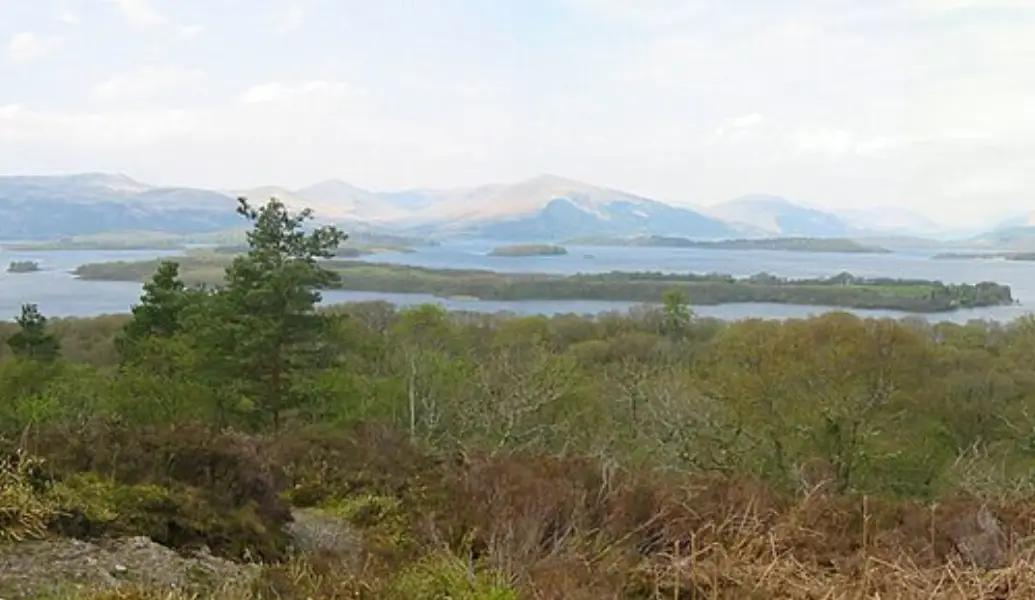
Caintigern, reverenced as Saint Kentigerna, was a daughter of Cellach Cualann, king of Leinster, and died in the year 734. Born into the royal line of southern Ireland, she married Feriacus, described as regulus of Monchestre, who is possibly to be identified with Feradach, grandson of Artúr of Dál Riata. Widowed, she did not remain at court: together with her brother Saint Comgán and her son Saint Fillan, whose Irish name was Fáelán, she embraced the eremitical life. The little family of saints lived first as hermits in Strath Fillan, the Glen that bears her son's name, then in the Lennox, and finally on the island of Inchcailloch on Loch Lomond, the Old Irish Innis na Cailleach, the island of the old woman, which became her burial place. The Aberdeen Breviary enters her commemoration on 7 January, and the Orthodox East keeps the same day. The Aberdeen Breviary's notice and the place-name traditions of the Lennox are the chief witnesses to her cult, and her memory is bound up with that of the two saints who shared her exile and her solitude, her brother and her son, in the Gaelic church of eighth-century Scotland.
The Complete Life
A King's Daughter of Leinster
Caintigern was born into the ruling house of Leinster in the south of Ireland: her father was Cellach Cualann, king of Leinster, a monarch whose own death fell in 715 and whose reign belongs to the closing years of the southern Ui Chennselaig dominance over that province. To be a king's daughter in eighth-century Ireland was to stand at the junction of dynastic politics and the flourishing Gaelic church, and the lives of royal women of this class frequently passed through marriage alliance into widowhood and thence into the religious life, a pattern that Caintigern's career follows exactly. Tradition gives her husband as Feriacus, a petty ruler styled regulus of Monchestre, who may be identical with Feradach, a grandson of Artúr of Dál Riata; such a match would tie her marriage to the Gaelic west of Scotland and help account for the Scottish phase of her later life. If that identification holds, her story links the royal genealogies of Leinster and of Dál Riata across the North Channel. Nothing further is recorded of her upbringing, her appearance, or the length of her marriage; the tradition is interested in her only as widow, hermit and saint, and her royal blood is cited chiefly to mark the height from which she descended into solitude.
§ Caintigern
Widow, Hermit of Inchcailloch
Widowhood was the hinge of Caintigern's sanctity. Freed from her marriage, she did not seek another alliance or retire into a convent of the old kind; the tradition states that she lived as a hermit, and that she did so in company, for with her went her brother Saint Comgán and her son Saint Fillan, whose Irish name Fáelán is preserved alongside his better known Latin one. Their eremitical life unfolded in three stages: first in Strath Fillan, the Perthshire glen that carries her son's name and that remained associated with his cult for centuries; then in the Lennox, the district east of Loch Lomond; and finally on the island of Inchcailloch on Loch Lomond itself. The island's Old Irish name, Innis na Cailleach, the island of the old woman, was long connected with her memory, and it became her burial place. She died in 734. Her cult received liturgical form in the Aberdeen Breviary, the great Scottish service book compiled in the early sixteenth century under Bishop William Elphinstone, which lists her feast for 7 January; the Eastern Orthodox Church keeps the same day, so that this Irish princess of the Gaelic church of Alba is honored in both the western and eastern traditions. Her association with Comgán and Fillan makes the three of them a family of witnesses to the Columban church in the Lennox.
§ Caintigern
Timeline
- 715
Her father, Cellach Cualann, king of Leinster, died, per the Oxford Dictionary of National Biography entry cited in the article
§ Sources
- 734
Caintigern died; the island of Inchcailloch on Loch Lomond is remembered as her burial place
§ Caintigern
The Record
- Canonization
- Pre-congregation; feast listed in the Aberdeen Breviary and kept in the Eastern Orthodox Church
Prayer
Bibliography
Show 4 sources
- "Saint Kentigerna", Gazetteer for Scotland.
- "Caintigern (Kentigerna)". Dictionary of Irish Biography. October 2009.
- Anderson, Alan Orr, Early Sources of Scottish History A.D 500 – 1286, volume 1. Reprinted with corrections. Paul Watkins, Stamford, 1990. ISBN 1-871615-03-8.
- Doherty, Charles (2004). "Cellach Cualann (d. 715)". Oxford Dictionary of National Biography (online ed.). Oxford University Press. doi: 10.1093/ref:odnb/50090.
Profile text adapted from the Wikipedia article, licensed CC BY-SA 4.0.
Pray with this saint every day
Save St. Caintigern (Kentigerna) to your favorites, read the full profile, and get feast-day reminders in the Saints app.
Get the Saints AppFree on the App Store for iPhone and iPad