
died 363·Feast August 13
St. Cassian of Imola
Schoolmaster Put to Death by His Own Pupils
Overview
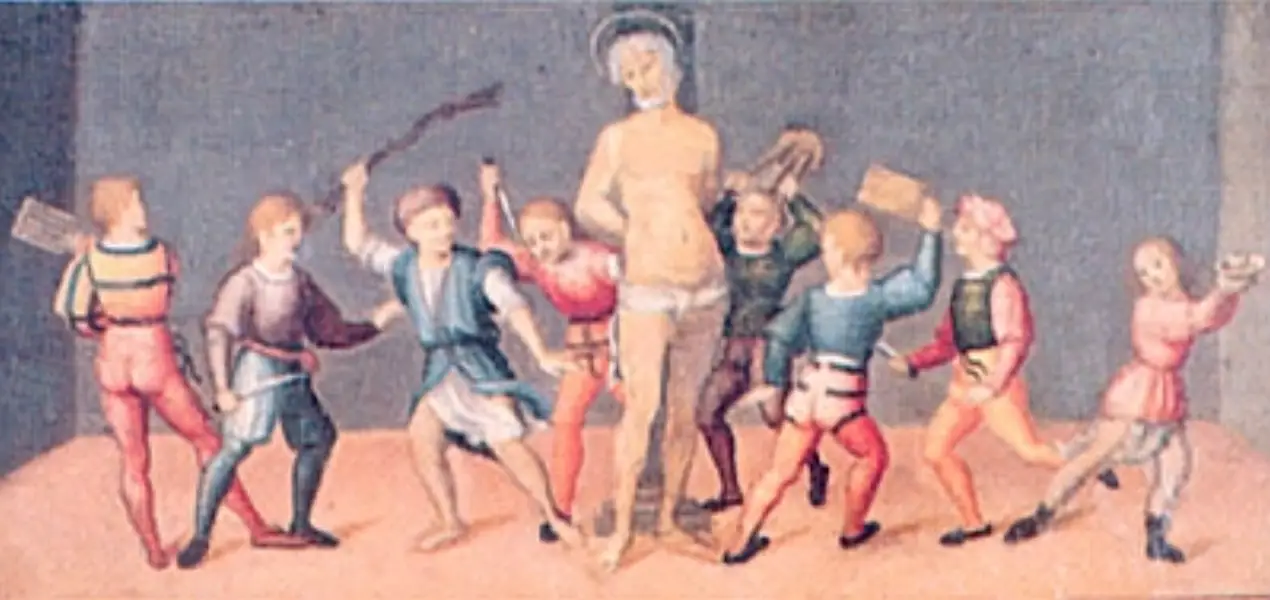
Cassian, also called Cassius, was a Christian schoolmaster at Imola who suffered martyrdom in the fourth century, traditionally on 13 August 363. The ancient accounts tell little of his life before his death, but they agree on the manner of it. When the emperor Julian the Apostate ordered Christians to offer sacrifice to the Roman gods, Cassian refused, was condemned, and was handed over to his own pupils for execution. The boys, who remembered the punishments their master had inflicted on them, bound him to a stake and killed him slowly with their iron writing-styli, the pointed instruments used for marking wax and wooden tablets. Which of the fourth-century persecutions his death belongs to cannot be fixed with certainty. The Christians of Imola buried him, and a rich mausoleum was later raised over his relics. He is the patron of Imola, of Mexico City, of San Casciano in Val di Pesa and San Casciano dei Bagni, of Las Galletas in Tenerife, of Sukošan in Croatia, of the De La Salle Brothers and Lasallian educators, and of schoolteachers, shorthand-writers and parish clerks. Comacchio Cathedral and the cathedral of Brixen are dedicated to him, and his strange death has echoed through literature from a mention by Annie Dillard to a fictional choir in the musical Ride the Cyclone.
The Complete Life
A Teacher at Imola
Almost everything the record preserves of Cassian belongs to his last hour, yet that hour is unintelligible without the trade it presupposes. He was a schoolmaster, magister in the Latin of the late empire, and his school stood at Imola, the Forum Cornelii of Roman Italy, a town on the Aemilian road between Bologna and Ravenna. To keep a school in the fourth century was to hold a recognised place in municipal life: boys of the town were sent to him to learn letters, grammar and the copying of texts, and the discipline of the schoolroom was corporal, exercised with the rod and the ferule as a matter of course. It is exactly that discipline — his pupils, as the sober old phrase has it, were glad to avenge themselves for the many punishments he had handed out — which furnishes the terrible mechanism of his passion. Beyond his profession the sources are silent: no family, no birthplace, no age is recorded, and even the persecution under which he died cannot be named with confidence, since the fourth century offered more than one. What may be said is that a Christian lay schoolmaster, teaching the classical curriculum of a pagan education while refusing pagan worship, stood with a foot in both worlds, and that when the state demanded the sacrifice, the two worlds could no longer be reconciled in his person.
§ Life
The Refusal
The vocation by which Cassian is known was not to a state of life but to a single act of witness. Julian, who had abandoned the faith of his upbringing and taken the name of Apostate from Christian posterity, ordered that Christians sacrifice to the Roman gods; the command reached the schoolmaster of Imola as it reached every Christian of the empire. Sacrifice was a small thing in itself, a few grains of incense, a libation, a signature, and thousands of Christians in the earlier persecutions had bought their lives with it and been readmitted after penance. Cassian refused. The refusal of a teacher carried a weight that a private citizen's could not: his school was a nursery of the next generation, and a master who would not burn incense taught, by that very refusal, a doctrine about the gods that the emperor could not allow. He was therefore condemned to death. The authorities at Imola added a refinement of cruelty that was meant as degradation and has read as horror ever since: he was handed over to his own pupils for execution. The act of witness that began as a quiet professional's refusal of a formality ended on a stake, with the instruments of his own schoolroom turned against him, styli in the hands of the boys whose exercise-books he had once corrected.
§ Life
Stabbed with Styli
The manner of Cassian's death has fixed him in Christian memory more firmly than any detail of his life. His pupils, given charge of the condemned man, proved willing executioners: the tradition says they were eager to repay the punishments he had imposed on them in class. They bound him to the stake and killed him slowly, piercing him over and over with the pointed iron styli, the writing implements then in universal use for marking the wax of a tablet or the surface of wood. Death by many small wounds is among the slowest and most painful the ancient world knew, and the martyrologies understood the fittingness of the instrument: the teacher perished by the tools of his own teaching. The traditional date of the martyrdom is 13 August 363, which is why 13 August stands on the Roman calendar as his feast, and it is worth noticing that this date falls only a few weeks before Julian himself died on campaign in Persia in June of that same year, so that the persecution that killed the schoolmaster expired with the persecutor within months. Which of the fourth-century persecutions the death formally belongs to, however, the older authorities concede cannot be assigned with certainty. The Christians of Imola took his body and buried it, and in time a rich mausoleum rose over the relics of their master-martyr.
§ Life
The Teachers' Patron
Cassian's cult spread wherever teachers needed a heavenly colleague. He is the patron of Imola, his own city, and further afield of Mexico City, of San Casciano in Val di Pesa and San Casciano dei Bagni in Tuscany, of Las Galletas in Tenerife, and of Sukošan on the Croatian coast; the De La Salle Brothers and Lasallian educators claim him, and so do parish clerks, shorthand-writers and schoolteachers, the last three patronages reading his death by writing-instruments as a professional emblem. Two cathedral churches are dedicated to him, at Comacchio and at Brixen, and a retreat and conference centre bears his name. Modern literature has found him irresistible. John Kennedy Toole has Ignatius Reilly inform a professor that Cassian perished under his students' styli, a holy death the professor himself would never merit; Annie Dillard alludes to him in The Living of 1992; Bethel College kept a Cassianus Lounge for its faculty; and the 2008 musical Ride the Cyclone, which reached Off-Broadway in 2016, populates its stage with the dead of a fictional St. Cassian High School Chamber Choir. Even the jurist Carl Schmitt joined the reception, naming his last retreat at Plettenberg San Casciano, though the common opinion traces the name to Machiavelli's Florence rather than to the saint.
§ Cultural references
Timeline
- 13 Aug 363
Condemned at Imola under Julian the Apostate for refusing sacrifice to the Roman gods, the schoolmaster was handed to his pupils, who stabbed him to death with their styli.
§ Life
- 1500
Innocenzo Francucci paints the Martyrdom of Saint Cassian around this year.
§ Introduction
- 1980
A Confederacy of Dunces has Ignatius Reilly recall the martyrdom: pupils killed their old master with writing implements.
§ Cultural references
- 1992
Annie Dillard refers to Cassian in her novel The Living.
§ Cultural references
- 2008
The musical Ride the Cyclone makes its deceased students members of the fictional St. Cassian High School Chamber Choir.
§ Cultural references
- 2016
Ride the Cyclone reaches its Off-Broadway run.
§ Cultural references
The Record
- Patron of
- Imola·Mexico City·Sukošan, Croatia·San Casciano in Val di Pesa·San Casciano dei Bagni·Las Galletas, Tenerife·Schoolteachers·Shorthand-writers·Parish clerks·The De La Salle Brothers and Lasallian educators
- Symbols
- Bound to a stake and pierced with stylus points·Teaching implements, the iron stylus of the wax tablet
- Canonization
- Pre-congregation; an ancient martyr of the fourth century on the Roman calendar
Prayer
Bibliography
Show 6 sources
- Benigni, Umberto. "Imola." The Catholic Encyclopedia, Vol. 7. New York: Robert Appleton Company, 1910.
- Monks of Ramsgate. "Cassian." Book of Saints, 1921. CatholicSaints.Info, 30 September 2012.
- Butler, Alban. "St. Cassian, Martyr." Lives of Saints, vol. VIII, 1866.
- Toole, John Kennedy (1980). A Confederacy of Dunces. New York: Wings Books. p. 151.
- Raymond, J.D. "The Teacher-Martyr: St. Cassian of Imola." Gaudium Magazine, 6 February 2023.
- "Mennonite Library and Archives – Martyrs Mirror Images." Retrieved 7 November 2007.
Profile text adapted from the Wikipedia article, licensed CC BY-SA 4.0.
Pray with this saint every day
Save St. Cassian of Imola to your favorites, read the full profile, and get feast-day reminders in the Saints app.
Get the Saints AppFree on the App Store for iPhone and iPad