
c. 1332 – 1381·Feast March 24
St. Catherine of Vadstena
Virgin of Vadstena, daughter of Saint Bridget of Sweden
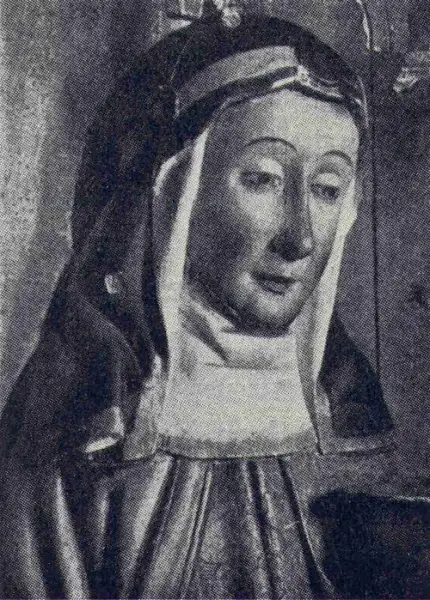
Overview
Catherine of Vadstena, also known as Catherine of Sweden or Katarina Ulfsdotter, was a Swedish noblewoman born around 1332, the daughter of Ulf Gudmarsson, Lord of Ulvåsa, and of Saint Bridget of Sweden. Married at twelve or thirteen to Lord Eggert van Kyren, a pious young nobleman of German descent, she won him over to a vow of perfect chastity, and the two lived together in virginity. In 1349 she accompanied her mother to Rome and, soon after arriving, learned of her husband's death. She remained with Bridget, sharing her journeys, among them a pilgrimage to Palestine. When Bridget died, Catherine brought her mother's body back to Sweden for burial at the monastery of Vadstena, and there she became head of the Brigittine convent her mother had founded, training the sisters in her mother's rule and leading the Order of the Holy Savior. She later spent five years in Rome working for her mother's canonization, forming a close friendship there with Catherine of Siena. She died on 24 March 1381. Venerated in both the Roman Catholic Church and the Church of Sweden, she is invoked for women who suffer miscarriage and is depicted with a hind at her side.
The Complete Life
Daughter of Ulvåsa
Catherine Ulfsdotter was born in about 1331 or 1332 into one of the most consequential families of medieval Sweden. Her father, Ulf Gudmarsson, was Lord of Ulvåsa; her mother was Birgitta Birgersdotter of Finsta, known to history as Saint Bridget of Sweden, though in her own lifetime she was simply Birgitta. Catherine thus grew up in a noble household that was also a household of emerging religious fame, with a mother whose visions and foundations would transform the Swedish church. The sources for her childhood are sparse, and what is recorded concerns chiefly the two marriages that framed her early life: her parents' union, which placed her between the aristocracy and the reforming piety of fourteenth-century Scandinavia, and her own. At the age of twelve or thirteen she was married to Lord Eggert van Kyren, a young nobleman of German descent who was himself of religious disposition. The match, arranged as noble matches were, took an unusual direction entirely of the couple's own making, for Catherine persuaded her husband to join her in a vow of absolute chastity. From that point the two lived as brother and sister, in a state of virginity within marriage, an arrangement the church of their time regarded as a recognised form of consecrated life rather than an eccentricity.
§ Life
A vow kept and a widow's path
Catherine's vocation was defined by the vow of chastity she made with Eggert van Kyren and by her widowhood, which freed her to follow her mother's calling. In 1349 she left Sweden to accompany Bridget to Rome, and soon after their arrival news reached her that her husband had died. The timing made her, in effect, a widow for the whole of her remaining thirty years, and she did not return to a life of her own but attached herself wholly to her mother's mission. She stayed on in Rome with Bridget and accompanied her on several journeys, among them a pilgrimage to the Holy Land. This was the formation of her vocation: years spent beside one of the great religious figures of the century, sharing her travels, her hardships and her spiritual labour. When Bridget died, Catherine took upon herself the duty that fell to a daughter in that age, escorting her mother's body back to Sweden, where it was buried at the monastery of Vadstena. The return was not a retreat into private grief. It brought her to the institution her mother had founded and set her at its head, so that the widow who had followed Bridget through Europe and Palestine now carried her rule, as well as her body, to the place where it would live on.
§ Life
Building the Brigittine order
Catherine's principal work was the consolidation of the Brigittine order. At Vadstena Abbey, the monastery founded by her mother, she became head of the convent and charged herself with training the sisters in the rule composed by Bridget, and with directing the Order of the Holy Savior, the religious family later called the Bridgettines. In an age when new foundations often faltered at the death of their founder, her succession gave the young order continuity at the moment of its greatest vulnerability; she was, in effect, the living link between the visionary who had drafted the rule and the nuns who had to live it. Her mission carried her back to Rome in her mother's cause, and there she stayed five years working for Bridget's canonization, a campaign that ended in success and helped secure the order's standing in the church. During those Roman years she formed a close friendship with Catherine of Siena, the Dominican tertiary then at the height of her influence, a meeting of two women who each carried a reforming movement. Her later years were marked by pilgrimage as well as governance: a vision spurred her to visit the Holy Land again, and she returned to Rome before journeying home to Sweden, where she died on 24 March 1381.
§ Life
A saint by permission, not by process
Catherine's recognition as a saint followed an unusual path shaped by the Reformation. In 1484, roughly a century after her death, Pope Innocent VIII allowed her veneration as a saint, her feast being fixed to 22 March within the Roman Martyrology, a confirmation of an existing cultus rather than the conclusion of a full process. In 1488 that same pope authorised the moving of her relics at Vadstena, an act of honour that acknowledged her standing in the Brigittine house she had governed. The formal beatification and canonization process, which would have documented the required miracles, was begun but never completed, because the Protestant Reformation swept away the conditions for such a cause in Sweden. Her veneration survived nonetheless, and she is honoured both in the Roman Catholic Church and, remarkably for a medieval saint, in the Church of Sweden, the Evangelical Lutheran church that otherwise set aside the cult of saints; there her feast, Katarinamäss, is kept on 2 August, while the Roman Catholic feast is 24 March, the day of her death. In art she is represented with a hind at her side, the animal said to have come to her aid against unchaste pursuers, and she is invoked as patron of women who suffer miscarriage.
§ Sainthood
Timeline
- 1332
Born in Sweden, daughter of Ulf Gudmarsson, Lord of Ulvåsa, and of Bridget of Sweden, later herself a saint
§ Life
- 1349
Accompanies her mother Bridget to Rome and soon after arrival learns of her husband's death
§ Life
- 1372
Spurred by a vision, makes a pilgrimage to the Holy Land
§ Life
- 24 Mar 1381
Dies soon after returning to Rome from the Holy Land
§ Life
- 1484
Pope Innocent VIII permits her veneration as a saint and assigns her feast in the Roman Martyrology
§ Sainthood
- 1488
Pope Innocent VIII permits the translation of her relics at Vadstena
§ Sainthood
The Record
- Major works
- Direction of the Brigittine convent of Vadstena Abbey and formation of its community in the rule of Saint Bridget·Leadership of the Order of the Holy Savior (Bridgettines)·Promotion of the cause for her mother's canonization in Rome
- Patron of
- Women who suffer miscarriage
- Symbols
- a hind (female red deer) at her side·Bridgettine religious habit
- Canonization
- Permission for her veneration as a saint given by Pope Innocent VIII in 1484 (cultus confirmed); the formal process was never completed because of the Protestant Reformation.
Prayer
Bibliography
Show 6 sources
- Kirsch, Johann P (1908). "St. Catherine of Sweden". In Herbermann, Charles (ed.). Catholic Encyclopedia. Vol. 3. New York: Robert Appleton Company.
- Monks of Ramsgate. "Catherine of Sweden". Book of Saints, 1921. CatholicSaints.Info. 1 October 2012.
- "St. Catherine of Vadstena". www.ewtn.com. Retrieved 29 April 2018.
- Beyer, Jürgen (1999). "On the Transformation of Apparition Stories in Scandinavia and Germany, c. 1350–1700". Folklore. 110 (1–2): 39–47.
- "Katarina Ulfsdotter". Nordisk Familjebok (1910). pp. 1281–1283.
- "Helgon- och minnesdagar i Domkyrkan". Svenska kyrkan. 5 February 2019.
Profile text adapted from the Wikipedia article, licensed CC BY-SA 4.0.
Pray with this saint every day
Save St. Catherine of Vadstena to your favorites, read the full profile, and get feast-day reminders in the Saints app.
Get the Saints AppFree on the App Store for iPhone and iPad