
6th century
St. Ceitho
Sixth-Century Welsh Abbot and Hermit of Llangeitho
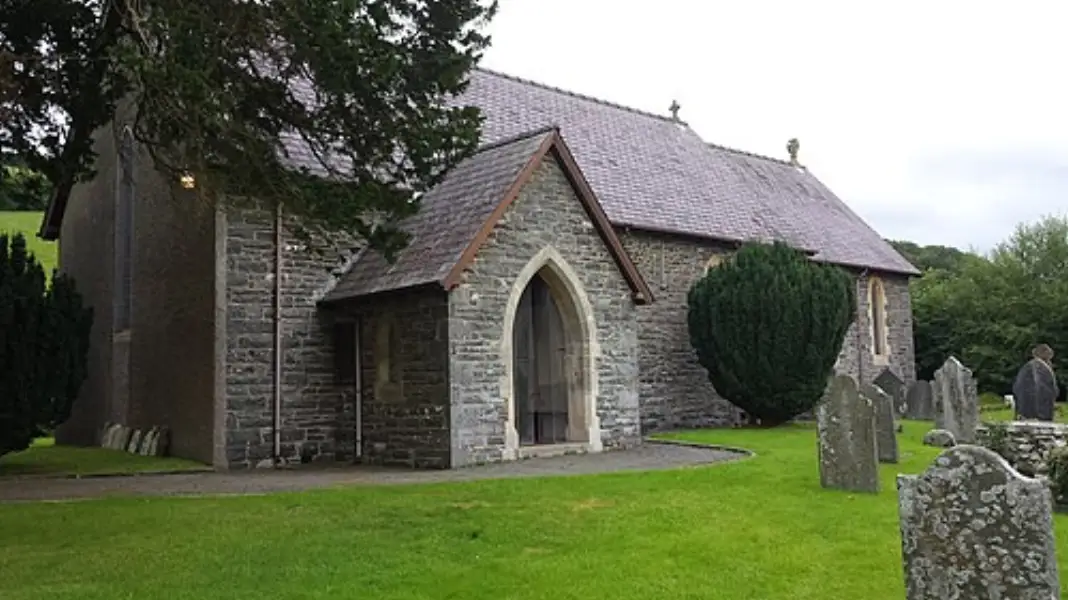
Overview
Ceitho was an abbot and saint of West Wales who lived in the sixth century. Tradition names him among five sons born to Cynyr Farfdrwch of Cynwyl Gaeo, and traces his line back to Cunedda Wledig, an early Welsh king. All five brothers, Gwynno, Gwynoro, Celynin, Gwyn and Ceitho, came to be honoured as saints, and the family is remembered in the Carmarthenshire village of Llanpumsaint, whose name preserves the memory of the five holy brothers said to have founded it. Ceitho himself is the patron saint of Llangeitho in Ceredigion, where tradition says he established an abbey and then withdrew inside its enclosure into the life of a recluse. Close by the village rises Ffynnon Geitho, Ceitho's Well, a natural spring that local tradition credits with the curious property of running cold through the summer months and warm through the winter. His cult rests on the medieval Welsh genealogies of the saints compiled by Sabine Baring-Gould and John Fisher and on modern studies such as T. D. Breverton's Book of Welsh Saints.
The Complete Life
A Saint Among Five Brothers
The Welsh tradition places Ceitho in the sixth century, in the western reaches of the country where the old British kingdoms still held their ground against the incoming tide of Anglo-Saxon settlement. According to the legend recounted in the sources, he was one of five sons born to Cynyr Farfdrwch of Cynwyl Gaeo, and through that father's line a descendant of Cunedda Wledig, the ancient Welsh king remembered as the founder of the royal dynasties of north and west Wales. What is most striking in this genealogy is not merely its royal descent but its fruit: every one of the five brothers, Gwynno, Gwynoro, Celynin, Gwyn and Ceitho himself, came to be honoured as a saint. A household that produced five venerated sons left a deep mark on the religious geography of Wales. Tradition credits the brothers with founding Llanpumsaint, the Carmarthenshire village whose name openly commemorates the five holy men. For medieval Welsh Christians, sanctity ran in families and in bloodlines as much as in individual vocation, and Ceitho stands as a clear example of that conviction: a son of Cynyr, a kinsman of kings, and one of five brothers whose memory the Welsh church treasured together.
§ Ceitho
Abbot and Recluse
Ceitho's own vocation was that of an abbot, but with a distinctly solitary character. He is said to have founded an abbey at Llangeitho in Ceredigion, and then, within the enclosure he had established, to have secluded himself in order to live as a hermit. The pattern is an old one in the Celtic churches: a founder who creates a community and then withdraws from its daily life into stricter retreat, holding the house in prayer while others carry its practical burdens. In this Ceitho resembles the many Welsh and Irish monks for whom the office of abbot was inseparable from the discipline of the solitary cell. Nothing in the surviving record details his rule, his companions or the length of his retreat, and the sources are content to leave the fact standing as tradition. What the tradition does preserve is the association between the man and the place. Llangeitho took his name and kept his patronage, so that the village's identity and the saint's memory became one. The abbey he founded is known only through this dedication, yet the persistence of the place-name across centuries testifies to how firmly his cult was fixed in the landscape of Ceredigion, kept alive by the people who lived around his church.
§ Ceitho
Llangeitho and the Saint's Well
Ceitho's legacy in Wales rests on two enduring landmarks. The first is his patronage of Llangeitho in Ceredigion, the village that grew around the site of his traditional abbey and that carries his name to the present day. The second is Ffynnon Geitho, Ceitho's Well, a natural spring near the village to which popular devotion attached a striking property: it is said to run cold in the summer and warm in the winter, inverting the ordinary behaviour of the seasons. Wells of this kind occupy a central place in Welsh hagiography, where a saint's presence in the landscape was believed to sanctify the water that rose from it, and Ffynnon Geitho belongs squarely within that tradition. Together with the village of Llanpumsaint in Carmarthenshire, said to have been founded by Ceitho and his four brothers, these sites map a family sanctity onto the physical terrain of West Wales. The scholarly record of this cult is comparatively brief but respectable: Ceitho's life is treated in Sabine Baring-Gould and John Fisher's early twentieth-century Lives of the British Saints and in T. D. Breverton's more recent Book of Welsh Saints, which keep his name in the standard roll of the saints of Wales.
§ Ceitho
The Record
- Major works
- Abbey at Llangeitho, Ceredigion (traditional foundation)
- Patron of
- Patron saint of Llangeitho, Ceredigion
- Symbols
- Hermits' cell·Natural spring (Ffynnon Geitho)
- Canonization
- Pre-congregation; venerated since antiquity in the Welsh tradition.
Prayer
Bibliography
Show 2 sources
- T. D. Breverton, The Book of Welsh Saints (Glyndŵr Publishing, 2000)
- Baring-Gould, Sabine; Fisher, John (1908). The Lives of the British Saints: The Saints of Wales and Cornwall and Such Irish Saints as Have Dedications in Britain, Volume 2. C. J. Clark. p. 102.
Profile text adapted from the Wikipedia article, licensed CC BY-SA 4.0.
Pray with this saint every day
Save St. Ceitho to your favorites, read the full profile, and get feast-day reminders in the Saints app.
Get the Saints AppFree on the App Store for iPhone and iPad