
died 107 AD·Feast September 5; October 15; January 29
St. Charbel (martyr)
Early Syriac Martyr of Edessa
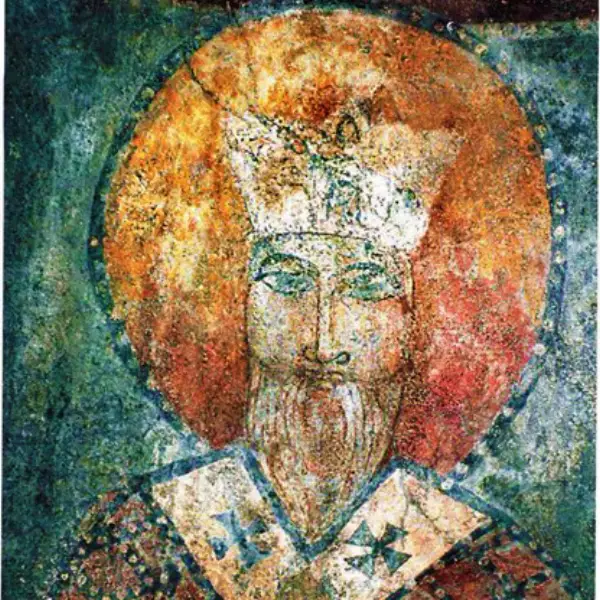
Overview
Saint Charbel of Edessa — known in Syriac tradition as Mar Sharbel and also called Tiphael — was an early second-century Christian martyr put to death in the city of Edessa, in what is now Şanlıurfa in southeastern Turkey, during the persecution of Christians under the Roman emperor Trajan. The year given for his death is 107 AD. According to the tradition linking him with Barsimaeus, he was converted from paganism to the Christian faith by that bishop-saint of Edessa, and some scholars suspect his story may have been backdated from events that occurred in the city under the emperor Decius more than a century later. His sister, Bebaia of Edessa (also rendered Barbe or Thivea), was killed soon after him, and the two martyrs are honored together on 29 January. Charbel is venerated by both the Catholic Church and the Eastern Orthodox Church, and his cult is especially strong in Lebanon, where the Maronite Church keeps numerous shrines in his name, together with one ruined Greek Orthodox shrine at Douma. The principal shrine stands in the village of Maad, erected over the remains of a pagan temple and remarkable for frescoes painted in the twelfth century. Other churches dedicated to him are found at Jezzine, on Mar Elias Street in Beirut, at Adonis, and at Ibrine.
The Complete Life
A Christian of Edessa
Charbel lived at Edessa in the opening years of the second century, when the city was emerging as one of the first great centers of Syriac Christianity. He is known in Arabic as Mar Sharbel al-Rahawi, the Edessene, and an alternative name, Tiphael, also attaches to him in the tradition. The account that has come down connects his conversion with Barsimaeus, the sainted bishop of Edessa, through whom Charbel is said to have turned from paganism to faith in Christ. Modern scholarship looks at the story with caution: because Edessa suffered under the emperor Decius in the middle of the third century, some historians judge that the martyrdom remembered under Trajan may in fact reflect those later events carried back to an earlier reign. What the tradition certainly preserves is the memory of a man of Edessa who abandoned the old gods, confessed Christ, and died for that confession in the year 107, during the persecution under Trajan.
§ Charbel (martyr)
Conversion and Martyrdom
The shape of Charbel's vocation is the shape of the earliest Syriac martyrdoms: a convert won from paganism, a confession of faith, and a death under Roman authority. The persecution of Christians under Trajan, which claimed his life at Edessa in 107, did not end with him. His sister Bebaia — whose name also appears as Barbe and Thivea — was murdered soon afterwards, and the two siblings entered the calendars of the churches together, venerated jointly on 29 January. That shared commemoration is the most personal fact the record preserves: a household that received the faith and paid for it twice over. In an age when conversion cut a family off from the civic religion that bound Roman society, the deaths of Charbel and Bebaia witnessed to a loyalty that outran every claim of empire and kinship alike.
§ Charbel (martyr)
Veneration East and West
Charbel belongs to the immemorial company of pre-congregation saints, honored by the Catholic Church and the Eastern Orthodox Church alike without any formal process of canonization. No bull records his name; it stands in the calendars by the older and quieter authority of uninterrupted liturgical memory. His cult is carried today above all by the Maronite Church of Lebanon, which keeps many shrines in his name, alongside a single ruined Greek Orthodox shrine at Douma in the Batroun district — a reminder that both heirs of the Syriac tradition have claimed him. In the liturgical calendars he is commemorated on three days: 29 January together with his sister Bebaia, and also on 5 September and 15 October. The diffusion of these feasts across the year reflects the spread of his devotion through Syriac and Maronite communities over many centuries, carried by monks and migrants from the ancient heartland of Edessa to the mountains of Mount Lebanon, where his churches multiplied around village springs and terraced slopes.
§ Charbel (martyr)
The Shrines of Lebanon
The principal monument of Charbel's cult stands at Maad in Lebanon. The church there was raised upon the ruins of a pagan temple, a fitting site for a saint who himself crossed from paganism to Christ, and it preserves frescoes of exceptional quality painted in the twelfth century, among the notable surviving examples of Syriac Maronite painting. Other shrines dedicated to him are found at Jezzine, on Mar Elias Street in Beirut, at Adonis, and at Ibrine, so that a traveler through the Maronite heartland meets his name again and again. Modern scholarship has begun to tend this inheritance: the chapel at Douma has been the subject of a published study in the journal Chronos, and the frescoes of Maad have been set within the story of Syriac identity in Lebanon. The elder Charbel remains the witness of the church's first generations in the Syriac world, and his Lebanese shrines keep that memory alive in stone and fresco.
§ Charbel (martyr)
Timeline
- 107
Killed at Edessa amid Trajan's persecution of Christians.
§ Introduction
- 107
His sister Bebaia of Edessa slain soon after him; the pair are honoured together.
§ Introduction
- 1100
Frescoes of exceptional quality painted at the principal shrine of Maad, Lebanon, raised on a ruined pagan temple.
§ Introduction
The Record
- Symbols
- Martyr of Edessa·Honored with his sister Bebaia
- Canonization
- Pre-congregation; venerated in the Catholic Church and the Eastern Orthodox Church
Prayer
Bibliography
Show 5 sources
- Berbary, G. (2019). "The Chapel of Saint Charbel of Edessa in Douma-Batroun". Chronos 24: 53-79.
- de Tarrazi, P. (1991). Asr Al-Siryan Al Zahabi, Bahith Ilmi Tareekhi Athari (L'Âge d'Or des Syriaques). Introduit par Joseph Shabo, Family Bookshop, Alep, 1991, Troisième édition, p. 68.
- Dodd, Erica Cruikshank. "Maad". Bethmardutho.
- Dr. Amine Jules Iskandar, "Syriac Identity of Lebanon - Part 11: Syriac Maronite Frescoes", November 2020.
- "Den hellige Barsimaeus av Edessa (200-t)", Den katolske kirke (in Norwegian).
Profile text adapted from the Wikipedia article, licensed CC BY-SA 4.0.
Pray with this saint every day
Save St. Charbel (martyr) to your favorites, read the full profile, and get feast-day reminders in the Saints app.
Get the Saints AppFree on the App Store for iPhone and iPad