
1821 – 1893·Feast January 5
St. Charles of Mount Argus
Dutch Passionist Priest and Healer of Dublin
Overview
Charles of Mount Argus, born Joannes Andreas Houben at Munstergeleen in the Dutch province of Limburg on 11 December 1821, was a Passionist priest who spent most of his priestly life in Ireland. One of eleven children of a poor miller, Peter Joseph Houben, and his wife Johanna Elizabeth Luyten, he was known in the family as Andrew. A slow learner and extremely shy, he walked the two miles to secondary school at Sittard for ten years. Conscripted at nineteen into the First Infantry Regiment of the Netherlands, he was so afraid of hitting anyone during a civil disturbance that he pointed his rifle the wrong way and nearly shot his superior officer. Discharged on 18 February 1845, he entered the Passionist novitiate at Ere near Tournai in Belgium, professed vows in 1846, and took the religious name Charles of St. Andrew. Ordained around 1850, he served in England from 1852 as assistant novice master at Cotton Hall, where he first met Irish people fleeing the famine. Transferred to Mount Argus in Harold's Cross, Dublin, in July 1857, English and preaching both defeated him, yet in the confessional and at the bedsides of the sick he showed his genius, and he won fame for healings that touched even the pages of Joyce's Ulysses. After eight years at Sutton, St Helens, he returned to Dublin in 1874 and died there on 5 January 1893. He was canonized in 2007 after the inexplicable cure of Adolf Dormans of his birthplace.
The Complete Life
A Slow Learner from Munstergeleen
The future religious was given the name Joannes Andreas Houben at his birth in Munstergeleen, a Limburg village, on 11 December 1821, when the province belonged to the United Kingdom of the Netherlands. His parents were Peter Joseph Houben, a miller by trade, and his wife Johanna Elizabeth Luyten, and their son was named after a maternal uncle who was also his godfather; within the family circle, however, he was always called Andrew. The household was large and poor: Andrew was one of eleven children, and the pressure of feeding so many marked the whole of his upbringing. He attended the village primary school, where he was regarded as a slow learner, and to those outside the family he appeared quiet and extremely shy. There was nevertheless a persistence in him that outran his early reputation. Across a whole decade he made the two-mile walk to secondary school in neighbouring Sittard, a daily discipline that trained in him a habit of endurance which his later life would demand again and again. Nothing in his boyhood promised distinction in the world's terms. He was not brilliant, not confident, not eloquent; the gifts that would later draw crowds to Mount Argus were of a kind that no school can measure and no examination can certify. Yet the poor miller's son, clumsy in the classroom and silent in company, carried within him the seeds of a vocation that would carry him across the Channel and, in the fullness of time, onto the calendar of the saints of the Catholic Church.
§ Life
Soldier, Novice, Passionist
When Houben was nineteen years old his country called him to arms, enrolling him for service in the First Infantry Regiment of the Netherlands. The soldierly life fitted him badly, and one episode from his time in uniform became part of his story. During a disturbance in the town, the army was called out and given the order to fire; Andrew, in terror of striking a civilian, turned his rifle aside, and all but killed his own commanding officer. It was the act of a man whose conscience could not be drilled into obedience. On 18 February 1845 his reserve period ended and he was formally discharged, free at last to follow the pull towards religious life that he had felt for some time. That same year, at Ere, a village close to Tournai, he entered the novitiate of the Passionists, an order which had reached Belgium only a short time before. He professed his religious vows in 1846, receiving the habit and the religious name Charles of St. Andrew. Dominic Barberi, the Italian Passionist apostle to England, shaped him during his formation, and in August 1849, only days before Barberi died at Reading, Charles belonged to the little group of students who walked with him to the boat. Ordination to the priesthood came in 1850, and Charles' father died just beforehand; the expenses of the funeral left the family unable to pay their way to the ceremony, so that even this happiest of days passed in loneliness.
§ Passionist
Cotton Hall and the Road to Mount Argus
England was the scene of his first assignments: in 1852 the young Passionist priest crossed the Channel and took up the post of assistant novice master at Cotton Hall, the retreat of St Wilfred, whence he served the surrounding districts, Cheadle in Staffordshire among them. There, in the English Midlands, he first met the Irish who were crossing to England in flight from the devastating famine then destroying their own country. The encounter marked him permanently: the poor of Ireland, displaced and grieving, became the people to whom his priesthood would be given. Then, in 1857, came the turn. Paul Mary Packenham, Mount Argus' first rector, had died, and at the wish of Ignatius Spencer Charles was moved in July of that year to Ireland, to the retreat of Blessed Paul newly founded at Mount Argus, Harold's Cross, Dublin. The role he was given was not the one Passionists ordinarily filled. Traditionally members of the congregation conducted missions and retreats, spreading devotion to the Passion of Christ through preaching. Charles was not a good preacher, and he never really mastered the English language; his Dutch tongue and his slow schooling stood against him in the pulpit. Yet the appointment proved wise in a way no one could have planned. He became fond of the Irish people, and they, recognizing something better than eloquence in him, became fond of him. What the mission field of Dublin required was not an orator but a man of mercy, and it was precisely a man of mercy that Munstergeleen had sent.
§ Passionist
The Confessional and the Sick
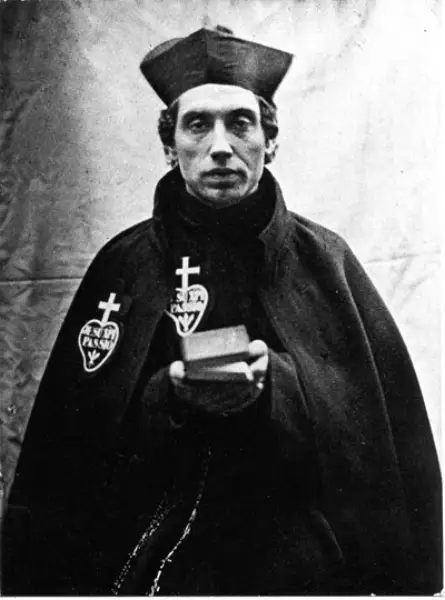
The sanctity of Charles of Mount Argus was worked out in two places: the confessional and the sickroom. The confessional was his pulpit, and the bedsides of the sick; it was there that his gifts appeared, and there that Dublin came to know him. His reputation rests above all on his gift of healing. Sebastian Keens, a fellow Passionist in Dublin, afterwards recalled a boy of twelve, deprived of the use of his leg and carried to the monastery: Charles was sent for at once, and very soon the child was discovered pacing to and fro before the house, entirely healed. Such reports multiplied until the quiet Dutchman became a popular figure of whom the diocesan authorities and the medical profession alike grew suspicious. Some doctors complained to Cardinal Cullen, the Archbishop of Dublin, that Charles discouraged people from seeking medical help, a charge that was later retracted. There were also unscrupulous persons who took holy water blessed by Charles and, without his knowledge, sold it throughout Ireland. The fame of the healings reached so far into the life of the city that a reference to him appears in James Joyce's novel Ulysses, the most famous literary monument of Dublin. Charles himself made no claims; the power, as he understood it, belonged to the Passion of Christ which he had professed to preach, and the habit he wore was its sign. His sanctity was not spectacular but sacramental: God's mercy passing through a man who listened, blessed, and stayed.
§ Healer
Sutton, the Broken Leg, and a Dawn Death
The very popularity that made Charles beloved in Dublin made his position there difficult. In order to discourage the trade in holy water blessed in his name, in 1866 he was posted once more to England, to the Retreat of St Anne, Sutton, in St Helens, Merseyside, where eight years were passed, with service also at St Saviour's Retreat, Broadway. It was an exile of sorts, and a quiet one: the same ministry of confession and consolation continued in a different key, away from the crowds that had gathered around him in Harold's Cross. In 1874 he returned to Dublin and to Mount Argus, where the rest of his life was passed. A little after his coming back, the trap carrying him upset near St Clare's Convent, Harold's Cross; the fracture that resulted never properly healed. From that time onward he walked with the marks of the injury, carrying in his body a permanent reminder of the city that had become his home. He remained in Dublin until his death, increasingly frail, still at the service of those who came to him. The end came at dawn on 5 January 1893, at St Paul's Retreat, Mount Argus, where he had lived and laboured for so many years. He was seventy-one years old. His funeral drew people from all over Ireland, and the devotion of the crowds who came to bury him was itself evidence of the place he had won in the affections of the country that had received him as a stranger and kept him as a saint.
§ Healer
From Servant of God to the Canon of the Saints
The process that carried Charles of Mount Argus to canonization moved slowly but steadily. On 9 May 1934 the theologians pronounced approval of his writings, and on 13 November 1935 his beatification cause was formally inaugurated, with the title Servant of God attached to his name. After the recognition of a miracle attributed to his intercession, Pope John Paul II beatified him on 16 October 1988 in Saint Peter's Basilica. The miracle that led on to canonization concerned Adolf Dormans of Munstergeleen, the village of Charles' own birth. His disease was appendicitis, perforated and gangrenous, with generalized peritonitis setting in and compromising several organs at once, a state from which medicine expected no recovery; the healing nonetheless occurred, and it was judged inexplicable by science. Unanimous approval of the healing's supernatural character came from the theologian consultors and from the Ordinary Congregation of Cardinals and Bishops, and on 3 June 2007 Pope Benedict XVI inscribed Charles among the saints, once more in Saint Peter's Basilica. His feast is kept on 5 January, the day of his death, and his major shrine is at St Paul's Retreat, Mount Argus, in Dublin, where his tomb remains a place of pilgrimage. The canonization of a priest who never preached well and never fully mastered the language of his adopted country testified that the Church measures holiness not by talent but by charity.
§ Veneration
The Saint of Harold's Cross
The legacy of Charles of Mount Argus is written first into the memory of Dublin. People came to his funeral from every part of Ireland, and their numbers showed plainly how deep the popular devotion around him had run through his lifetime; the monastery's Superior told the family in a letter that the people had already declared him a saint, a verdict the Church itself would in due course confirm. His fame had penetrated literature as well: the reference to him in James Joyce's Ulysses, made in his own lifetime, shows how completely the Dutch Passionist had entered into the fabric of the city. His tomb in Mount Argus Church remains his major shrine, and pilgrims still come to Harold's Cross as the sick of the nineteenth century came. His birthplace has an equal share in the memory: Munstergeleen in Limburg, where the house of his childhood is honoured, and from which came Adolf Dormans, the man whose healing opened the way to canonization. In the twenty-first century the devotion was renewed in an official way. To mark two hundred years since the birth of Charles, Pope Francis recognized a special holy year, running from December 2021 to January 2023; throughout it the Apostolic Penitentiary made a plenary indulgence available to the faithful visiting either his tomb and shrine at Mount Argus or the place where he was born, at Munstergeleen. Two countries, the Netherlands that bore him and Ireland that kept him, thus share a single saint, whose lesson endures: that the confessional and the sickbed may be a pulpit more powerful than any other.
§ Veneration
Timeline
- 11 Dec 1821
Born Joannes Andreas Houben at Munstergeleen in Dutch Limburg, eleventh child of a poor miller's family
§ Life
- 1845
Feeling called to religious life, he is admitted this year to the Passionist novitiate at Ere near Tournai in Belgium
§ Passionist
- 18 Feb 1845
Formally discharged from army reserve duty
§ Life
- 1846
Professes religious vows and receives the habit with the name Charles of St Andrew
§ Passionist
- 1849
Chosen among the students who accompany Dominic Barberi to the boat shortly before Barberi's death at Reading
§ Passionist
- 1850
Loses his father, who dies just before Charles's ordination to the priesthood
§ Passionist
- 1852
Sent to England, serving as assistant novice master at St Wilfred's retreat, Cotton Hall, among famine-era Irish immigrants
§ Passionist
- Jul 1857
Transferred to the newly founded Mount Argus retreat in Harold's Cross, Dublin, after the first rector's death
§ Passionist
- 1866
Transferred back to England to curb the trade in his blessed holy water, serving eight years at Sutton, St Helens
§ Healer
- 1874
Returns to Dublin, where a carriage accident leaves him with a fracture that never properly heals
§ Healer
- 5 Jan 1893
Dies at dawn at Mount Argus in Dublin, mourned by crowds from all over Ireland
§ Healer
- 9 May 1934
His writings receive theological approval
§ Veneration
- 13 Nov 1935
Beatification cause formally opened, granting him the title Servant of God
§ Veneration
- 16 Oct 1988
Beatified by Pope John Paul II in Saint Peter's Basilica after approval of a miracle
§ Veneration
- 3 Jun 2007
Canonized by Pope Benedict XVI on the strength of the medically unexplained cure of Adolf Dormans
§ Veneration
- Dec 2021
A special holy year commemorating his birth bicentenary begins, running to January 2023 with plenary indulgences at his shrines
§ Veneration
In Their Own Words
The people have already declared him a saint.
The Record
- Symbols
- Passionist habit·crucifix·breviary·biretta
- Canonization
- Beatified by Pope John Paul II on 16 October 1988; canonized by Pope Benedict XVI on 3 June 2007, both at Saint Peter's Basilica
Prayer
Bibliography
Show 9 sources
- Nolan, Anne (Summer 1992). "Father Charles of Mount Argus, 1821-1893". James Joyce Quarterly. 29 (4): 841-845. JSTOR 25485327.
- D'arcy CP, Brian. "Doing God's Will", Herald of Hope: Reflections on the Life and Spirit of St. Charles of Mount Argus. Ovada Books.
- Duffy, Patrick. "Saint Charles of St. Andrew of Mount Argus". Catholic Ireland.
- Spencer CP, Paul Francis. To Heal the Broken-Hearted: St. Charles of Mount Argus. 1988.
- "Biography of Charles of St. Andrew". Zenit, May 29, 2007.
- "Short Life of St. Charles". Passionists: St. Patrick's Province.
- Biography of St. Charles. Vatican Website.
- Index ac status causarum beatificationis servorum dei et canonizationis beatorum (in Latin). Typis polyglottis vaticanis, January 1953, p. 45.
- "Jubilee of St Charles". Mount Argus Parish.
Profile text adapted from the Wikipedia article, licensed CC BY-SA 4.0.
Pray with this saint every day
Save St. Charles of Mount Argus to your favorites, read the full profile, and get feast-day reminders in the Saints app.
Get the Saints AppFree on the App Store for iPhone and iPad