
1847 – 1870·Feast July 13
St. Clelia Barbieri
Youngest foundress of a missionary religious congregation
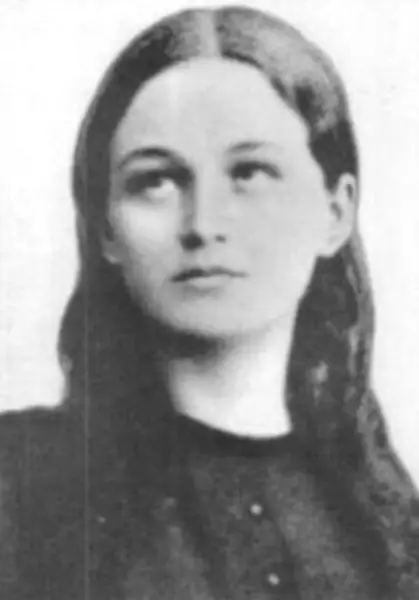
Overview
Clelia Barbieri was born into a family of poor labourers at Le Budrie di Persiceto in 1847 and was baptized as Clelia Rachele Maria. Orphaned of her father by a cholera epidemic at the age of eight, she took up spinning hemp beside her mother to help feed the household. Pious and contemplative from childhood, she made her First Communion in 1858 and soon showed remarkable gifts as a catechist. At fifteen she joined the Workers of Christian Catechism, serving as an assistant teacher, and the parish priest, Father Gaetano Guido, placed the doctrinal instruction of girls in her hands. She turned away repeated proposals of marriage, certain that God was asking a different kind of life. On 1 May 1868, aged twenty-one, she founded the Suore Minime dell'Addolorata, the Little Sisters of the Mother of Sorrows, to serve the poor and the sick of the countryside. Tuberculosis ended her life on 13 July 1870. She is remembered as the youngest woman ever to have founded a religious congregation, and her sisters, now serving as far away as Tanzania and India, report that her voice is still heard among them in prayer.
The Complete Life
A Childhood of Poverty and Prayer
Clelia Barbieri came into the world on 13 February 1847 in the village of Le Budrie, in the territory of San Giovanni in Persiceto, and was baptized without delay under the names Clelia Rachele Maria. Her parents, Giuseppe Barbieri and Giacinta Nannetti, were poor workers whose household knew real want, yet it was a home in which faith was taught and practised. When Clelia was eight years old, a cholera epidemic took her father, and the family's circumstances grew harder still. The girl took up the spindle at her mother's side to earn bread for the younger children, and during those years her mother and her sister Ernestina were able to move into a house near the parish church, thanks to the intervention of a doctor uncle. Poverty did not prevent interior depth: those who knew her recalled that she spent long stretches in deep contemplation even as a child. Her religious education was solid for so humble a household, and on 17 June 1858 she made her First Communion, an event that marked her inwardly. The pattern of her whole life was already visible: hard manual work offered to God, and a heart quietly recollected in the midst of it.
§ Life
Catechist at Fifteen
In 1861, still only fourteen or fifteen years old, Clelia joined the Workers of Christian Catechism as an assistant teacher, and there her unusual gift for leadership became plain. She made so deep an impression that the parish priest, Father Gaetano Guido, handed over to her the catechetical instruction of the village girls, a striking charge for one so young. Families in the village began to notice the difference she made among their daughters. During these same years Clelia had also to decide about her own future, and marriage offers were put before her; up until 1864 she declined them all. This was not a rejection of people but a choice of a particular path: she had resolved to belong to God alone and to spend herself for others. Her determination was not welcome everywhere, and she knew pressure and opposition within her own village, but she did not waver. The resolve of the adolescent catechist matured into a definite plan of life. By her early twenties the thought that had guided her since childhood took visible shape, as she gathered companions willing to share her consecration and her service of the rural poor.
§ Life
Founding the Little Sisters of the Mother of Sorrows
On 1 May 1868, at twenty-one years of age, Clelia founded a separate community that came to be known as the Suore Minime dell'Addolorata, the Little Sisters of the Mother of Sorrows. It was a striking undertaking: a congregation begun by a young peasant woman of twenty-one, without means or patronage, in the service of the poorest of her district. The new group directed its ministry to the poor and the sick of the local area, going where need was greatest and accepting hardship as part of its vocation. Poverty pressed close upon the young foundation, and the sisters learned to depend on Providence in very concrete ways. The most famous story told of those early days belongs to a moment when the community's food had entirely run out: Clelia led her sisters in prayer to Saint Francis of Paola, and the shelves were replenished. Whatever the sisters made of such events, the anecdote records the confidence with which the foundress brought every necessity to God. Under her guidance the young congregation took root in the villages around Le Budrie, binding together teaching, care of the sick, and sorrowful compassion at the foot of the Cross.
§ Life
The Voice That Remained
Clelia's death did not end her presence among her sisters, at least not in the conviction of those who lived after her. The first report came in 1871, while her sisters were gathered for their ordinary evening hour of meditation: her voice was heard. In the years that followed, similar reports came from various parishes she had visited in life and from the houses in which her order later settled. Those who described the phenomenon insisted that the voice never speaks alone; it is heard as part of a group, joining in scriptural readings and in song. People of many different backgrounds claimed to have heard it, and nearly all said the same thing: that it was unlike any voice they had ever heard before. The Church has made no pronouncement that would settle what such experiences mean, and they remain, as the sources themselves present them, unusual and unexplained. Yet for the Little Sisters of the Mother of Sorrows the singing and reading voice of their foundress has become part of the household's daily faith, a sign that the woman who taught them to pray still prays with them.
§ The voice
Consumption and a Quiet Death
Clelia did not live to see what her congregation would become. Tuberculosis, the wasting disease of the nineteenth century's poor, took hold of her while she was still in her early twenties, barely two years after the foundation had been begun. She died on 13 July 1870, at Le Budrie di Persiceto, in the same village where she had been born twenty-three years earlier, mourned by the sisters she had gathered. Her age at death made her a singular figure in the history of the Church: no one younger has ever founded a religious congregation in its communion. The work she left behind proved durable. The Little Sisters of the Mother of Sorrows outgrew their first village and crossed continents, eventually operating in places as distant as Tanzania and India. By 2008 the congregation counted 296 religious houses across 36 different communities, a remarkable expansion for a foundation begun by a girl without money or rank. The measure of those twenty-three years is not their length but their fruit, and the fruit has continued to multiply long after the foundress's voice fell silent in this world.
§ Life
From Servant of God to Saint
The process that led to Clelia's elevation to the altars was long and careful. The informative and apostolic processes for her beatification were conducted in Bologna, and on 2 April 1935 the theologians gathered and reviewed her spiritual writings, ruling that nothing in them ran against Church doctrine. The cause was formally introduced under Pope Pius XI on 15 March 1939, at which point she received the title Servant of God. Pope Pius XII, once her life of heroic virtue was confirmed on 22 February 1955, declared her Venerable. Two miracles attributed to her intercession were then confirmed, and on the strength of them Pope Paul VI raised her to the honours of the blessed in Saint Peter's Basilica on 27 October 1968. A third miracle, investigated in the place of its occurrence, was validated by the Congregation for the Causes of Saints on 18 April 1986, approved by medical experts on 23 March 1988 and by theologians on 17 June 1988, and assented to by the Congregation on 6 December 1988. Pope John Paul II issued definitive approval on 11 February 1989, and on 9 April 1989 he canonized Clelia Barbieri in Saint Peter's Square.
§ Beatification process
A Congregation That Spread Across the World
The measure of Clelia Barbieri's short life is the congregation she left behind and the devotion that gathered around her memory. The Little Sisters of the Mother of Sorrows carried her charism far beyond the villages of the Persiceto: they established houses in Tanzania and in India, and by 2008 they numbered 296 religious houses within 36 different communities. Few foundations begun in such poverty have travelled so far. Her reputation for holiness rested on two things her contemporaries testified to: the inspirational force of her leadership among the young, and the humble service she offered the sick and the poor. To these was added, after her death, the extraordinary and continuing reports of her voice heard in her communities' prayer, which kept her memory vivid among her sisters in a way few foundresses share. Liturgically she is honoured on 13 July, the anniversary of her death. In the catalogue of the Church's saints she occupies a distinctive place: a girl of the poorest working class who founded a religious congregation before she was old enough to be called anything but young, and who brought it to birth in barely two years of active leadership.
§ The voice
Timeline
- 13 Feb 1847
Born at Le Budrie di Persiceto to the poor workers Giuseppe Barbieri and Giacinta Nannetti, and baptized Clelia Rachele Maria.
§ Introduction
- 1855
Her father dies in a cholera epidemic; she begins spinning hemp beside her mother to support her siblings.
§ Life
- 17 Jun 1858
Makes her First Communion.
§ Life
- 1861
Joins the Workers of Christian Catechism as an assistant teacher; Father Gaetano Guido entrusts her with instructing girls in doctrine.
§ Life
- 1 May 1868
Founds the Suore Minime dell'Addolorata at twenty-one; the group begins ministering to the poor and sick of the area.
§ Life
- 13 Jul 1870
Dies of tuberculosis at Le Budrie di Persiceto, aged twenty-three; no one younger has ever founded a religious congregation.
§ Introduction
- 1871
Her sisters first report hearing her voice during their usual evening meditation.
§ The voice
- 15 Mar 1930
Her beatification cause is opened.
§ Introduction
- 2 Apr 1935
Theologians inspect her spiritual writings and confirm they contravene no official doctrine.
§ Beatification process
- 15 Mar 1939
Pope Pius XI formally introduces her cause, and she receives the title Servant of God.
§ Beatification process
- 22 Feb 1955
Her life of heroic virtue is confirmed, allowing Pope Pius XII to declare her Venerable.
§ Beatification process
- 27 Oct 1968
Pope Paul VI beatifies her in Saint Peter's Basilica after two miracles are confirmed.
§ Beatification process
- 11 Feb 1989
Pope John Paul II issues definitive approval of the third miracle required for her canonization.
§ Beatification process
- 9 Apr 1989
Pope John Paul II canonizes her in Saint Peter's Square.
§ Beatification process
The Record
- Major works
- Little Sisters of the Mother of Sorrows (Suore Minime dell'Addolorata)
- Canonization
- Canonized by Pope John Paul II on 9 April 1989 in Saint Peter's Square, after beatification by Pope Paul VI in 1968
Prayer
Bibliography
Show 7 sources
- "Blessed Clelia Barbieri". Saints SQPN. 15 November 2016.
- "Clelia Barbieri (1847-1870) - biography". www.vatican.va. Retrieved 2021-06-29.
- "Saint Clelia Barbieri". Santi e Beati. Retrieved 5 December 2016.
- "Saint of the week: Clelia Barbieri (July 13)". Catholic Herald. July 6, 2017.
- Index ac status causarum beatificationis servorum dei et canonizationis beatorum (in Latin). Typis polyglottis vaticanis. January 1953. p. 53.
- Ball, Ann (1998). Faces of Holiness: Modern Saints in Photos and Words. New York: Our Sunday Visitor Publishing. ISBN 0-87973-950-9.
- Cruz, Joan (1984). Relics. New York: Our Sunday Visitor Publishing. ISBN 9780879737016.
Profile text adapted from the Wikipedia article, licensed CC BY-SA 4.0.
Pray with this saint every day
Save St. Clelia Barbieri to your favorites, read the full profile, and get feast-day reminders in the Saints app.
Get the Saints AppFree on the App Store for iPhone and iPad