
c. 1070 – 1124·Feast February 17
St. Constabilis
Benedictine abbot of Cava and founder of Castellabate
Overview
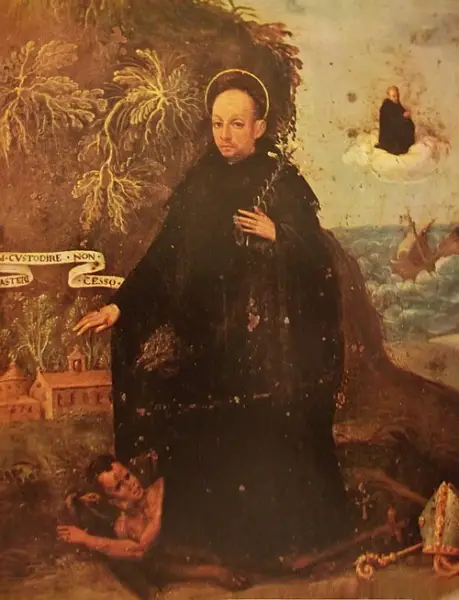
Constabilis, abbot of the great Benedictine abbey of La Trinità della Cava from 1122 until his death in 1124, is remembered above all as the founder of the town of Castellabate, which still bears the mark of his enterprise. Born around 1070 at Tresino in Lucania, into the noble Gentilcore family, he was given at the age of seven into the care of Leo I, abbot of Cava, and grew up within the monastery's cloister. As a monk he kept the Benedictine Rule with such fidelity that his superiors entrusted him with important negotiations and business on the abbey's behalf; in 1118 he was named coadjutor to Abbot Peter of Pappacarbone, whose successor he became on 4 March 1122. His abbacy was brief but gentle — he governed the community with humility and attended to the needs of each monk as well as the whole. On 10 October 1123 he laid the foundations of the castle on the hill that took its name, Castrum Abbatis, from his office, and the village that gathered beneath it became Castellabate. He died on 17 February 1124, aged fifty-three, and was venerated ever after as a protector of the abbey's ships; Pope Leo XIII confirmed his cult in 1893.
The Complete Life
A Noble Child Given to the Abbey
Constabilis was born around 1070 at Tresino, in the region of Lucania — the modern Basilicata's neighbor along the southern Tyrrhenian coast — within what is now the commune of Castellabate, the very town he would one day found. His family were the Gentilcore, nobles of the district, and their son's future was settled early in the manner of the medieval church: at seven years old the boy was entrusted to the care of Leo I, abbot of La Trinità della Cava, the Benedictine monastery nestled in the hills above Cava de' Tirreni. The oblation of children to monasteries was a common practice of the age, and in Constabilis's case it proved to be the whole shape of a life. He grew to manhood within the abbey, became a monk of the community in due course, and never left it except on the abbey's business. The abbey of Cava, founded by Alferius and in time one of the great religious houses of southern Italy, thus received its fourth abbot as a seven-year-old offering — a fact that later generations would read as providence preparing the town's founder in the cloister before he ever stood upon its rock.
§ Biography
Monk, Trustee, Coadjutor
Within the community of Cava, Constabilis distinguished himself by his fidelity to the Benedictine Rule, following it, the sources say, with zeal. That fidelity was not merely inward; it bore the practical trust of his superiors. The abbey's business — its lands, negotiations, and transactions — was important and delicate, and Abbot Peter of Pappacarbone came to entrust such matters to the monk who could be relied upon to conduct them honestly and well. Such administrative dependability marked him out, and on 10 January 1118 the community's future was formally arranged: Peter promoted Constabilis to the position of coadjutor, the designated assistant and successor in the abbatial office. For four years he bore the burden beside his aged superior. When Peter died on 4 March 1122, Constabilis succeeded him as abbot of La Trinità della Cava, the fourth to govern the monastery since its foundation. His rise through every grade of monastic responsibility — oblate, monk, business trustee, coadjutor, abbot — was accomplished entirely within the walls of the house that had received him as a child. Every trust the abbey placed in him was repaid with discretion.
§ Biography
The Castle of the Abbot
Constabilis's enduring monument stands not within the abbey but on the coast. Castellabate, the town whose patron he remains, owes both its existence and its name to him. As the settlement's founder he began, on 10 October 1123, the construction of the stronghold known as the Angel's Castle, raised on the heights above the sea. The title to the fortress and its surrounds became his, and from his office the place drew the name by which it has been known ever since: Castrum Abbatis, the castle of the abbot — Castellabate. The enterprise was characteristic of the abbots of Cava, whose monastery held wide lands and founded communities across the region, but it made Constabilis singular among them in one respect: he founded not only a religious house's outpost but a town, whose people would look to him for protection in this world and the next. As abbot he also steered the monastery itself in an unassuming manner, attending to the general welfare of the community and to the individual needs of each monk — a governance remembered as much for its gentleness as for its competence.
§ Biography
A Short Abbacy and a Quiet Death
Constabilis's tenure as abbot lasted scarcely two years. He died on 17 February 1124, at the age of fifty-three, the age at which many abbots were only reaching the maturity of their office. His community buried him in the church that overhangs the grotto of Arsicia, the cave that had sheltered Alferius, the founder of Cava, in the monastery's first days — so that the fourth abbot came to rest beside the memory of the first. The abbey passed to his successor, Simeon. The brevity of his rule might have consigned him to a footnote among the abbots of Cava, had his foundation not grown into a living town and his personal holiness not kept his memory green among its people. The unspectacular virtues the sources attribute to him — humility in command, care for individuals, fidelity to the Rule over a lifetime — proved more durable than longer administrations, for they were the kind that communities remember when they name their children, their churches, and their streets after a man. His successors inherited an abbey at peace and a coastline slowly gathering around the castle he had begun.
§ Biography
The Four Abbots of Cava
Veneration of Constabilis long preceded any formal act of the Church. After his death he was said to have appeared to his successors in the abbatial office, and the monks of Cava honored him as a special protector of the abbey's ships — a patronage suited to a monastery whose wealth and traffic moved along the Tyrrhenian coast, and one that made him a natural intercessor for sailors in danger. The recognition of the Church came at the close of the nineteenth century. On 21 December 1893, Pope Leo XIII confirmed the cultus of the first four abbots of Cava — Alferius, Peter of Pappacarbone, Constabilis, and their companions — as saints. The decree did not create new devotion so much as give it permanent official standing: veneration for Constabilis had already existed for centuries, and it now rested on papal confirmation. His feast was fixed on 17 February, the day of his death, and Castellabate keeps it as the patronal solemnity of the town founded by its own saint. The papal decree of 1893 thus sealed a devotion the coast had never allowed to grow cold.
§ Veneration
Patron of the Town He Built
The most visible legacy of Constabilis is the town itself. Castellabate, grown up around the castle he began in 1123, still crowns the Cilento coast, and its name — the castle of the abbot — is spoken a thousand times a day by people who may never think of the Benedictine who gave it to them. As patron of the town, he receives the devotion of its families and the processions of its feast; as protector of sailors, he remains the reference point of a seafaring people whose livelihood rides on the same waters his abbey's ships once sailed. Within the history of the abbey of La Trinità della Cava he holds a quieter place, one of the four founding abbots whom Leo XIII raised to the altars together in 1893, linking his memory permanently to Alferius the hermit founder and Peter the restorer. His life offers the rare, complete circle of medieval monastic sanctity: a child offered to God, a monk faithful in small things, an abbot gentle in command, a founder whose work outlasted the monastery's own fortunes, and a protector invoked centuries after the cloister that formed him had passed through fire and change.
§ Veneration
Timeline
- 1070
Born around this year at Tresino in Lucania, into the noble Gentilcore family
§ Biography
- 1077
Entrusted at the age of seven to Leo I, abbot of Cava, and raised as a monk of the abbey
§ Biography
- 10 Jan 1118
Promoted by Abbot Peter of Pappacarbone to the position of coadjutor
§ Biography
- 4 Mar 1122
Succeeded Peter as abbot of La Trinità della Cava upon his death
§ Biography
- 10 Oct 1123
Began building the Angel's Castle, from which the village took the name Castellabate
§ Biography
- 17 Feb 1124
Died aged fifty-three; his remains were laid to rest in the church above the grotto of Arsicia
§ Biography
- 21 Dec 1893
Pope Leo XIII recognized the first four abbots of Cava as saints, approving his longstanding cult
§ Veneration
The Record
- Major works
- Founding of Castellabate (Castrum Abbatis), begun with the Angel's Castle in 1123
- Patron of
- Castellabate·Sailors
- Canonization
- Cultus confirmed 21 December 1893 by Pope Leo XIII, together with the first three abbots of Cava
Prayer
Bibliography
Show 3 sources
- San Constabile (Costabile) (in Italian).
- Constabilis of Cava.
- "San Constabile (Costabile)". External links, Constabilis article.
Profile text adapted from the Wikipedia article, licensed CC BY-SA 4.0.
Pray with this saint every day
Save St. Constabilis to your favorites, read the full profile, and get feast-day reminders in the Saints app.
Get the Saints AppFree on the App Store for iPhone and iPad