
died c. 47 (by tradition)·Feast May 1
St. Ctesiphon of Vergium
One of the Seven Apostolic Men of Spain
Overview
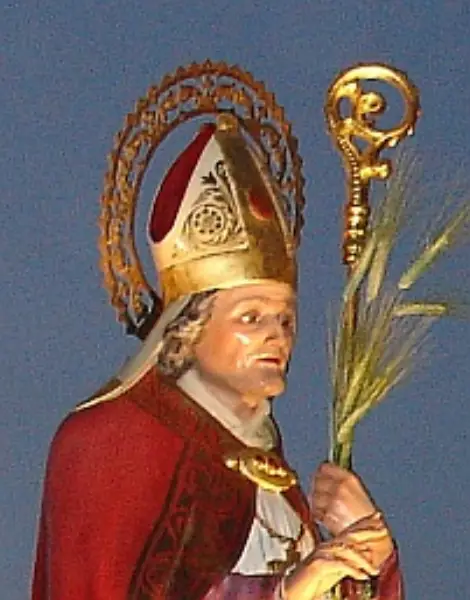
Ctesiphon of Vergium, honored in Spanish as San Tesifonte, belongs to the celebrated company of the Seven Apostolic Men, the seven clerics whom Christian tradition says were ordained in Rome by Saints Peter and Paul and sent out to evangelize Spain. His companions were Torquatus, Caecilius, Euphrasius, Indaletius, Hesychius, and Secundius, and whether the seven were Romans, Greeks, or native Hispanians the sources do not say. Tradition makes Ctesiphon a missionary of the first century, in the Apostolic Age itself, and gives him the town of Vergium or Bergi, identified with Berja in Andalusia, as his field, where he is said to have become the first bishop. The legend that carries his name probably took shape in the eighth century, though the Martyrology of Lyon, compiled in 806, preserved material reaching back to the fifth century, and the Mozarabic liturgy names them all. A medieval account tells how the missionaries, chased to the river at Acci during a pagan festival, were saved when the bridge collapsed behind them, and how the noblewoman Luparia hid them and was converted. Ctesiphon is patron of Berja together with the Virgen de Gádor, and his relics are said to rest in the catacombs of Sacromonte Abbey at Granada.
The Complete Life
Ordained by Peter and Paul
The tradition that gives Ctesiphon his place in history is one of the founding legends of Spanish Christianity: that seven clerics were ordained in Rome by the Apostles Peter and Paul themselves and dispatched to preach the Gospel in Hispania. Ctesiphon stands among them beside Torquatus, Caecilius, Euphrasius, Indaletius, Hesychius, and Secundius. The sources confess their ignorance on the most basic questions, since no one can settle whether these men were Romans, Greeks, or Hispanians by birth; even the birthplace recorded for them in the calendars is uncertain, perhaps Spain, perhaps some other part of the Roman Empire. What the tradition insists on is their commission: missionaries of the Apostolic Age, sent from the apostolic church to the western edge of the empire in the first generation of preaching. The legend in this form probably dates from the eighth century, yet it rests on older ground, for the Martyrology of Lyon, set down in 806, preserved older material going back to the fifth century, and the Mozarabic liturgy, which kept the old Spanish rites, likewise names all seven. Whatever the historian may conclude, the Spanish church received Ctesiphon from the beginning as an apostolic man, a bishop whose authority traced directly to the Fishermen of Galilee.
§ Introduction
The Collapsed Bridge and the Town of Berja
The medieval manuscripts, recording material handed down from the eighth or ninth centuries, tell how the seven missionaries arrived at Acci, the modern Guadix, during a festival held for Jupiter, Mercury, and Juno, whose worshippers drove the strangers toward the river; behind them the bridge gave way miraculously, and all seven came through unharmed. A noblewoman named Luparia, drawn to their mission, hid the fugitives and, once she had raised an altar to John the Baptist, entered the Christian faith herself. From Acci the seven separated to evangelize the region of Baetica, each taking a city for his own. Ctesiphon's lot was Vergium, written also Bergi or Vergi(s), identified with the town of Berja in Andalusia, where tradition says he preached, planted the church, and became the town's first bishop. The historians add a caution: the identification of most of these early sees is imprecise, and the diocese of Vergi was probably only founded around 500, generations after the apostolic age in which the tradition places its founder. But the bond between the saint and Berja has never been broken, and the town honors him as its own to this day.
§ The seven cities
An Apostle Remembered by the Church
Ctesiphon was never canonized by any process, for he belongs to the age before canonization existed; the church's veneration of him and his companions is pre-congregational, resting on the immemorial cult of the martyrs. His name is preserved in the Martyrology of Lyon of 806, which drew on a fifth-century source, in the Mozarabic liturgy of Spain, and in the writings of the Dominican Rodrigo de Cerrato in the thirteenth century, who retold the story of the seven men for the friars' age. At the Cathedral of Guadix, the ancient Acci where the seven missionaries found shelter from the mob, statues of all seven saints stand together with one of Saint Peter, the Apostle who was said to have sent them forth. The veneration of the group received a modern papal seal in 1982, when John Paul II, on his first journey to Spain, declared that Spain owed its conquest for the Gospel to the apostolic energy of these seven missionaries. The Eastern Orthodox and Roman Catholic churches alike keep their memory, and each of the seven also carries his own particular feast day within the general observance that the calendar assigns to the company.
§ Veneration
Patron of Berja, Guest of Sacromonte
Ctesiphon's living inheritance is the town of Berja in Andalusia, of which he is venerated as patron together with Mary under her title of the Virgen de Gádor. The link between the apostolic missionary and the Andalusian town has survived thirteen centuries of conquest and change, and the identity of Vergium with Berja stands firmer in tradition than most of the identifications attached to the Seven Apostolic Men. His relics, according to the belief of the church of Granada, lie in the catacombs of Sacromonte Abbey, alongside those of his companions Hesychius of Cazorla and Caecilius of Elvira, a claim that ties the apostolic legend to one of the most famous archaeological discoveries of early modern Spain. A further strand of medieval tradition wove the seven into the cult of Saint James the Great: the ninth-century Translatio S. Iacobi in Hispaniam related that seven disciples of the Apostle had carried his remains to Hispania following his death as a martyr at Jerusalem, and named Torquatus, Athanasius, and Ctesiphon among those laid to rest beside him. Whether as first bishop, hidden fugitive, or companion of Santiago, Ctesiphon remains woven into the oldest fabric of Spanish Christian memory.
§ Ctesiphon
Timeline
- 47
By tradition he died in Spain around this year as one of the seven missionary martyrs of the Apostolic Age.
§ Introduction
- 500
The Diocese of Vergi, whose first bishop tradition says he was, was probably only founded around this time.
§ Ctesiphon
- 700
The legend of the seven clerics sent to evangelize Spain probably took shape during the eighth century.
§ Introduction
- 800
A ninth-century author linked the seven men to Saint James the Great in the Translatio S. Iacobi in Hispaniam.
§ Associations with Saint James the Great (Santiago)
- 806
The Martyrology of Lyon, drawing on a fifth-century source, recorded the seven saints.
§ Introduction
- 1200
Rodrigo de Cerrato, a Dominican writer, treated the Seven Apostolic Men in his works during the thirteenth century.
§ Introduction
- 1982
Pope John Paul II, visiting Spain for the first time, credited the Seven Apostolic Men with conquering the country for the faith.
§ Veneration
In Their Own Words
was conquered for the faith by the missionary zeal of the Seven Apostolic Men
The Record
- Major works
- Evangelization of Vergium (Berja) and its traditional first bishopric
- Patron of
- patron of Berja, Andalusia, together with the Virgen de Gádor
- Canonization
- Pre-congregation; venerated from antiquity as one of the Seven Apostolic Men, martyrs of the Apostolic Age
Prayer
Bibliography
Show 6 sources
- "San Torcuato y los 7 Varones Apostólicos". Aciprensa. n.d. Retrieved September 5, 2008.
- "Ctesiphon von Vergium", Ökumenisches Heiligenlexikon.
- "Los orígenes históricos del cristianismo. Lección XVII: La difusión del cristianismo fuera de Palestina". Lecciones de la cátedra de Teología. Archimadrid.es. p. 168.
- "Guil, Escultora / San Pedro y los siete Varones Apostólicos (Catedral de Guadix)". A-guil.com. Retrieved 2012-09-20.
- "San Torquato Vescovo di Guadix". Santi e Beati. 6 Feb 2003.
- Diccionario de Historia de España. Madrid: Istmo, 2003.
Profile text adapted from the Wikipedia article, licensed CC BY-SA 4.0.
Pray with this saint every day
Save St. Ctesiphon of Vergium to your favorites, read the full profile, and get feast-day reminders in the Saints app.
Get the Saints AppFree on the App Store for iPhone and iPad