
504 – 581·Feast July 1
St. Cybard
Recluse of Angoulême in His Cave of Forty-Four Years
Overview
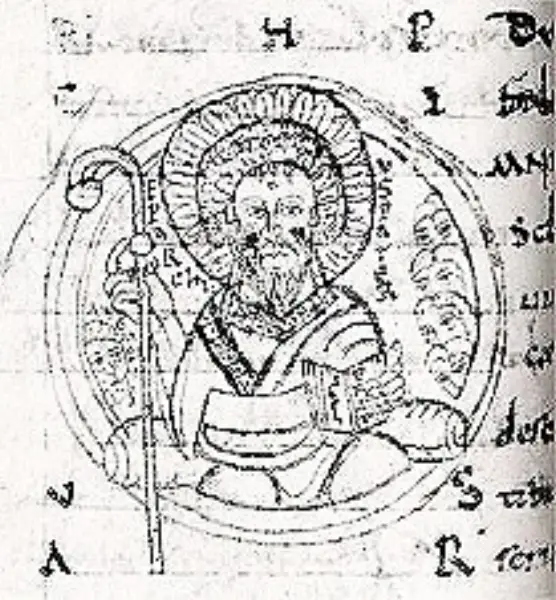
Cybard, whose Latin name was Eparchius and who appears in French as Éparche, Ybar, or Ybard, was a monk and hermit of the sixth century whose whole fame rests on a single act of fidelity: for forty-four years he lived as a recluse in a cave beneath the walls of Angoulême. Born, probably at Trémolat in the Périgord, in 504, he first embraced religious life against the wishes of his family at the monastery of Sedaciac, where his virtues and miracles soon drew admiration. Fearing the poison of praise, he withdrew into absolute solitude, and with the blessing of his abbot and the bishop of Périgueux he shut himself in a cell by the river Charente. The bishop of Angoulême obliged the reluctant recluse to accept priesthood in 542, and from his cave Cybard guided disciples, kept relentless austerities, and labored for the redemption of captives until his death on 1 July 581. Gregory of Tours recorded his story, an anonymous hagiographer wrote his life, and the abbey raised over his cave kept his memory alive at Angoulême, where a whole quarter still bears his name.
The Complete Life
Out of the World Despite His Parents
Cybard's vocation began in opposition. His parents tried to prevent the young man from following the religious life, but he quit the world in spite of them and entered the monastery of Sedaciac in the Périgord, where he served God for a time under Abbot Martin. There his extraordinary virtues and his miracles quickly made him known and admired, and that admiration decided the rest of his life: terrified by the sweetness of human praise, he forsook his monastery and withdrew into utter solitude. With the leave of the bishop of Périgueux and of his abbot, he took up his dwelling near Angoulême and shut himself in a cell. The anonymous life of the saint, the Vita et virtutes Eparchii reclusi Ecolismensis, preserves the scene of his going: alone, he walked by night to the place appointed for his enclosure, and when his journey and his prayers were finished, he laid his head upon a rock. The site his biographer describes was remote from the city, on the flank of a mountain where a stream of flowing water trickled down and the river Charente began its course. There, in a cave beneath the walls of Angoulême, the recluse settled for the remaining decades of his life.
§ Butler's account
The Rule of the Cave
The spirituality that grew in Cybard's cave was one of relentless simplicity. Alban Butler records that the recluse was extremely austere in food and clothing, and that his austerities reached their height in Lent. He admitted disciples to his company, but on terms all his own: he refused them manual labor, and by his own example willed that they remain constantly occupied in prayer. When any of the brothers complained of lacking necessities, he answered them with the word of Saint Jerome, that faith never feared hunger, and his trust was not deceived. The beneficence of the faithful kept abundance flowing to the cave, so that the recluse and his household lacked nothing, and from that plenty Cybard bought back many who had been taken captive, freeing prisoners from their chains in an age when captivity was the common fate of the countryside. Prayer without labor, poverty without anxiety, and mercy bought at the price of every comfort: such was the rule of the cave beneath Angoulême. Gregory of Tours, who told the story in the sixth book of his Historia Francorum, thought the life worth recording; the anonymous hagiographer who wrote the saint's Vita thought it worth telling at length; and the bishops who obliged this fugitive from honors to accept the priesthood in 542 evidently judged that a recluse so admired could not refuse the service of the altar.
§ Butler's account
Death at the Height of Summer
Cybard died on 1 July 581, having passed roughly forty years in his cell, forty-four years by the reckoning that counts his whole life of reclusion. He had entered the cave a fugitive from admiration and died its most famous citizen; the world he had fled had learned to beat a path to his rock. His disciples, formed in constant prayer, carried his spirit forward, and the faithful who had fed the household of the cave now claimed him as theirs. The date of his death became his feast, kept on the first of July in the diocese that he served from below the city walls. His body was laid to rest where his sanctity had been wrought, and the place of his enclosure grew into a shrine. Of the details of his last illness or his final words the sources are silent, as they are for most recluses, whose lives were their testimony; the miracle of the man was simply that he stayed, decade after decade, in the narrow place he had chosen for love of God alone. When death came in the summer of 581, Angoulême possessed in its dead hermit a patron more powerful, its people believed, than any living defender, and it set about honoring him in stone.
§ Life
The Abbey, the Quarter, and the Ashes
The memory of Cybard took permanent form over the very cave where he had lived: the Abbey of Saint-Cybard rose upon the site of his enclosure and kept his relics in its church for nearly a thousand years. His cult spread through the Angoumois and beyond; a church at La Rochefoucauld is dedicated to him, a quarter of the city of Angoulême bears his name, and he is honored as patron saint of the diocese. His Latin name, Eparchius, survives in French forms across the region, in Éparche and in the commune of Saint-Ybars, a witness to how deeply his cult struck root in the language of the country. The relics themselves met a harsher fate: kept in the abbey church that bore his name, they were burnt by the Huguenots in 1568, so that the wars of religion destroyed the body that warfare of every other kind had spared. Yet the destruction of the relics did not destroy the cult; the abbey site, the cave, the city quarter, and the July feast kept the recluse of Angoulême present to his people. Historians still turn to his life, told by Gregory of Tours and by his anonymous biographer, as a window into the monastic world of sixth-century Gaul, where a man could serve God, and serve captives, from a hole in the rock.
§ Saint Cybard
Timeline
- 504
Born, probably at Trémolat in the Périgord.
§ Saint Cybard
- 542
Ordained a priest by Aptonius III, Bishop of Angoulême.
§ Life
- 1 Jul 581
Died on 1 July after some forty years enclosed in his cell near Angoulême.
§ Butler's account
- 1568
His relics, kept in the abbey church bearing his name, were burnt by the Huguenots.
§ Butler's account
In Their Own Words
Faith never feared hunger.
alone he ... walked by night to the spot where he should be a recluse
The Record
- Major works
- Abbey of Saint-Cybard, built over his cave at Angoulême·Church dedicated to him at La Rochefoucauld
- Patron of
- diocese of Angoulême
- Symbols
- cave of Saint Cybard
- Canonization
- Pre-congregation canonization; honored as patron saint of the diocese of Angoulême
Prayer
Bibliography
Show 3 sources
- Butler, Alban (1833). The Lives of the Fathers, Martyrs, and Other Principal Saints: Compiled from Original Monuments and Other Authentic Records. R. Coyne.
- Michael Gervers, "The Cave Church at Gurat (Charente): Preliminary Report", Gesta 6 (1967): 14, notes 22 and 28.
- Saint-Roche, P. (1985). "A propos du sanctoral du sacramentaire d'Angoulême." Rivista di archeologia cristiana 61 (1–2): 113–18.
Profile text adapted from the Wikipedia article, licensed CC BY-SA 4.0.
Pray with this saint every day
Save St. Cybard to your favorites, read the full profile, and get feast-day reminders in the Saints app.
Get the Saints AppFree on the App Store for iPhone and iPad